
ARTICLE: HERITAGE DAY 2016
 What is wonderful about Heritage Day (as one of the “new” holidays in the not so new South Africa) is that we can look back and celebrate what we have achieved over the past 22 years. For many it will go back further than 22 years – to our cultural and traditional past – that is also part of our heritage, individually and collectively. “Heritage” means different things to different people.
Some will say that in 2016 there is nothing to celebrate – among them are angry students, persistent grumblers and disillusioned poor people. They will point out our problems at the political level, government level and Zuma level; the student riots and arson; the Springboks, Bafana Bafana and the Proteas’ poor or mediocre performances; the weak economy; unemployment, poverty and inequality; and the drought and high food prices.
MESSAGE OF SUPPORT FROM FORMER PRESIDENT DE KLERK TO THE IRIS HOUSE CHILDREN’S HOSPICE ANNUAL BALL
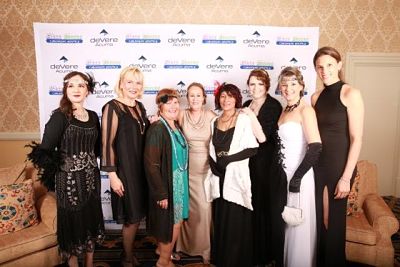 Thank you once again for inviting Elita and me to your annual hospice ball. I am sorry that we will not be able to join you this evening. However, I know that the FW de Klerk Foundation will be well-represented by several members of our team, including Ms Phephelaphi Dube, Director of our Centre for Constitutional Rights.
The annual ball is, indeed, an auspicious occasion. It will provide Iris House with an excellent opportunity to celebrate the impressive achievements of the past year – and to share your plans for the future. Elita and I would like to congratulate you on your wonderful work and would like to wish you every success in the year that lies ahead.
STATEMENT: FW DE KLERK FOUNDATION TO LAUNCH CENTRE FOR UNITY IN DIVERSITY
 On Friday, 26 August 2016, the FW de Klerk Foundation is hosting a conference in Johannesburg to launch its Centre for Unity in Diversity (CUD). The Centre’s name is derived from the reference in the Preamble to the Constitution that South Africa belongs to all who live in it, united in our diversity.
The CUD will operate alongside the Foundation’s existing Centre for Constitutional Rights (CFCR). Its aims include promoting the constitutional rights of South Africa’s communities to preserve and develop their cultural, religious and linguistic identities within the framework of national unity, and promoting harmonious non-racial relations between all who live in South Africa.
INVITATION: ROUNDTABLE SERIES 2019 – NUMBER 4
Join us for the fourth discussion for 2019 hosted by the Centre for Unity in Diversity (CUD) and supported by the Konrad Adenauer Foundation (KAS).
ARTICLE: THE CONSTITUTIONAL COURT AND GELYKE KANSE: WHAT HAPPENED?

On October 10, 2019, the Constitutional Court ruled in the case in which Gelyke Kanse (GK) asked that the 2016 Language Policy of the University of Stellenbosch (SU) be set aside because it is unconstitutional. GK’s application was essentially an appeal against the Western Cape High Court’s earlier ruling, and a request to bypass the Supreme Court of Appeal (SCA) and approach the Constitutional Court directly. This was allowed.
The overall verdict – with which all 10 judges agreed – was written by Judge Edwin Cameron (who was recently appointed new Chancellor of the SU). There are also two additional rulings, one by Chief Justice Mogoeng Mogoeng and the other by Judge Johan Froneman, which provide additional perspectives.
SPEECH: FREEDOM: THE KEY FACTOR IN ALL SUCCESSFUL SOCIETIES
In 1989 the American Academic, Francis Fukuyama, proclaimed that the “end of history” had arrived:
“What we may be witnessing is not just the end of the Cold War, or the passing of a particular period of post war history, but the end of history as such: that is, the point of mankind’s ideological evolution and the universalisation of Western liberal democracy as the final form of human government.”