
ARTICLE: PUBLIC PARTICIPATION IN A DEMOCRATIC SOCIETY: SOUTH AFRICAN VETERINARY ASSOCIATION (SAVA) V SPEAKER OF THE NATIONAL ASSEMBLY
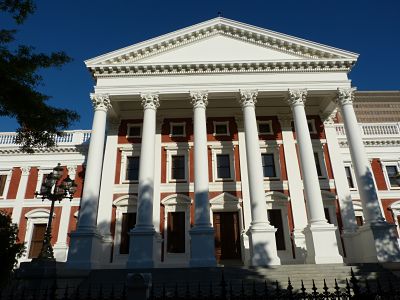
The concept of public participation in South Africa has often been narrowly understood to mean only the participation in public affairs of the State via the right to vote. Whilst the right to vote is indeed an effective tool to ensure public involvement in government affairs, the Constitution also extends public participation to involvement in Parliament’s legislative process. In the Preamble, the Constitution states that South Africa’s democracy should be founded on a government “based on the will of the people”. Further, section 59(1), 72(1) and 118(1) of the Constitution oblige Parliament to “facilitate public involvement in the legislative and other processes” of the same. Parliament may limit the public’s involvement but is prohibited from doing so unless a reasonable and justifiable cause exists.
SPEECH: MULTICULTURALISM AND GLOBAL POLITICAL CHALLENGES
Your Royal Highnesses, Fellow Nobel Peace Laureates, Your Excellencies, ladies and gentlemen… One of the inescapable implications of globalisation is an enormous increase in the interaction between people from different backgrounds, cultures, languages and religions. The management of the resulting cultural, language and religious diversity will be one of this century’s greatest challenges.
STATEMENT: WHAT IS ZUMA UP TO?

It might be easy to laugh off the comments about State capture in a lecture by former President Jacob Zuma in the Eastern Cape on 12 September as ludicrous, funny and weird – the rantings of a wounded former President. To say that the present crisis is a “politically-decorated expression of state capture” and there is no such thing as “State capture” while the work of the Zondo Commission (into State capture!) – and which he himself appointed – is underway, is nonsensical. At its best, it is a theoretical lesson in semantics, totally devoid of any realism. But that should not worry us. What is Zuma really up to – at worst?