
 THE CONSTITUTION AND GOOD PUBLIC LEADERSHIP: BREAKFAST DISCUSSION SERIES 2016
 An ad hoc committee was established by Parliament to oversee the appointment of the successor to the Public Protector, Advocate Thuli Madonsela. It was chaired by the African National Congress (ANC) MP, Dr Makhosi Khoza. In her opening speech she promised “the best person for the job”. Serving in the committee, were Julius Malema on behalf of the Economic Freedom Fighters (EFF), together with the following: Glynnis Breytenbach, Phumzile van Damme, James Selfe and Werner Horne, on behalf of the Democratic Alliance (DA). Other members included on behalf of the ANC, besides the chairperson, Makhosi Khoza, Bongani Bongo, Amos Masondo, Nicolaas Koornhof, Grace Tseke, Madipoane Mothapo, and Patrick Maesela.
 The Constitutional Court (the Court) recently heard a matter concerning the principle of the best interests of the child. In this case, Raduvha v Minister of Safety and Security and Another, the Court heard an appeal lodged by Michell Raduvha (the applicant) in a claim for damages which she brought against the Ministry of Safety and Security (the Minister), as well as the South African Police Service (SAPS) following her arrest and detention at the age of 15. The Court’s ruling has serious implications for the rights of children who find themselves in conflict with the law and the conduct of law enforcement officials in such situations.
The applicant was arrested in 2008 at her home without an arrest warrant. At the time of the arrest she was 15 years old and the arrest took place when the police were responding to a complaint about the breach of a protection order against the applicant’s mother. Raduvha stood between the police officers and her mother to prevent the latter’s arrest. She was arrested based on section 40(1)(j) of the Criminal Procedure Act (the CPA), which permits police to arrest anyone who is obstructing the execution of their duties. She and her mother were bundled into a vehicle and were detained at the Brixton Police Station for 19 hours, after which they were released with a warning.
 Yesterday, the Constitutional Court (the Court) in Nkabinde and Another v Judicial Service Commission and Others, ruled that a provision in the Judicial Service Commission Act meets constitutional muster. In making the ruling, the Court dismissed the application filed by Justices Nkabinde and Jafta to rescind an order previously made by the same Court. The Court further underlined that it is in the interests of justice that the complaint against Western Cape Judge President Hlophe be brought to finality.
The decision is the last hurdle which has been met and all but clears the way for the setting up of a tribunal to conduct disciplinary hearings into Judge Hlophe’s conduct. This, after a complaint of gross misconduct was laid before the Judicial Service Commission (JSC) against Justice Hlophe by all the then Justices of the Constitutional Court, including the subjects of yesterday’s ruling, Jafta and Nkabinde. They alleged that Justice Hlophe had acted improperly in trying to sway their judgments in matters with a direct bearing on the corruption charges against President Jacob Zuma. Justices Jafta and Nkabinde would have provided crucial evidence of this impropriety but they, instead, challenged the lawfulness of the tribunal that the JSC would have established. Eight years and numerous legal challenges later, it seems that this ruling will bring the matter to finality.
 On 16 August 2016 the Centre for Constitutional Rights (CFCR) hosted its first breakfast discussion in conjunction with the Centre for Human Rights (CHR) at the University of Pretoria, supported by the Konrad Adenauer Stiftung (KAS). The breakfast discussions aim to stimulate a platform for debate and dialogue about the Constitution and good public leadership.
The dialogue was structured as a roundtable forum, which included an in depth-discussion between dignitaries and the broader audience. Guests who attended the breakfast were from a myriad of disciplines including government, diplomatic circles, academia, civil society and the media. The overarching themes of the event included electoral reform and state accountability. Both panel and audience members flushed out the underpinnings of the current electoral system and gave critical insight into potential reform frameworks.
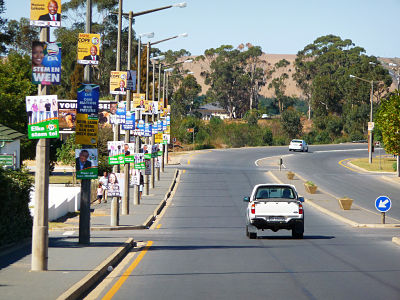 In the months leading up to this year’s Local Government Elections, the possibility of free and fair elections was marred by various incidents across the country. From protests in Vuwani regarding municipal demarcation, to the multiple political killings in KwaZulu-Natal, as well as the plethora of objections and complaints on election day, it was indeed unlikely that a calm political atmosphere would prevail following the release of the final results. However, after the conclusion of the voting process and the announcement of the final results, the Independent Electoral Commission (IEC) declared the elections free and fair. These sentiments have been echoed by the Law Society of South Africa.
 The Constitution protects the right of all South Africans to participate in the cultural life of their choice and further protects the cultural, religious and linguistic rights of communities, on condition that such practices are not inconsistent with any provision in the Bill of Rights. However, developments in the course of the year suggest that the rights to equality and dignity for many women in the country remain elusive, due to cultural practices.
 The Constitutional Court (the Court) has spoken – as of 28 July 2016, the Restitution of Land Rights Amendment Act 15 of 2014 (the Amendment Act) is invalid, largely due to the flawed process which led to it being passed into law by the National Assembly. The decision underscores the importance of public participation in the legislative process. After all, it stands to reason that the very people who will become the subjects of the law are not only consulted, but their views should be taken into account when crafting laws. Ultimately the decision has implications for, particularly, the Expropriation Bill, in respect of which the President has recently written to the Speaker of the National Assembly and the Chairperson of the National Council of Provinces (NCOP) to clarify procedural matters, including insufficient public participation.
 THE CONSTITUTION AND GOOD PUBLIC LEADERSHIP: BREAKFAST DISCUSSION SERIES 2016