
ARTICLE: A CASE OF SELECTIVE PROSECUTION?
 The National Prosecuting Authority (NPA) will tell all who care to hear, that the body is independent, impartial and that the body acts without fear or favour. It follows then, that after the Finance Minister Pravin Gordhan has been charged with fraud – albeit with debatable merits of the case – that criminal charges too, should be laid against various individuals whose business ventures appear to have transgressed numerous South African laws.
An affidavit deposed to by the Finance Minister suggests that the Department of Mineral Resources was not entirely truthful in its approval of the transfer of R1.5 billion from a trust account to a bank in India. The affidavit is in support of an application for a Declaratory Order asking the Court to declare that as the Minister of Finance, he did not have the authority to intervene with the Banks’ decision to close business accounts associated with the Gupta family. The sum of R1.5 billion was meant to rehabilitate Optimum Coal Mine which is owned by the Gupta family – the subject of a Public Protector investigation into allegations of state capture.
 How does a nation come to terms with its past? Is there a right way to remember the past? How can a multicultural society forge a common identity for the sake of social cohesion? These were the recurring themes during the course of a study tour to Berlin, Germany, and its surrounds. Together with a motley crew from business, government, academia and civic society, I participated in the study tour during the last week of September, generously funded by the Konrad Adenauer Foundation. Germany, with its fraught and often contested 20th century history under the National Socialists, as well as the communist dictatorship in the former German Democratic Republic (GDR), served as the perfect backdrop with which to examine the South African experience.
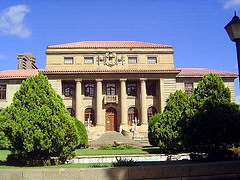 The importance of public participation in a representative democracy was highlighted in the recent Supreme Court of Appeal (SCA) judgment of Primedia Broadcasting v The Speaker (Primedia appeal) on 29 September 2016.
 a. The Centre for Constitutional Rights (CFCR) operates as a unit of the FW de Klerk Foundation The CFCR seeks to defend and promote the Constitution and the Bill of Rights and works for harmonious relations in multicultural societies. In this context it monitors any actions, statements or developments that might affect the Constitution, the Bill of Rights or harmonious relations between communities in our multicultural society.
  On Wednesday 5 October, the Parliamentary Portfolio Committee on Communications (the Committee) convened a meeting with the beleaguered Board of the South African Broadcasting Corporation (SABC) to allow the latter to brief the former on the state of affairs at the public broadcaster. This was done in light of the recent Supreme Court of Appeal (SCA) judgment concerning its newly appointed Group Executive for Corporate Affairs, Hlaudi Motsoeneng, and the problems that have recently plagued the SABC. It is worth noting that this meeting was conducted during a period of Parliamentary recess, which indicated the gravity of the matter.
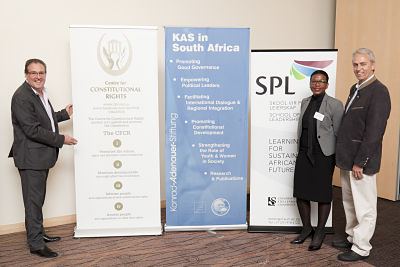 On 5 October, the Centre for Constitutional Rights (CFCR) hosted its third breakfast discussion in partnership with the School for Public Leadership (SPL) for 2016, and sponsored by the Konrad Adenauer Stiftung (KAS). The focus of the breakfast discussion was engaging with the past in the context of reconciliation and restitution.
 The Centre for Constitutional Rights (CFCR) is pleased to announce the appointment of Ms Christine Botha as Legal Officer, as of October 2016. In this capacity, Ms Botha will support the Director of the CFCR in achieving the Centre’s objectives of promoting the values, rights and principles in the Constitution; monitoring developments, including draft legislation, in terms of the Constitution; informing people and organisations of the constitutional rights and obligations; and assisting people and organisations in claiming their rights.
 It is a convoluted affair and – where sense can be made of it – suggests an organisation mired in skulduggery and maladministration. That since its inception the National Prosecuting Authority (NPA) is yet to have a head successfully complete a full term without either resigning or being forced to leave the position, is one of the telling signs.
 The embattled Chief Operations Officer (COO) of the South African Broadcasting Cooperation (SABC) may have reached the end of his tenure at the public broadcaster. After a series of court battles with opposition parties, the Supreme Court of Appeal (SCA) has dismissed SABC COO, Hlaudi Motsoeneng’s application for leave to appeal a High Court ruling that his permanent appointment should be set aside.