
ARTICLE: JULIUS MALEMA IN THE CROSSHAIRS OF THE LAW ONCE AGAIN – THE CONSTITUTIONALITY OF THE RIOTOUS ASSEMBLIES ACT
 The leader of South Africa’s third largest political party, Mr Julius Malema, finds himself in the crosshairs of the law once again. This time, for allegedly contravening the Riotous Assemblies Act in purportedly urging his supporters to invade land. He is reported to have said this to a large group of supporters in 2014, and mostly recently, in June 2016. News reports further mention his intention to approach the Constitutional Court to challenge the constitutionality of the Riotous Assemblies Act. Various political commentators appear to be in agreement with this assertion, premised on the fact that the Riotous Assemblies Act (the Act) pre-dates the Constitution as it was promulgated in 1956.
 On 11 November 2016, Communications Officer Megan Dick, and CFCR interns, Kiah Murphy and Sonam Mansingh had the opportunity to visit the soon-to-be-completed Welvanpas Water Treatment Works purification plant in Drakenstein Municipality.
  In a unanimous judgment delivered by the Chief Justice Mogoeng, the Constitutional Court reinforced the founding values of our Constitution, which is built on human dignity and the achievement of a non-racial South Africa. This judgment sends a clear message to all employers and employees that racism will not and cannot be condoned in the workplace.
 On 16 September 2016, the third draft of the highly contested Refugees Amendment Bill (the Bill) was introduced in the National Assembly. The public was invited to submit written submissions by 28 October 2016. The Bill aims to amend the Refugees Act 130 of 1998 (the Act) and the Refugees Amendment Acts of 2008 and 2011, the latter two which still need to be proclaimed. The provisions of the Bill will only come into effect after such commencement.
  A question has arisen as to whether the Public Protector may legally compel the President to establish a commission of inquiry, seeing as the establishment of commissions of inquiry is, in terms of the Constitution, the sole prerogative of the President.
 1. The Centre for Constitutional Rights (CFCR) is a unit of the FW de Klerk Foundation – a non-profit organisation dedicated to upholding the Constitution of the Republic of South Africa, 1996 (the Constitution). To this end, the CFCR seeks to promote the Constitution and the values, rights and principles enshrined in the Constitution; to monitor developments including legislation and policy that may affect the Constitution or those values, rights and principles; to inform people and organisations of their constitutional rights and to assist them in claiming their rights. The CFCR does so in the interest of everyone in South Africa.
 For the last five weeks, the country has experienced a magnitude of violent protests at tertiary institutions in the #FeesMustFall campaign, which was reignited in September 2016 after the Minister of Higher Education and Training (the Minister) announced a cap of 8% increase in student fees for 2017. Government further proposed to subsidise students from households where the income is less than R600 000 per annum through the National Student Financial Aid Scheme (NSFAS).
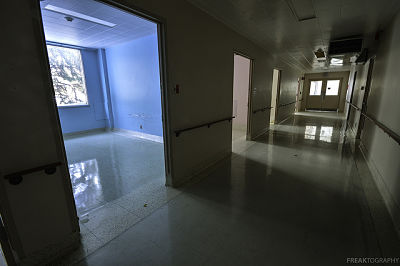 On 21 September, the death of the 37th psychiatric patient removed and transferred from Life Esidimeni Healthcare Centre was announced. The Gauteng Department of Health (the Department) transferred approximately 1 300 patients from Life Esidimeni to 122 non-governmental organisations and other homecare facilities around the province in March 2016. This initiative came after the provincial health department ended its long-term relationship with Life Esidimeni. The Department stated that it had decided to re-prioritise funds allocated to Esidimeni, citing R323 million paid to the hospital during the 2014/15 financial year. The Department had held a public-private partnership with Life Esidimeni, the institution which cared for Gauteng’s most serious mentally ill patients, often from more marginalised and underserved populations.
 In terms of the Constitution, it is the prerogative of the national executive to not only negotiate but also sign all international agreements. Such agreements are then binding on the country after they have been approved by resolution in Parliament unless the international agreement in question is of a technical or administrative nature, then such agreement binds the country without the need for a resolution from Parliament. Thereafter, the international agreement becomes law after national legislation is enacted. It is on this basis that the Implementation of the Rome Statute of the International Criminal Court (Implementation Statute) became a part of South African law in 2002.