View Archived Content

ARTICLE: TAXI VIOLENCE IN THE WESTERN CAPE
TAXI Foter com CC BY ND opt

The rate of violence linked to taxi wars in the Western Cape has risen alarmingly. It has been reported that between April 2018 and June 2018, 45 people died due to taxi violence, compared to 22 deaths over the same period in 2017. The situation has escalated to the point where the Police Minister, Bheki Cele, threatened to shut down the problematic taxi ranks and routes if taxi-related killings continued. This violence and the possibility of a shut-down does not only impact the lives of commuters and taxi operators. It also threatens the economic livelihood of the approximately 15 million people who rely on taxis daily, as a means by which to travel, for example, to and from their places of employment. As a result, the Western Cape Department of Transport called for hearings aimed at investigating the root causes of the violence, and a report on the same is expected on 6 July 2018.


Read More »

ARTICLE: THAT CABINET RESHUFFLE – WHEN CAN THE COURTS INTERFERE?

parliament sabc

The Gauteng High Court (High Court) in Pretoria previously ordered former President Jacob Zuma to provide within five days, a record and reasons as to the firing of former Finance Minister, Pravin Gordhan. The Presidency unsuccessfully petitioned the Supreme Court of Appeal (SCA) for leave to appeal and is said to have approached the Constitutional Court in the belief that the High Court judgment sets a bad precedent. 

The President’s spokesperson is reported to have stated that “If that matter is left unattended, it means that we’re going to have to provide records for all Cabinet reshuffles. Some of these are decisions taken on the basis of certain political considerations.”

The doctrine of separation of powers seeks to prevent the abuse of power within different spheres of government – all public power is subject to the dictates of the Constitution – with the courts being the ultimate guardian of the Constitution. The Constitution provides that any law or conduct inconsistent with the Constitution is invalid. As such, courts are empowered to review laws or conduct – even in matters involving the Legislature or the Executive. Despite the fact that the Executive is made up of political appointees, this does not mean that all decisions taken by the Executive are of a political nature and therefore incapable of being the subject of judicial review. Neither does it mean that the courts have carte blanche power to review all decisions taken by the Executive.

Read More »

CASE DISCUSSION: LEVENSTEIN AND OTHERS V THE ESTATE OF THE LATE SYDNEY LEWIS FRANKEL

boy face hidden opt

On 14 June 2018, the Constitutional Court ruled in an application for the confirmation order of a constitutional invalidity order made by the Johannesburg High Court. The High Court declared section 18 of the Criminal Procedure Act (CPA) inconsistent with the Constitution and invalid insofar as it bars, in all circumstances, the right to institute criminal prosecution for all sexual offences other than rape and compelled rape, after 20 years have lapsed since the commitment of the offence.  

The applicants are adult men and women who were allegedly sexually assaulted by the now late Mr Frankel in 1970 and 1989 when the they were between six and 15 years old. The applicants claim to have suffered physical, emotional and psychological trauma because of the alleged assault. The 20-year prescription period provided for by section 18 of the CPA meant that the alleged offences prescribed between 1999 and 2011. The applicants said that it was only after they fully appreciated the gravity of the criminal acts committed by Frankel (between June 2012 and 2015) that they instituted both civil and criminal action against him. However, the Director of Public Prosecutions (DPP) of Gauteng declined to prosecute, citing the CPA’s prescription period as the reason.

Read More »

ARTICLE: SHINING A SPOTLIGHT ON POLITICAL PARTIES

poster party foter opt

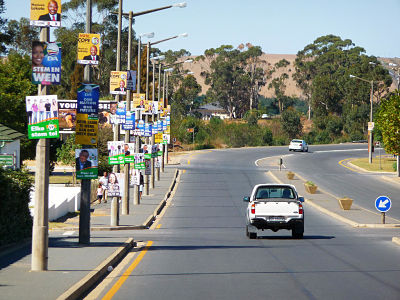
South Africa, alongside other constitutional democracies, recognises the importance of political parties. The founding provisions of the Constitution mention that South Africa is a sovereign, democratic State, founded on the values of universal adult suffrage, a national common voters roll, regular elections and “a multi-party system of democratic government”. Political parties as such, play a beneficial role within South Africa’s constitutional democracy. 

It stands to reason that political parties are not homogenous but are nonetheless united in their quest to acquire and exercise political power. But what happens when the practices and conduct of political parties are found wanting, resulting in an apparent existential intra-party crisis?

While there is an obvious distinction between political parties and the State, however, South Africa’s democracy is highly dependent on political parties. Moreso at provincial and national level, political parties are voted in – rather than individuals – and it is these members of political parties who then become the Executive. The Executive, in terms of the Constitution, is tasked with ensuring good governance through quality service delivery while realising the aspirations of the nation as a whole.

Read More »

ARTICLE: WORLD REFUGEE DAY – IN THE SHADOW OF THE BORDER MANAGEMENT AUTHORITY BILL

REFUGEES OPT

Wednesday, 20 June 2018, marks World Refugee Day, a day earmarked to honour the millions of people who have fled their home countries due to war, violence and extreme human rights abuse, with little more than the clothes on their backs. 

On this day the United Nations (UN) reminds us that the international commitment by countries to assist the most vulnerable in terms of the 1951 Convention Relating to the Status of Refugees (the UN Convention), is not a “shared burden” but a “shared global responsibility” based on our “common humanity” and international law obligations. This responsibility is shared by South Africa, which ratified the UN Convention.

Read More »

ARTICLE: THE FORGOTTEN YOUTH

abc opt

16 June is celebrated annually in South Africa as Youth Day. The Day honours the students who sacrificed their lives in 1976, during protests against Bantu Education and the addition of Afrikaans (alongside English) as a compulsory medium of instruction in all schools.

There is a plethora of statistics and information about South African youth that can be used to illustrate the dire situation in which this group finds itself as the commemorations begin. From the abysmal state of youth unemployment – recorded at 38.2% for young people aged 15 to 34 in the first quarter of 2018 – to the quality of the primary education system being ranked 116/137 by the World Economic Forum’s Global Competitiveness Report. In addition, the state of higher education has been under a microscope for years with very little positive progress, and the Department of Basic Education (DBE) is battling to ensure that every child has a place in school at the beginning of every academic year, amongst others. 

Read More »

ARTICLE: INTERNATIONAL ALBINISM AWARENESS DAY

Photo by MONUSCO on Foter com CC BY SA opt

On 18 November 2014, the United Nations (UN) General Assembly adopted a resolution which set aside 13 June as International Albinism Awareness Day. This resolution served to affirm the need to advocate more fiercely for the rights of persons with albinism (PWA) across the globe. This cause is particularly important for a number of African countries, South Africa included, where the lives of PWA are threatened daily. There have been numerous cases reported concerning violence against PWA. One such case is the ritual killing in 2015 of Thandazile Mpunzi, a woman with albinism, by her boyfriend and two others, one of whom was a traditional healer. There is a belief that body parts of PWA attract wealth and as a result, PWA are killed and dismembered for muti. Thandazile’s chopped up body was found in a shallow grave, 10 days after her death (the perpetrators were successfully prosecuted). 

Sadly, cases like Thandazile’s are not isolated. There are more stories like hers littered across the country, and indeed, the continent. Since 2006, there have been over 600 (reported) attacks and other violations against PWA in 28 African countries. When one considers how small the ratio of PWA is compared to people who do not have albinism, this translates to a serious threat. The most vulnerable of this already vulnerable group are women and children. They endure kidnapping, human trafficking, murder and mutilation among other violations. These violations have been reported in Tanzania, South Africa, Malawi and Zambia, to name a few. 

Read More »

ARTICLE: ENVIRONMENTAL RIGHTS VS ECONOMIC STABILITY

WindFarm2 opt

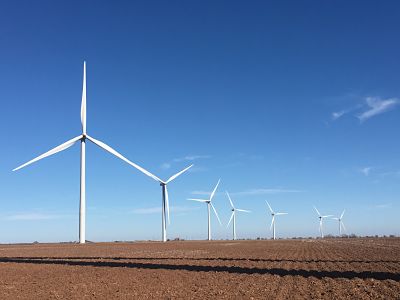
In March of 2018, the Minister of Energy, Jeff Radebe, finally signed power purchase agreements with 27 Independent Power Providers (IPPs) on behalf of Eskom – the national electricity provider. These agreements should have been signed as far back as 2015, under the auspices of the Renewable Energy Independent Power Producer Procurement Programme (REIPPPP). REIPPPP was launched in 2011 to encourage private investment and help in the development of the renewable energy sector in South Africa. 

South Africa is particularly suited for renewable energy generation due to the abundance of wind for wind farms and sunshine for solar energy projects. In December 2017, the Department of Energy stated that since the commencement of REIPPPP in 2011, the country had attracted over R194 billion in investments. On 1 June 2018, Radebe announced a new round in REIPPPP, which could bring between R40 billion and R50 billion worth of investment to the sector. The delay in the signing of the agreements came from several avenues. Eskom resisted pressure from the State to execute the agreements, citing the high cost of procuring and producing renewable energy. Eskom also stated that it was operating at overcapacity, meaning that it was, and is, producing more electricity than demanded by consumers. This reasoning was used to suggest that there was, therefore, no need for alternative energy sources, much less more expensive ones. 

Read More »

CASE DISCUSSION: RUSTENBURG PLATINUM MINE V SOUTH AFRICAN EQUITY WORKERS ASSOCIATION OBO MEYER BESTER AND OTHERS

mining opt

In May 2013, Rustenburg Platinum Mine (the mine) dismissed an employee, Mr Bester, on grounds of insubordination and the making of racial remarks. Briefly, the facts of the case are that, after a parking issue he tried to raise was ignored, Mr Bester interrupted a meeting where he referred to the owner of the vehicle concerned, as a “swart man” (black man), and in so-doing, contravened a workplace rule that prohibited the use of abusive and derogatory language at the mine. Bester was later charged with insubordination for interrupting the meeting, and with making racial remarks against a fellow employee. Following suspension and a disciplinary hearing, Bester was dismissed.

He approached the Commission for Conciliation, Mediation and Arbitration (CCMA) on the grounds of an allegedly unfair dismissal because he claimed he had not uttered the words. The CCMA held that the use of the term was racially innocuous because it had been used to identify someone whom he did not know by name. The CCMA held that ‘swart man’ had been used to describe a physical attribute and therefore, the dismissal was both procedurally and substantively unfair. 

Read More »