HUMAN RIGHTS REPORT CARD: 2018
The Centre for Constitutional Rights (CFCR) is pleased to present its annual Human Rights Report Card indicating where, in our opinion, South Africa has been

The Centre for Constitutional Rights (CFCR) is pleased to present its annual Human Rights Report Card indicating where, in our opinion, South Africa has been
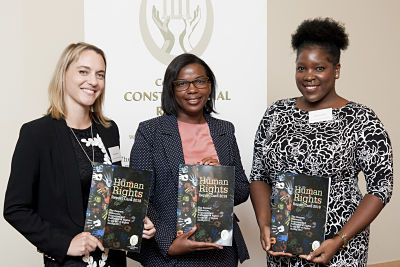 The Centre for Constitutional Rights (CFCR) annually releases a Human Rights Report Card, in terms of which the State’s obligations in the Bill of Rights are assessed. The Report is released to coincide with Human Rights Day on 21 March. The day is celebrated in honour of human rights and to commemorate the Sharpeville massacre.
Undeniably, South Africa is a better place to live in and has made progress in leaps and bounds since then. This is not to suggest that the State has lived up to its constitutional obligations and fulfilled the constitutional imperative to “improve the quality of life of all citizens and free the potential of each person”. Although 2017 saw a few improvements in the realisation of some rights, the highly-publicised State failings greatly eroded the enjoyment and fulfilment of certain rights.
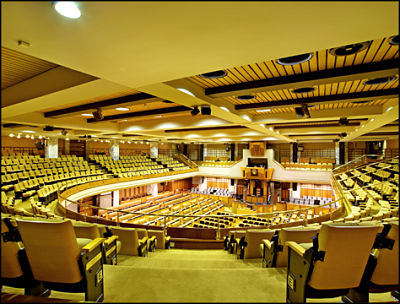 The National Assembly’s resolution on 27 February to review the property clause resulted in near hysteria, or euphoria. However, there is a sore lack of nuance, and even deliberate misinformation, regarding the contents of the motion passed.
The crux of the final amended resolution is to “review section 25 of the Constitution and other clauses necessary to make it possible for the State to expropriate land in the public interest without compensation and in the process conduct public hearings to get the views of ordinary South Africans, policy makers, civil society organisations and academics, about the necessity of, and mechanisms for expropriating land without compensation”.
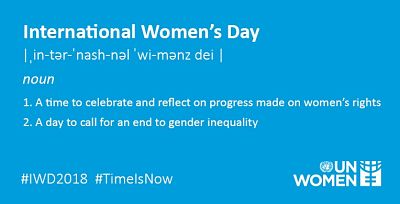 International Women’s Day is a global call to action for the protection of the rights of women all over the world. Annually, various issues which affect women, one of the world’s most vulnerable groups, are highlighted and the achievements in those areas, if any, are celebrated. However, these achievements are celebrated with the qualifier that so much more needs to be done to achieve equal treatment. Furthermore, those who are recognised for bringing women closer to gender equality receive acknowledgment particularly because of the seemingly insurmountable obstacles they have overcome to do so. From seeking gender parity in terms of equal payment, to fighting for freedom from sexual harassment both in and outside the workplace, as well as simple human dignity, the day stands as a reminder of the hard road ahead.
 The newly-appointed Minister of Communications, Nomvula Mokonyane, has indicated that she and her Department have sought legal counsel regarding a High Court appeal which was initiated by her predecessor, Mmamoloko Kubayi-Ngubane, late last year. The appeal is in relation to the SOS Coalition and the Right2Know Campaign application, which requested the Court to determine the extent of the Minister’s powers over the functions of the South African Broadcasting Corporation (SABC). In October 2017, the High Court in Pretoria declared that the Memorandum of Incorporation (MOI), which afforded the Minster extensive powers to interfere with the workings of the SABC, was invalid as it did not protect the independence of the public broadcaster. Some of the identified powers were that of the appointment and dismissal of senior executives, the Minister’s veto powers regarding appointments, as well as the Minister’s powers to remove all Directors at will. This judgment reinforced the principles of transparency and openness, which are an essential buttress to South Africa’s democracy.
 As modern constitutions stand, they can be amended as a means of responding to changing times and as a way of remaining relevant. The South African Constitution is no exception, having been amended no less than 17 times since it was adopted in 1996. The latest attempt involves amendments to the property clause.
The resolution passed this week by the National Assembly, of which the crux is to ensure “that Government would continue the land reform programme that entails expropriation of land without compensation, making use of all mechanisms at the disposal of the state, implemented in a manner that increases agricultural production, improves food security and ensures that the land is returned to those from whom it was taken under colonialism and apartheid and undertake a process of consultation to determine the modalities of the governing party resolution”. The passed resolution is an amendment of the EFF-sponsored resolution, which essentially to sought to ensure the “necessity of the State being a custodian of all South African land”. Suffice to say, the EFF resolution as it stands, had it been passed and subsequently incorporated into the Constitution, would have abolished all notions of private property ownership.
 Join us for the launch of the Centre for Constitutional Rights’ (CFCR) flagship publication, the Human Rights Report Card. The launch event is hosted in partnership with the Konrad Adenauer Foundation (KAS).
The Centre for Constitutional Rights (CFCR) welcomes the President’s decision to tender his resignation from the highest office of the land. While the resignation will only come into effect once the Speaker of the National Assembly has been informed in writing, the decision nonetheless brings much needed certainty for the nation. For most of 2018, South Africa has been in a state of paralysis regarding the President’s future at the helm. Such paralysis saw the postponement of the annual State of the Nation Address (SONA), as well the postponement of several key functions of the National Assembly. These included the Public Protector’s appearance before the Justice Committee to answer for the shoddy Estina Dairy Report, which failed to assign proper liability to individuals known to have misconducted themselves, at the expense of South Africa’s particularly vulnerable citizens.
In 1973, the Watergate Scandal broke, eventually costing United States of America’s President Richard Nixon his scalp in 1974. The Deputy President, Gerald Ford, was appointed, unelected, into the position, which he held for three more years. He holds the distinction as the only unelected President of the USA in the 20th Century. Back home, the Constitution contemplates such a scenario, albeit for a temporary period.
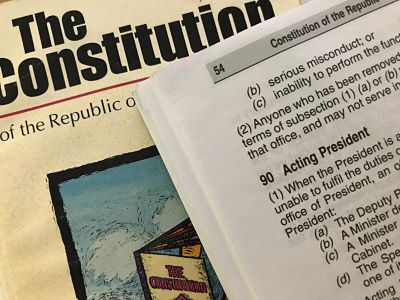
Specifically, section 90 of the Constitution governs the eventuality of an Acting President in circumstances where the President is “absent from the Republic or otherwise unable to fulfil the duties of President, or during a vacancy in the office of President”. Prior to assuming the office of the President, the Acting President “must swear or affirm faithfulness to the Republic and obedience to the Constitution”.