View Archived Content

CASE DISCUSSION: DOBROSAV GAVRIĆ V REFUGEE STATUS DETERMINATION OFFICER, CAPE TOWN AND OTHERS

refugee day

In September 2018, the Constitutional Court ruled in an application by Mr Dobrosav Gavrićfor leave to appeal a Western Cape High Court judgment, which confirmed the decision of the Refugee Status Determination Officer (RSDO) to refuse to grant Gavrić refugee status in terms of the Refugees Act (the Act). This case was important because it emphasises South Africa’s international law obligations under the principle of nonrefoulement – the general prohibition against the return of a person to any country where that person’s life, physical safety or freedom will be threatened. The judgment also establishes a test for the vagueness of the term “political crime” as a requirement for the granting of refugee status.


Read More »

ARTICLE: TO REVEAL SOURCES? WHAT DOES THE PUBLIC INTEREST DEMAND?

confidential opt

In a country where freedom of expression, including freedom of the press and other media, is well-protected and enjoyed – at least on paper – can there ever be compelling, public interest reasons for journalists to reveal their sources?

South Africa was recently gripped by revelations emanating from the Commission of Inquiry into tax administration and governance at the South Africa Revenue Service (SARS) headed by retired Judge Nugent. Not least among the revelations is that the widely reported ‘rogue unit’ within SARS was in fact, the High-Risk Investigations Unit, lawfully constituted, with extensive search and seizure powers. Such powers enabled tax assessments and recovery of illicit tobacco, drugs and counterfeit clothing worth more than R4 billion in the time of its existence. Despite this, the Sunday Times newspaper published a series of articles in which senior-ranking SARS officials were implicated in the establishment of a covert or “rogue” investigative unit that allegedly spied on former President Jacob Zuma and that set up a brothel aimed at infiltrating the governing party. The paper has since retracted the stories regarding the rogue unit and has tendered an apology.

Read More »

ARTICLE: SCHOOL INFRASTRUCTURE BACKLOG – CLEARING THE ROT IN THE WEAK ACCOUNTABILITY CHAIN DEMANDS IMMEDIATE ACTION

DILAPIDATED SCHOOL opt

Recent reports outlining the vastness of “irregular” and “fruitless and wasteful” expenditure incurred by State Departments left the public numb. According to media reports, the Auditor-General of South Africa (the AG) recently announced in Parliament that the State’s “fruitless and wasteful expenditure” defined as “expenditure which was made in vain and would have been avoided had reasonable care been exercised” had increased by 200%, from just under R1 billion in the previous financial year to R2.5 billion. 

Read More »

ARTICLE: BEYOND THE LAW – ETHICS MATTER

NENE FOTER

President Cyril Ramaphosa has, to put it mildly, monumental tasks ahead of him. Not least, crafting a tangible and coherent message about economic recovery to assuage jittery investors and skeptical voters ahead of the 2019 national elections, but also appointing the best people for public office.

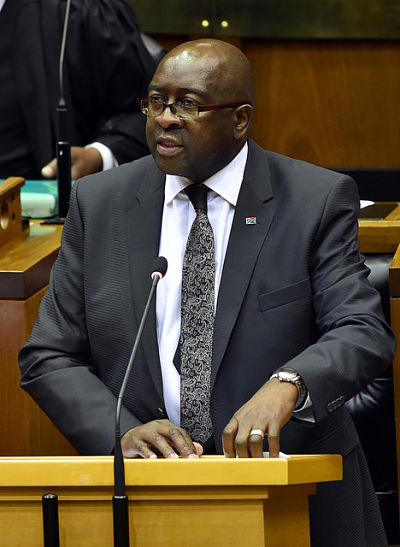
Among the revelations before the State Capture Commission of Inquiry is that current Minister of Finance, Nhlanhla Nene, met the Gupta family at their family residence on at least 11 occasions between 2009 and 2014, when he was Deputy Minister of Finance. This is a significant admission because the terms of reference of the Commission include probing “whether and to what extent and by whom attempts were made to influence executive office bearers, organs of state, and directors of State-Owned Entities”. The precise details of the meetings are as yet unknown. Also unknown at this stage is the causal link, if any, between the contents of the meetings and any subsequent policy decisions taken by Minister Nene. Media reports state that Minister Nene has, while not tendering a resignation, asked the President to relieve him of his duties.

Read More »

ARTICLE: NATIONAL HEALTH INSURANCE: RUNNING BEFORE CRAWLING – THE NEED FOR OBJECTIVE REASSESSMENT OF THE PILOT PHASE – PART II

Healthcare 2 opt

In Part I of the series on health reform and the draft National Health Insurance Bill (NHI Bill), the Centre for Constitutional Rights (CFCR) argued that considering the anticipated costs of the NHI and lack of crucial detail, South Africa needs to urgently assess alternative models to address the healthcare crisis. In Part II, the CFCR assesses the lack of information on the results of the NHI pilot phase, which is supposed to inform the further roll-out of the NHI.

Read More »

ARTICLE: THE DOOMED NATIONAL HEALTH INSURANCE BILL: THE NEED TO RESET THE PATH TO UNIVERSAL HEALTH COVERAGE – PART I

zululandobserver.co.za

In a similar vein to the land reform debate in South Africa, health reform is also filled with populist rhetoric, seemingly in the lead up to the 2019 national elections. In February 2018, President Ramaphosa singled out the urgency of National Health Insurance (NHI) in his first State of Nation address. Publication of the draft National Health Insurance Bill (NHI Bill) followed shortly, with the simultaneous release of the Medical Schemes Amendment Bill (MSA Bill).

Read More »

ARTICLE: THE NEED TO ADDRESS LIVED REALITIES OF INEQUALITY – LEGAL RECOGNITION FOR RELIGIOUS MARRIAGES

MUSLIM MARRIAGE opt

To reflect the realities of a diverse society, the Constitution broke away from the dominant colonial view of family dynamics. The Constitution provides that everyone has the right to “freedom of conscience, religion, thought, belief and opinion” and to enjoy and practice their culture and religion – on the condition that it is in line with the Constitution.

Although the institution of marriage is not recognised as a right, the Constitutional Court held in 2006 in Minister of Home Affairs and Another v Fourie and Another that marriage is a fundamental unit of our society. Further, it held in 2015, in DE v RH, that the institution of marriage has “constitutional significance”. The Constitution, in contrast to many strict secular systems, even goes as far as providing in section 15(3) that the legislature is not prevented from drafting legislation recognising marriages concluded under any religious system or tradition – on the condition that it is not at odds with other constitutional rights.

Read More »

CASE DISCUSSION: THE RIGHT TO PRIVACY IN CONTEMPORARY SOUTH AFRICA – MINISTER OF JUSTICE AND CONSTITUTIONAL DEVELOPMENT AND OTHERS V GARETH PRINCE AND OTHERS

cannabis opt

On 18 September, the Constitutional Court ruled in a landmark judgment concerning the possession, purchase, use and cultivation of cannabis for private use. The case was a confirmation of a previous order of the Western Cape High Court (High Court). The High Court held that the criminalisation of the possession, purchase, use and cultivation of cannabis under the auspices of the Drugs and Drug Trafficking Act (Drugs Act) and the Medicines and Related Substances Control Act (Medicines Act) was unconstitutional and declared the impugned provisions invalid. The High Court further suspended the order of invalidity for 24 months to allow Parliament to cure the offending legislation.

Read More »