
ARTICLE: THE REFUGEES AMENDMENT BILL – WILL IT TRULY COMBAT CORRUPTION?
 On 16 September 2016, the third draft of the highly contested Refugees Amendment Bill (the Bill) was introduced in the National Assembly. The public was invited to submit written submissions by 28 October 2016. The Bill aims to amend the Refugees Act 130 of 1998 (the Act) and the Refugees Amendment Acts of 2008 and 2011, the latter two which still need to be proclaimed. The provisions of the Bill will only come into effect after such commencement.
The Centre for Constitutional Rights (CFCR) made written submissions to Parliament as this Bill impacts a vulnerable and apparently very large group of people who are subject to potential abuse within the asylum system. A report by the UNHCR in June 2016 estimated that the number of asylum-seekers in South Africa amounted to 1 096 063 people. The organisation Africa Check investigated these figures and found that the pending cases as reported by the UNHCR are not as high but that South Africa does however have the second largest backlog of unsettled asylum cases in the world.
 A question has arisen as to whether the Public Protector may legally compel the President to establish a commission of inquiry, seeing as the establishment of commissions of inquiry is, in terms of the Constitution, the sole prerogative of the President.
 1. The Centre for Constitutional Rights (CFCR) is a unit of the FW de Klerk Foundation – a non-profit organisation dedicated to upholding the Constitution of the Republic of South Africa, 1996 (the Constitution). To this end, the CFCR seeks to promote the Constitution and the values, rights and principles enshrined in the Constitution; to monitor developments including legislation and policy that may affect the Constitution or those values, rights and principles; to inform people and organisations of their constitutional rights and to assist them in claiming their rights. The CFCR does so in the interest of everyone in South Africa.
 For the last five weeks, the country has experienced a magnitude of violent protests at tertiary institutions in the #FeesMustFall campaign, which was reignited in September 2016 after the Minister of Higher Education and Training (the Minister) announced a cap of 8% increase in student fees for 2017. Government further proposed to subsidise students from households where the income is less than R600 000 per annum through the National Student Financial Aid Scheme (NSFAS).
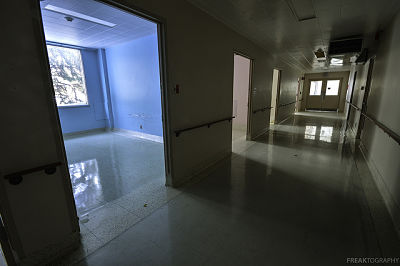 On 21 September, the death of the 37th psychiatric patient removed and transferred from Life Esidimeni Healthcare Centre was announced. The Gauteng Department of Health (the Department) transferred approximately 1 300 patients from Life Esidimeni to 122 non-governmental organisations and other homecare facilities around the province in March 2016. This initiative came after the provincial health department ended its long-term relationship with Life Esidimeni. The Department stated that it had decided to re-prioritise funds allocated to Esidimeni, citing R323 million paid to the hospital during the 2014/15 financial year. The Department had held a public-private partnership with Life Esidimeni, the institution which cared for Gauteng’s most serious mentally ill patients, often from more marginalised and underserved populations.
 In terms of the Constitution, it is the prerogative of the national executive to not only negotiate but also sign all international agreements. Such agreements are then binding on the country after they have been approved by resolution in Parliament unless the international agreement in question is of a technical or administrative nature, then such agreement binds the country without the need for a resolution from Parliament. Thereafter, the international agreement becomes law after national legislation is enacted. It is on this basis that the Implementation of the Rome Statute of the International Criminal Court (Implementation Statute) became a part of South African law in 2002.
 The National Prosecuting Authority (NPA) will tell all who care to hear, that the body is independent, impartial and that the body acts without fear or favour. It follows then, that after the Finance Minister Pravin Gordhan has been charged with fraud – albeit with debatable merits of the case – that criminal charges too, should be laid against various individuals whose business ventures appear to have transgressed numerous South African laws.
 How does a nation come to terms with its past? Is there a right way to remember the past? How can a multicultural society forge a common identity for the sake of social cohesion? These were the recurring themes during the course of a study tour to Berlin, Germany, and its surrounds. Together with a motley crew from business, government, academia and civic society, I participated in the study tour during the last week of September, generously funded by the Konrad Adenauer Foundation. Germany, with its fraught and often contested 20th century history under the National Socialists, as well as the communist dictatorship in the former German Democratic Republic (GDR), served as the perfect backdrop with which to examine the South African experience.
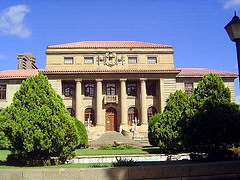 The importance of public participation in a representative democracy was highlighted in the recent Supreme Court of Appeal (SCA) judgment of Primedia Broadcasting v The Speaker (Primedia appeal) on 29 September 2016.