
ARTICLE: STATE OF THE NATION ADDRESS: BUSINESS UNEXPECTED
 The President will tomorrow, in an address to South Africans at large, speak on the nation’s current affairs. As the head of the Executive, he is expected to speak frankly on the nation’s political, as well socio-economic status quo, while giving the nation hope that despite sluggish economic growth and other ills, there are still many things for which South Africans may be glad. As has come to be custom, the opposition benches will heckle the President while he speaks. The courts have ruled decisively that Members of Parliament may not be removed from the room for expressing themselves, however displeasing such expression may be to the presiding officer – so one does not expect a repeat of last year’s violent scenes. But this year, in the run-up to the Address, there are some unexpected developments, such as the deployment of members of the South African National Defence Force (SANDF) to “maintain law and order”. Unexpected too, is the news that journalists will allegedly be placed in two “media squares”, with movement only permitted when accompanied by two police escorts.
 The Western Cape High Court has dismissed the South African Broadcasting Corporation’s (SABC) leave to appeal last year’s ruling against Hlaudi Motsoeneng in Democratic Alliance v South African Broadcasting Corporation and Others SOC Ltd; Democratic Alliance v Motsoeneng and Others. In the aforementioned case, the same Court found Motsoeneng’s appointment to Group Executive of Corporate Affairs (GECA) to be unconstitutional and thus, unlawful and invalid. The Court also held that Motsoeneng should not occupy any position at the SABC. The Board was found guilty of ignoring the findings and remedial action prescribed by the erstwhile Public Protector, in the report “When Governance and Ethics Fail”.
 On 31 January 2017, the Centre for Constitutional Rights (the CFCR) under the umbrella of the FW de Klerk Foundation (the Foundation), also added its voice to the introduction of the Prevention and Combating of Hate Crimes and Hate Speech Bill (the Bill).
 On 27 January 2017, the Centre for Constitutional Rights (CFCR) and the School of Public Leadership (SPL) at Stellenbosch University (SU), supported by the Konrad Adenauer Stiftung (KAS), hosted the first dialogue in a series of breakfast discussions for 2017. The discussions aim to create a platform for debate and dialogue about the Constitution and good public leadership.
 On 24 January 2017, the Centre for Constitutional Rights (CFCR) will address the Portfolio Committee on Home Affairs (the Committee) on its main concerns regarding the Refugees Amendment Bill. The CFCR submitted written submissions on the Bill in October 2016, which can be accessed via the CFCR’s website:
  Acting National Police Commissioner Khomotso Phahlane is the subject of an investigation by the Independent Police Investigative Directorate (IPID) over allegations of corruption stemming from the time that he was the head of forensic services. Not only is he under investigation for corruption, but he is also accused of defeating the ends of justice, after allegedly contacting witnesses who formed part of the investigation into the corruption allegations.
 THE CONSTITUTION AND GOOD PUBLIC LEADERSHIP: BREAKFAST DISCUSSION SERIES 2017
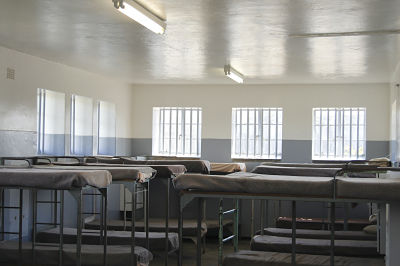 The South African Government’s failure to address the overcrowding at Pollsmoor Remand Detention Facility (Pollsmoor RDF) was addressed, on 5 December 2016, by the Western Cape High Court in the matter of Sonke Gender Justice v The Government of the Republic of South Africa and the Head of Pollsmoor Centre Remand Detention Facility.