View Archived Content

ARTICLE: INTERNATIONAL HUMAN RIGHTS DAY 2018 – #STANDUP4HUMANRIGHTS

70 Years UDHR LOGO E 01 opt

International Human Rights Day is observed every year on 10 December. This day coincides with the adoption of the Universal Declaration of Human Rights (UDHR) in 1948 by the United Nations General Assembly. This year, the UDHR celebrates 70 years of existence as a document that was born from the human rights atrocities that were committed during World War II and as a reminder that such violations should never occur again. Despite this powerful document, a testament to a recognition and undertaking by the international community of equal human rights for all, 70 years later, the world finds itself in a perpetual state of human rights violations. From conflict in Africa and the Middle East where young children are used in combat, to the advent of cybercrimes that consistently violate the privacy and safety of world’s citizens, there is nobody who is untouched by human rights infringements.

Read More »

ARTICLE: WORLD AIDS DAY – #KNOWYOURSTATUS

UNAIDS2018 opt

On 1 December 2018, the global community will celebrate World AIDS Day, dedicated to raising awareness in the fight against the AIDS epidemic. This year marks the 30th anniversary of this global awareness campaign and the theme for 2018 is “Know your status”. The 2018 campaign urges nations to remove barriers to accessing HIV testing and to find new and innovative approaches to HIV testing. This commitment falls squarely in line with South Africa’s constitutional obligation to take active steps, within its resources, to ensure that access to healthcare services is “progressively” made available to everyone.  On World AIDS Day it is appropriate to take a step back and shed some positive light on the innovative steps that have been taken to remove barriers in providing access to HIV testing. 

Read More »

ARTICLE:16 DAYS OF ACTIVISM – #HEARMETOO

16Days 2018 opt

It is that time of the year again, where a spotlight is shone on the grave epidemic that is gender-based violence and its primary targets, women and girls. The 16 Days of Activism campaign is strategically positioned to begin on 25 November, the International Day for the Elimination of Violence against Women, and end on 10 December – International Human Rights Day. This year’s theme is #HearMeToo and finds its roots in the many movements that have been birthed in recent years in response to sexual harassment. Women began speaking up about their experiences and gave other women who like them, had been victims, the courage to speak out. The numbers may have shocked some, but in reality, they are a true reflection of the society in which we live. According to the United Nations, one in three women worldwide experience gender-based violence. 

Read More »

CONCISE SUBMISSION ON THE EMPLOYMENT EQUITY AMENDMENT BILL, 2018 AND THE DRAFT EMPLOYMENT EQUITY REGULATIONS, 2018

worker

  1. The Centre for Constitutional Rights (CFCR) is a unit of the FW de Klerk Foundation – a non-profit organisation dedicated to upholding the Constitution of the Republic of South Africa, 1996 (the Constitution). To this end, the CFCR seeks to promote the Constitution and the values, rights and principles enshrined in the Constitution; to monitor developments including legislation and policy that may affect the Constitution or those values, rights and principles; to inform people and organisations of their constitutional rights and to assist them in claiming their rights. The CFCR does so in the interest of everyone in South Africa.
Read More »

ARTICLE: UNIVERSAL CHILDREN’S DAY 2018

cHILDREN RUNNING opt

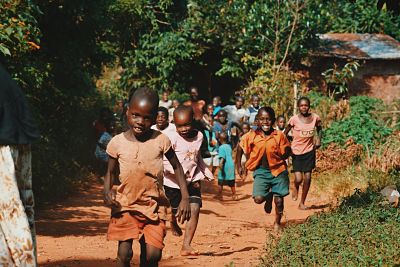
20 November is commemorated by the United Nations (UN) as Universal Children’s Day to promote international togetherness, awareness among children worldwide and to improve children’s welfare across the globe. It is also the date in 1989 when the UN General Assembly adopted the Convention on the Rights of the Child (CRC). Children face a plethora of challenges, including navigating life in conflict-ridden areas, which directly affects their access to fundamental human rights such as shelter, basic healthcare and human dignity. Because children are dependent by nature, their right to family life as articulated in many international instruments is also violated due to conflict. Aside from conflict, the global migration crisis has also led to millions of families being displaced, including children. 

Read More »

ARTICLE: NATIONAL HEALTH INSURANCE – BLINDLY CREATING BUREAUCRATICAL GOVERNANCE LOOPHOLES DESPITE GLARING WARNINGS – PART III

Doctors opt

There has been a small ray of hope amidst the catastrophic state of public healthcare in South Africa, thanks to recent reports from the Presidential Health Summit (the Summit), held on 19 and 20 October 2018. 

The Summit was convened to find collaborative solutions to the mammoth challenges facing South Africa’s health system and included various health sector stakeholders. According to the Deputy President’s closing remarks, short-term outcomes of the Summit included filling critical vacant posts in the health system; developing a sustainable financing model for the health system by National Treasury and prioritising maintenance upgrading of health infrastructure.  This initiative speaks directly to the need to promote the constitutional principle of ensuring “efficient, economic and effective use of resources”, as required in section 195(1)(b) of the Constitution.

Read More »

CASE DISCUSSION: HOLOMISA V HOLOMISA AND ANOTHER – THE IRRATIONAL LIMITATION OF SECTION 7(3) OF THE DIVORCE ACT OF 1979

marriage opt

In a constitutional democracy, it is assumed spouses have equal bargaining power on negotiating which matrimonial property regime will govern their marriage. However, the lived reality is that women in South Africa’s historical patriarchal system did not necessarily have equal bargaining power and find themselves today vulnerable during divorce proceedings. To address this reality, the Divorce Act of 1979 (the Act) provided for judicial intervention in terms of section 7(3). Section 7(3) of the Act makes it possible for a spouse married out of community of property, to apply for a redistribution of assets in divorce proceedings. The Court must determine what would be just and equitable and this provision has been hailed as an important safeguard against the severe consequences of a complete separation of property. This legislative safeguard however was (despite good intentions) not available to many women until the recent Constitutional Court judgment of Holomisa v Holomisa and Another (the Holomisa matter).

Read More »

STATEMENT: MALUSI GIGABA; YOUR MOVE NEXT, MR PRESIDENT

parliamentgovza

The Centre for Constitutional Rights (CFCR) calls for the President to remove Minister Malusi Gigaba from his position as Minister of Home Affairs. His stay in the position has become untenable in light of many factors, including: an adverse High Court judgment making material findings about Minister Gigaba’s conduct; a report by the Public Protector agreeing with the judgment, with the added finding that Minister Gigaba violated the Constitution, the Executive Ethics Code, and the Code of Ethical Conduct and Disclosure of Members’ Interests for Assembly and Permanent Council Members. To boot, the same report tasks the President with ensuring that appropriate disciplinary action is taken against Minister Gigaba. Most recently, the Constitutional Court refused the Minister leave to appeal the High Court decision, putting paid to any possibility of taking the Public Protector’s report on review before a court. In addition, Parliament’s Portfolio Committee on Home Affairs has asked the Minister to appear, once again, before the Committee to answer questions about his conduct in the Fireblade Aviation matter, from which the court challenge arose.

Read More »

CASE DISCUSSION: PROPERTY RIGHTS OF WOMEN – RAHUBE V RAHUBE AND OTHERS

AFRICAN WOMAN opt

On 30 October 2018 the Constitutional Court handed down judgment in Rahube v Rahube – an application for the confirmation of an order of constitutional invalidity made by the High Court in Pretoria. The order was made in respect of section 2(1) of the Upgrading of Land Tenure Rights Act 112 of 1991 (ULTRA) and concerned the automatic conversion of land tenure rights into ownership rights, without due process and in a manner that was discriminatory, specifically to African women. The judgment is delivered at a time that South Africa grapples with the “land question” and arguably demonstrates that despite the property clause making provisions for access to land and tenure security, it is often the legislation – whether poorly implemented or drafted – which fails to deliver on the underlying constitutional premise. 

Read More »