
ARTICLE: THE CONSTITUTIONAL COURT IMPLIES THAT CULTURAL TRADITION FOUNDED IN HISTORY FINDS NO RECOGNITION IN THE CONSTITUTION
 The renaming of streets and places must be handled with the greatest sensitivity. All South Africans should feel that they and their cultures are fully represented in street and place names. The Constitution declares that South Africa belongs to us all, united in our diversity.
The recent Constitutional Court judgment in City of Tshwane Metropolitan Municipality v AfriForum regarding the renaming of streets in Pretoria shows how important it is for all sides to deal with contentious issues arising from our deeply divided past with the greatest sensitivity. The judgment has implications that far transcend the question of geographic place names.
STATEMENT: THE FW DE KLERK FOUNDATION AND ITS CENTRE FOR CONSTITUTIONAL RIGHTS CALL FOR PEACEFUL LOCAL GOVERNMENT ELECTIONS
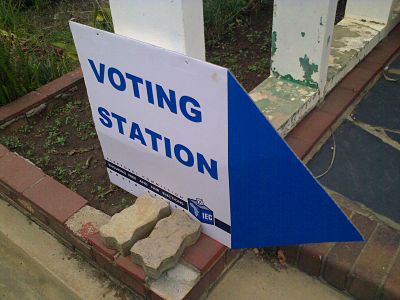 On Wednesday, 3 August, South Africans will cast their votes in the nation’s fourth democratic local government elections. Political rights are enshrined in the Bill of Rights, while the nation’s founding values include “universal adult suffrage, a national common voter’s roll, regular elections and a multi-party system of democratic government to ensure accountability, responsiveness and openness”.
The reported incidents of election-related violence and destruction of property cast doubt as to the degree with which the local government elections can be said to be free and fair. Already, the South African Human Rights Commission (SAHRC) has reported that in the run-up to the August 3 elections, there have been about 50 politically-related killings, predominantly in KwaZulu-Natal and Mpumalanga. The Institute for Security Studies (ISS), in a similar vein, notes that political killings are as a result of local conflicts and rivalries.
STATEMENT: MANDELA DAY 2016
 Mandela Day provides an opportunity to acknowledge and celebrate the life and service of former President Nelson Mandela. In keeping with the call to ‘take action’ and help change lives for the better, staff of the FW de Klerk Foundation and its Centre for Constitutional Rights (CFCR) will donate their time to two very worthy organisations. Staff will participate in hands-on projects at Autism Western Cape, and Iris House Children’s Hospice – organisations that make a meaningful, daily difference in the lives of children with disabilities.
ARTICLE: EWC OR ECONOMIC RECOVERY?

The Ad Hoc Committee to Initiate and Introduce Legislation Amending Section 25 of the Constitution convened a “constitutional dialogue” in Cape Town on 6 November 2019 to which it invited members of the public and civil society organisations – including the FW de Klerk Foundation’s Centre for Constitutional Rights (CFCR).
The Ad Hoc Committee was appointed by Parliament following a resolution by the National Assembly on 6 December 2018, “to initiate and introduce legislation amending section 25 of the Constitution”. The Ad Hoc Committee was tasked with making “explicit that which is implicit in the Constitution” regarding expropriation without compensation (EWC) and was required to finalise its work by 31 March 2020.
INVITATION: ROUNDTABLE SERIES 2019 – NUMBER 4
Join us for the fourth discussion for 2019 hosted by the Centre for Unity in Diversity (CUD) and supported by the Konrad Adenauer Foundation (KAS).
ARTICLE: THE CONSTITUTIONAL COURT AND GELYKE KANSE: WHAT HAPPENED?

On October 10, 2019, the Constitutional Court ruled in the case in which Gelyke Kanse (GK) asked that the 2016 Language Policy of the University of Stellenbosch (SU) be set aside because it is unconstitutional. GK’s application was essentially an appeal against the Western Cape High Court’s earlier ruling, and a request to bypass the Supreme Court of Appeal (SCA) and approach the Constitutional Court directly. This was allowed.
The overall verdict – with which all 10 judges agreed – was written by Judge Edwin Cameron (who was recently appointed new Chancellor of the SU). There are also two additional rulings, one by Chief Justice Mogoeng Mogoeng and the other by Judge Johan Froneman, which provide additional perspectives.