
ASSOCIATE ARTICLE: THE USE OF STATE ORGANS TO SETTLE PERSONAL DISPUTES
 In a media briefing following the Constitutional Court’s historic judgment, in which it ruled that the Public Protector’s report on the upgrades at President Zuma’s private Nkandla home was binding on him, and as a result he was obliged to pay money back in relation to non-security upgrades, Thuli Madonsela commented that instead of celebrating, she would only be happy if the Hawks and the National Prosecuting Authority (NPA) stopped investigating her. Although this has been denied by the two state agencies concerned, it is submitted that she would not have made such a statement without there being some tangible substance to it.
 A constitutional crisis occurs when the Constitution is unable to resolve issues that arise within the state or when the actions of state actors – the Executive, the Legislature or the Judiciary – are irreconcilable with the precepts of the Constitution.
 The Centre for Constitutional Rights (CFCR) welcomes the unanimous Constitutional Court decision in the combined cases of Economic Freedom Fighters (EFF) v The Speaker of the National Assembly and Others and Democratic Alliance (DA) v the Speaker of the National Assembly and Others matter. The decision is an emphatic affirmation not only of the Rule of Law, but also the supremacy of the Constitution. The unanimous decision further highlights the importance of the separation of powers in a constitutional democracy, as well as the necessity of checks and balances to protect against the abuse of power. Importantly, the decision has brought clarity as to the binding nature of the Public Protector’s remedial action recommended by her Office.
 Monday, 21 March, marks South Africa’s celebration of Human Rights Day. The day is set aside to remind the nation of its transition from apartheid to a constitutional democracy founded on values of human dignity, the achievement of equality, and the advancement of human rights and freedoms, as well as non-racialism and non-sexism. The supremacy of the Constitution and the Rule of Law are also guaranteed. A similar guarantee exists for universal adult suffrage, a national common voter’s roll, regular elections and a multi-party system of democratic government, to ensure accountability, responsiveness and openness.
 The Constitution at section 7(2) provides that the state must respect, protect, promote and fulfil the rights in the Bill of Rights. As a constitutional democracy, South Africa’s values are underpinned by considerations of human dignity, the achievement of equality, and the advancement of human rights and freedoms; non-racialism and non-sexism, supremacy of the Constitution and the Rule of Law; and a multi-party democracy to ensure a government that is accountable, responsive and transparent. Further, the Bill of Rights binds the Legislative, the Executive, the Judiciary and all organs of state. The Bill of Rights is not limited to protecting individuals against the state, but also provides in some circumstances direct protection of individuals against rights abuses by other individuals.
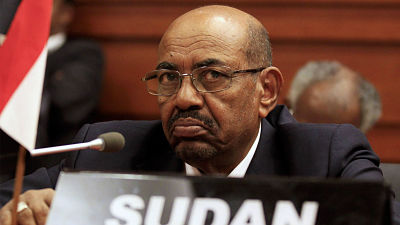 The Centre for Constitutional Rights (CFCR) welcomes the Supreme Court of Appeal’s (SCA) dismissal of the government’s appeal in the al-Bashir matter as an important affirmation of the Rule of Law. Section 2 of the Constitution establishes the Supremacy of the Constitution and provides that any law or conduct inconsistent with the Constitution is invalid and further that obligations imposed by the Constitution must be fulfilled. There is no derogation from this obligation.
 Corruption has many guises. It includes bribing of public officials, public officials trading in influence or abusing their functions of power for personal gain, illicit enrichment and embezzlement, misappropriation or diversion of property by a public official. Of course, corruption is not limited to public administration. Nevertheless, corruption in public administration is particularly damaging to democratic institutions, the economy and the Rule of Law.
 A recent ruling of the Constitutional Court (the Court) in the Oppelt v Head: Health, Department of Health, Provincial Administration: Western Cape saw a decision of the Supreme Court of Appeal (SCA) set aside. The Court found that the Department of Health (the Department) was indeed liable to pay damages to Mr Oppelt (the Applicant) after a sporting accident which resulted in the Applicant being left quadriplegic.
 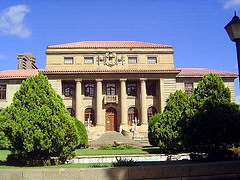 The recent ruling of the Supreme Court of Appeal (SCA) in the South African Broadcasting Corporation (SABC) and Others v The Democratic Alliance and Others, which upheld the decision of the Western Cape High Court and dismissed the SABC’s appeal on behalf of its Chief Operating Officer (COO) Hlaudi Motsoeneng and the Minister of Communications, is a welcome one. This is because it serves to cement the authority of the office of the Public Protector, as well as those of other Chapter 9 institutions.