
STATEMENT: STOP PAYING BRIBES
 Corruption has many guises. It includes bribing of public officials, public officials trading in influence or abusing their functions of power for personal gain, illicit enrichment and embezzlement, misappropriation or diversion of property by a public official. Of course, corruption is not limited to public administration. Nevertheless, corruption in public administration is particularly damaging to democratic institutions, the economy and the Rule of Law.
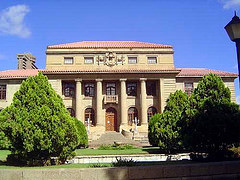 The recent ruling of the Supreme Court of Appeal (SCA) in the South African Broadcasting Corporation (SABC) and Others v The Democratic Alliance and Others, which upheld the decision of the Western Cape High Court and dismissed the SABC’s appeal on behalf of its Chief Operating Officer (COO) Hlaudi Motsoeneng and the Minister of Communications, is a welcome one. This is because it serves to cement the authority of the office of the Public Protector, as well as those of other Chapter 9 institutions.
 The Centre for Constitutional Rights (the CFCR) welcomes a unanimous judgment by the Constitutional Court in which the Court set aside the results of a number of by-elections in Tlokwe Local Municipality and ordered fresh by-elections – because the elections were not free and fair.
 On 22 September 2015 the Centre for Constitutional Rights (CFCR) and the School of Public Leadership (SPL) at Stellenbosch University (SU), supported by the Konrad Adenauer Stiftung (KAS), hosted the fourth in a series of breakfast discussions for 2015. The aim of these discussions is to create a platform for conversation and debate about the Constitution and good public leadership.
 The Centre for Constitutional Rights (the CFCR) welcomes Chief Justice Mogoeng Mogoeng’s intervention in relation to the recent spate of
 Ladies and gentlemen,
 “The basis of a democratic state is liberty” – Aristotle
 The Public Protector’s report into the non-security upgrades at the President’s homestead at Nkandla found that the President had unduly benefited from improvements and additions at his private residence and that he had tacitly accepted those improvements.