Support the work of the FW de Klerk Foundation
For more information regarding donations contact info@fwdeklerk.org or scan the QR code below
EKURHULENI MUST BE A TURNING POINT IN THE FIGHT AGAINST FEMICIDE
Issued by Ismail Joosub and Alia Khan Koumantarakis on behalf of the FW de Klerk Foundation on 15/09/2026
The FW de Klerk Foundation is deeply distressed by the discovery of women’s bodies across Ekurhuleni and extends its condolences to their families. Police are investigating possible links between the cases. These deaths demand attention within South Africa’s crisis of gender-based violence and femicide (“GBVF”), without prejudging individual findings.
Sections 9, 10, 11 and 12 of the Constitution protect equality, dignity, life and freedom from violence, including violence from private sources. Section 7(2) requires the State to protect these rights. In Carmichele, the Constitutional Court affirmed the State’s positive obligations to protect women against violence.
Ismail Joosub, Manager of Constitutional Advancement at the Foundation, says: “Equal citizenship loses its meaning when fear determines which freedoms women can exercise. The constitutional duty to protect women must shape how public institutions work, how resources are allocated and how failures are answered for.”
The Foundation welcomes the deployment of specialist investigators and strengthened policing. Effective investigations must be accompanied by prevention and support for affected families.
South Africa classified GBVF as a national disaster in November 2025. The National Council on Gender-Based Violence and Femicide, whose board took office in August 2026, has a statutory mandate to coordinate prevention and response across government and society. That mandate must translate into protection where women live.
Alia Khan Koumantaris, an intern at the Foundation, says: “Every woman must be free to imagine a future beyond the precautions she takes to survive the present. When violence narrows her choices, we lose the contribution she should have been free to make.”
The Foundation calls on the Council to strengthen cooperation between police, government and women’s organisations. This must support safer public spaces, effective investigations and accessible trauma services, with clear responsibilities, adequate funding and public accountability. Parliament must scrutinise implementation and demand answers where commitments remain unfulfilled.
South Africa’s response to femicide must be judged by the violence it prevents and the justice it secures. Women’s safety must become a sustained national priority in practice.
END.
For more on this topic read: GBV Declared a National Disaster: What Happens Now? – https://fwdeklerk.org/gbv-declared-a-national-disaster-what-happens-now/

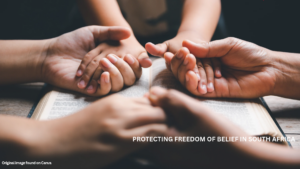
PROTECTING FREEDOM OF BELIEF IN SOUTH AFRICA
South Africa’s Constitution strongly protects freedom of conscience, religion, thought, belief and opinion. Yet recent debates surrounding the CRL Rights Commission’s proposed self-regulatory framework for the religious sector have raised important questions about the relationship between accountability, religious autonomy and State involvement. This article examines the constitutional protections afforded to religious communities, the controversy surrounding the Section 22 process, and why safeguarding freedom of belief remains essential to South Africa’s democracy, diversity and human rights culture.

CORRUPTION WATCH V SPEAKER OF THE NATIONAL ASSEMBLY AND OTHERS
The Constitutional Court’s judgment in Corruption Watch v Speaker of the National Assembly and Others confirms that meaningful public participation is a constitutional requirement in the appointment of Chapter Nine institution commissioners. The Court found that Parliament’s failure to provide adequate information, sufficient time and accessible avenues for public comment rendered the Commission for Gender Equality appointment process unconstitutional.
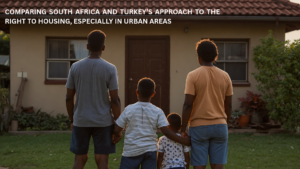
COMPARING SOUTH AFRICA AND TURKEY’S APPROACH TO THE RIGHT TO HOUSING, ESPECIALLY IN URBAN AREAS
As cities expand and housing demand rises, governments face growing pressure to provide safe, affordable and adequate housing. This article compares South Africa’s rights-based approach to housing, grounded in constitutional protections and human dignity, with Turkey’s development-driven model focused on large-scale housing delivery and urban renewal. By examining both systems, it highlights key lessons for addressing urban housing challenges while balancing efficient delivery with the protection of fundamental rights.