View Archived Content

STATEMENT: DEFENDING THE FOURTH ESTATE

PRESS FREEDOM opt

The Centre for Constitutional Rights (CFCR) calls for the protection of journalists and other personnel in the media, in view of the ever-increasing documented attacks on journalists, including Ferial Haffajee and Peter Bruce. Suna Venter’s death from natural causes, after sustained harassment, kidnapping and assaults is a grim reminder of the increasing vulnerability of practicing journalists in South Africa today.

“Sunlight is said to be the best of disinfectants”, wrote Louis Brandeis in 1914 – but that statement holds true for all ages. The Constitution makes accountability, openness and transparency the nation’s default values and the media in large part ensures that these default values remain as such. Freedom of expression too, is guaranteed in the Constitution, and it makes express allowance for freedom of the press and other media.  As such, the unwarranted and unlawful attacks on journalists are a direct assault on the Constitution.

Read More »

ARTICLE: THROWING THE RULE BOOK AT THE GUPTA SPYING SAGA

PRIVACY opt

The recent revelations in the leaked #GuptaEmails suggest that the prominent Gupta family spied on various individuals including former Finance Minister, Trevor Manuel; his wife and Absa Bank Chief Executive Officer, Maria Ramos; EFF leader, Julius Malema and FirstRand bosses, Laurie Dippenaar and GT Ferreira, and had access to their travelling movements.  While the motives for the spying on Manuel and Malema remain unclear, reports suggest that the spying on the rest is due to the Gupta interests in purchasing a South African bank. Should this be the case, then a number of laws appear to have been transgressed.

The extent of the surveillance detailed in news reports suggests that the Gupta business network operated in the same vein as a spy agency. The National Strategic Intelligence Act (Intelligence Act), established in terms of the Constitution, defines the functions of the members of the national intelligence structures. It makes it apparent that domestic intelligence should only be gathered in order to identify potential threats to the security of the Republic or its people.

Read More »

STATEMENT: ACCOUNTABILITY, RESPONSIVENESS AND OPENNESS AS THE ORDER OF THE DAY – THE SECRET BALLOT DECISION

constitutional court foter

The Centre for Constitutional Rights (CFCR) welcomes the decision handed down yesterday by the Constitutional Court (the Court) in UDM v Speaker of the National Assembly and Others, in which the Court made apparent that the Rules of Parliament, in line with the Constitution, allow for a secret ballot in motions of no confidence in the President.

Importantly, the Court made apparent the meaning of South Africa as a constitutional democracy – that “…governance structures [are] created to breathe life into our collective aspirations.” Pertinently the decision underscores that members of the National Assembly, as well as the President, swear an oath of office, which oath is a grave commitment to upholding the Constitution on behalf of the people of South Africa. Public office comes with responsibility – and should not be used for the advancement of personal or sectarian interests. Despite the enormous power which public office wields it is always subject to checks and balances. Accordingly, a motion of no confidence in the President is one such means of holding accountable the head of the nation’s Executive branch of government.

Read More »

CONCISE SUBMISSION ON THE DRAFT REGULATIONS IN TERMS OF THE PROPERTY VALUATION ACT 17 OF 2014

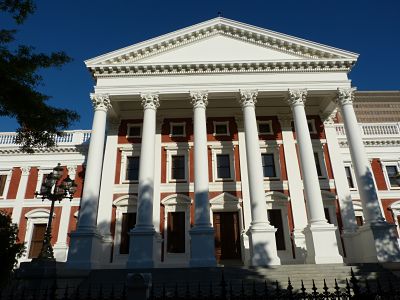
parliament exterior opt

  1. The Centre for Constitutional Rights (CFCR) is a unit of the FW de Klerk Foundation – a non-profit organisation dedicated to upholding the Constitution of the Republic of South Africa, 1996 (the Constitution). To this end, the CFCR seeks to promote the Constitution and the values, rights and principles enshrined in the Constitution; to monitor developments including legislation and policy that may affect the Constitution or those values, rights and principles; to inform people and organisations of their constitutional rights and to assist them in claiming their rights. The CFCR does so in the interest of everyone in South Africa.
Read More »

ARTICLE: SOUTH AFRICA’S ASYLUM SYSTEM – A BEACON OF HOPE?

refugee day

WORLD REFUGEE DAY #WithRefugees

20 June 2017 marks the United Nations (UN) World Refugee Day. This day honours the courage of millions of people worldwide, who flee their countries due to conflict, violence and the threat of persecution. The day was earmarked by the UN in terms of a 2001 resolution, which marked the 50-year anniversary of the adoption of the Convention Relating to the Status of Refugees (the 1951 Convention). The 1951 Convention sets out the fundamental concepts for international refugee protection, and signatories – of which South Africa is one – are obliged to ensure they adhere thereto.

Read More »

ARTICLE: YOUTH DAY 2017 – YOUNG LEADERS FOR FRESH SOLUTIONS

young leaders

Earlier this year, the youngest parliamentarian in South African history made her debut in a debate about government’s failure to improve the lives of young South Africans in terms of employment, education and training. At 24, Hlomela Bucwa is an example of the kind of young person needed in leadership positions – a young person whose presence will assist in effecting change for other young South Africans.

South Africa has yet to mature as a constitutional democracy. Nonetheless, its progressive Constitution is hailed globally as a blueprint with which to effect social justice, particularly for vulnerable groups, including its young people. Yet, when one considers the average age of Parliamentarians, the ratio of young people compared to those above the age of 50 is startling. In 2016, almost 48% of all voters were below the age of 40. This constituency translates to over 12.7 million young people able to elect leaders. It then seems odd that these numbers are not reflected in the composition of Parliament.

Read More »

ARTICLE: YOUTH DAY 2017 – YOUNG LEADERS FOR FRESH SOLUTIONS

young leaders

Earlier this year, the youngest parliamentarian in South African history made her debut in a debate about government’s failure to improve the lives of young South Africans in terms of employment, education and training. At 24, Hlomela Bucwa is an example of the kind of young person needed in leadership positions – a young person whose presence will assist in effecting change for other young South Africans.

South Africa has yet to mature as a constitutional democracy. Nonetheless, its progressive Constitution is hailed globally as a blueprint with which to effect social justice, particularly for vulnerable groups, including its young people. Yet, when one considers the average age of Parliamentarians, the ratio of young people compared to those above the age of 50 is startling. In 2016, almost 48% of all voters were below the age of 40. This constituency translates to over 12.7 million young people able to elect leaders. It then seems odd that these numbers are not reflected in the composition of Parliament.

Read More »

REFUGEES AMENDMENT BILL [B12B-2016] – STILL LACKING

outside parliament sabc

On 29 May 2017, the National Council of Provinces’ (NCOP) Select Committee on Social Services invited the public to submit written submissions on the further amended Refugees Amendment Bill [B12B-2016]. The Refugees Amendment Bill (the Bill) was introduced in the National Assembly (NA) in September 2016 and aims to amend the Refugees Act of 1998.

In essence, the Bill seeks to address systemic corruption, which has besieged the asylum system for years. Furthermore, it provides further disqualification and cessation provisions regarding refugee status, and re-establishes the Standing Committee.

The Centre for Constitutional Rights (CFCR) delivered both written and oral submissions on the Bill to the Portfolio Committee on Home Affairs. However, despite these concerns, very little has been amended and the further amended Bill was passed by the NA on 15 March 2017 and sent to the NCOP for concurrence.

Read More »

CONCISE SUBMISSION ON THE REFUGEES AMENDMENT BILL [B12B -2016]

parliament sabc1. The Centre for Constitutional Rights (CFCR) is a unit of the FW de Klerk Foundation – a non-profit organisation dedicated to upholding the Constitution of the Republic of South Africa, 1996 (the Constitution). To this end, the CFCR seeks to promote the Constitution and the values, rights and principles enshrined in the Constitution; to monitor developments including legislation and policy that may affect the Constitution or those values, rights and principles; to inform people and organisations of their constitutional rights and to assist them in claiming their rights. The CFCR does so in the interest of everyone in South Africa.

Read More »