
STATEMENT: MANDELA DAY 2016
 Mandela Day provides an opportunity to acknowledge and celebrate the life and service of former President Nelson Mandela. In keeping with the call to ‘take action’ and help change lives for the better, staff of the FW de Klerk Foundation and its Centre for Constitutional Rights (CFCR) will donate their time to two very worthy organisations. Staff will participate in hands-on projects at Autism Western Cape, and Iris House Children’s Hospice – organisations that make a meaningful, daily difference in the lives of children with disabilities.
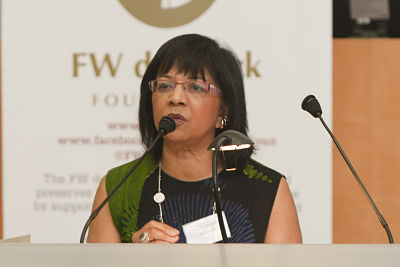 The FW de Klerk Foundation is pleased to announce the appointment of Ms Rhoda Kadalie as Deputy Chairperson of its Board of Trustees. Ms Kadalie, who joined the Board in October 2014, was unanimously elected as the Board’s Deputy Chairperson at a Board meeting held on 11 July 2016. With her extensive experience as an academic, as well as her ongoing work related to the advancement of human rights and the achievement of equality, the Board believes Ms Kadalie will add great value to the work of the Foundation.
 The medical profession is amongst the most altruistic of career paths. There is a commonplace understanding that becoming a doctor involves dedicating one’s life to the passion for saving the lives of others. The true extent of the dedication required is however a lesser known reality. Public health care practitioners face rigorous working hours rendered unlawfully exploitive in most other sectors. Young medical graduates bear the bulk of this burden, obliged to deal with these despotic working conditions in their two-year internship and further year of mandatory community service in order to complete their qualification.
 The University of Pretoria’s (UP) new language policy does not pass constitutional muster and leaves the university open to legal challenges.
 There should be no doubt about origins, intentions and consequences of the Expropriation Bill that President Zuma is about to sign into law.
 Much has recently been made of reports that Egypt has overtaken South Africa as Africa’s second largest economy and that we have now slipped to third place – with Nigeria in first place. All this has added to South Africa’s sense of national decline – after having prided ourselves for so long as being in an unassailable position as the continent’s largest economy. Commentators must now console South Africans with the reassurance that we are still the most “highly industrialised” economy in Africa.
 The hapless Judge Mabel Jansen’s recently exposed comments on social media that black South Africans have a culture of rape were crass and offensive. Jansen commented inter alia that she had “yet to meet a black girl who was not raped by the age of 12” and that in black culture “a woman is there to pleasure them. Period. It is seen as an absolute right and a woman’s consent is not required.”