STATEMENT: ZOHRA DAWOOD
Zohra Dawood was appointed as Director of the FW de Klerk Foundation’s Centre for Unity in Diversity as of 17 October 2016.

Zohra Dawood was appointed as Director of the FW de Klerk Foundation’s Centre for Unity in Diversity as of 17 October 2016.
 In the 10th Annual Helen Joseph Lecture last month, Prof Njabulo Ndebele, the Chancellor of the University of Johannesburg, mused about the burning earlier this year by UCT Rhodes-Must-Fall activists of portraits and commemorative objects symbolising the university’s “colonial” past. One of the objects was a plaque honouring Jan Christian Smuts. At first, Ndebele was shocked by this “burning of memory”.
However, after he had ‘mediated’ his thoughts, he saw the incident in a different light. It represented instead a clash between two historic periods – on the one hand “the legacy of the history of conquest” represented by Smuts – and on the other “the nascent moments” of the history that had begun in 1994.
 Zohra Dawood was appointed as Director of the FW de Klerk Foundation’s Centre for Unity in Diversity as of 17 October 2016.
Ms Dawood has degrees in law and a Master’s degree in economic history. She worked for a decade as chief researcher for a land rights’ organisation. After 1994, she worked with the Department of Land Affairs and Agriculture, where she was involved in policy formulation and implementation, including negotiations and settlement of land claims. Ms Dawood has been an adviser to cabinet members and was an adviser to the Presidency of Nelson Mandela. She also worked for the Department of Defence in drafting its legislation and policies on land and environment. In 1999, she joined the Soros Network’s Open Society Foundations (OSF) and was appointed Executive Director. In addition to her responsibilities for South Africa and African programmes for the Open Society Foundations, she was appointed to lead OSF’s efforts in Indonesia as Regional Director, where she headed up an OSF entity that seeks to institutionalise democracy and an open society in the largest Muslim country in the world.
 The entire country has been watching the drama of student protests over the past few months. Such widespread scenes of protest have not been seen in South Africa since the 1976 Soweto uprising. Historically white universities and their management are particularly unfamiliar with the phenomenon of ongoing student unrest and violence. The damage to property is already estimated at almost R1000m.
What are the causes of these phenomena? And what drives the new youth movement?
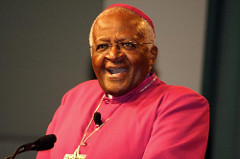 Former President FW de Klerk, the Chairman, Executive Director and staff of the FW de Klerk Foundation and its Centre for Constitutional Rights (CFCR) would like to extend their heartfelt congratulations and best wishes to Archbishop Desmond Tutu as he celebrates his 85th birthday on 7 October 2016.
We would like to wish the Archbishop the best of health in the year ahead, and acknowledge his valuable role as a peacemaker, as well as his contribution towards goodwill between all South Africans, and towards South Africa’s constitutional democracy.
Former President FW de Klerk, the Chairman, Executive Director and staff of the FW de Klerk Foundation and its Centre for Constitutional Rights (CFCR) would like to extend their heartfelt congratulations and best wishes to Archbishop Desmond Tutu as he celebrates his 85th birthday on 7 October 2016.
We would like to wish the Archbishop the best of health in the year ahead, and acknowledge his valuable role as a peacemaker, as well as his contribution towards goodwill between all South Africans, and towards South Africa’s constitutional democracy.
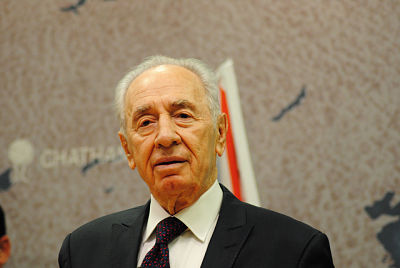 It is with great sorrow that I have learned of the death of former President Shimon Peres. Together with Yitzhak Rabin, he was one of the great peacemakers of our time. He worked tirelessly to promote harmonious relations between Israelis and Palestinians and continued throughout his life and also in his old age to inspire new generations with his vision of reconciliation, justice and peaceful coexistence. He understood that the best guarantee for the long-term security of Israel was the promotion of justice and equity for all.
FW de Klerk
 What is wonderful about Heritage Day (as one of the “new” holidays in the not so new South Africa) is that we can look back and celebrate what we have achieved over the past 22 years. For many it will go back further than 22 years – to our cultural and traditional past – that is also part of our heritage, individually and collectively. “Heritage” means different things to different people.
Some will say that in 2016 there is nothing to celebrate – among them are angry students, persistent grumblers and disillusioned poor people. They will point out our problems at the political level, government level and Zuma level; the student riots and arson; the Springboks, Bafana Bafana and the Proteas’ poor or mediocre performances; the weak economy; unemployment, poverty and inequality; and the drought and high food prices.
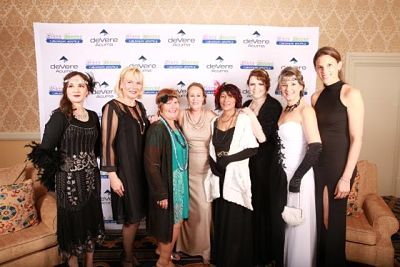 Thank you once again for inviting Elita and me to your annual hospice ball. I am sorry that we will not be able to join you this evening. However, I know that the FW de Klerk Foundation will be well-represented by several members of our team, including Ms Phephelaphi Dube, Director of our Centre for Constitutional Rights.
The annual ball is, indeed, an auspicious occasion. It will provide Iris House with an excellent opportunity to celebrate the impressive achievements of the past year – and to share your plans for the future. Elita and I would like to congratulate you on your wonderful work and would like to wish you every success in the year that lies ahead.