ARTICLE: SIXTEEN DAYS OF ACTIVISM BUT THE QUEST FOR EQUALITY AND FREEDOM CONTINUE
Between 25 November and 10 December each year, there is a global pause and considered reflection on the grave and disabling matter of gender-based violence.

Between 25 November and 10 December each year, there is a global pause and considered reflection on the grave and disabling matter of gender-based violence.
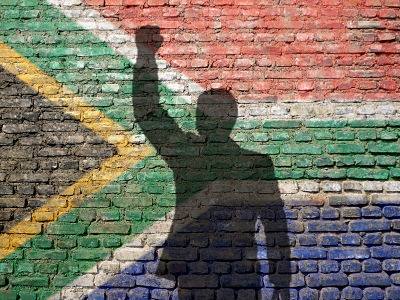
It is today four years since South Africa mourned the passing of Nelson Rolihlahla Mandela, the first President of the democratic and non-racial South Africa. And even though this is a short time in the life of a country, it seems much longer. This feeling originates from the fact that in the last four years, the country has moved almost a lifetime away from Madiba’s South Africa. During, and for some time after his presidency, South Africa was the country of hope, of reconciliation, of an active reconstruction and development programme, and of a public service with a motto such as batho pele, the people first.
Even within his beloved ANC, countless leaders have asked the question of what Madiba would have thought of the South Africa of 2017. A South Africa where hope has all but left even the most patriotic of South Africans, where reconciliation has been replaced with racialisation and intolerance, where not even the most basic of government programmes are implemented and service delivery has grinded to a halt, where the motto of the public service is, with only a few exceptions, ke pele, me first. Those same leaders answered their own question: He would have been pained, sad and furious. Lack of leadership, corruption and state capture are far from the ideal society Madiba had envisaged for the nation.

In an affidavit that came to light last week, the evidence leader of the parliamentary Eskom inquiry, Advocate Ntuthuzelo Vanara, stated that the Minister of State Security, Bongani Bongo, offered him a bribe to derail the inquiry. It was specifically stated that Bongo told Vanara that he offered him the “blank cheque” at the request of the interim chairman of the Eskom board, Zethembe Khoza. Khoza has since denied that he had anything to do with the bribe or that he even knows Bongo.
All parties taking part in the Eskom inquiry were outraged by this, and the Speaker even reported this on Monday to President Zuma, as Minister Bongo is a member of his cabinet. The Presidency released a statement on Tuesday stating that the president is “attending to the matter”.
The last few weeks and months have witnessed an unrelenting news cycle that has kept most South Africans on edge, anticipating yet another leak, another book containing explosive information, and more indictments against people in high places.

The Life Esidimeni tragedy, in which 143 psychiatric patients lost their lives, often in painful circumstances, subject to inhumane conditions, is replaying before our very eyes. This, as part of the arbitration hearing proceedings are televised on news channels daily. While watching the painful interrogation of former Director of Mental Health in Gauteng, Makgabo Manamela by former Constitutional Court judge Dikgang Moseneke, and hearing her often repeated remark “it was not my fault”, one cannot help but think that we have entered a political age of no consequences.
In his testimony to a parliamentary inquiry on Eskom, the former Chairman of the Board, Zola Tsotsi, made statements under oath that seriously implicated the relevant Minister, Lynne Brown, as being part of the state capture process, resulting in losses or misspent funding of millions of Rands. Minister Brown’s now notorious remark in response to this, that “one of us is lying” falls into the same category of no consequences. And Bathabile Dlamini’s arrogant and cavalier attitude about the Post Office contract with SASSA brings the same to mind: she simply does not take responsibility for her mandated task to ensure that 17 million poor South Africans get their social grants in time.
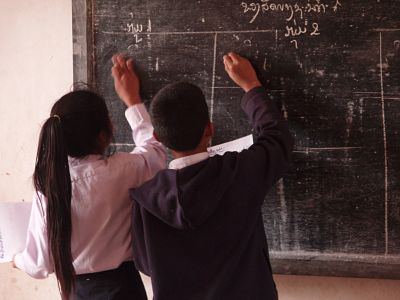
In his reply to the avalanche of criticism on the proposed amendments to the Schools Act, Mr Panyaza Lesufi, MEC for Education in Gauteng, recently said that “economically and educationally the country cannot afford single-medium schools (read: Afrikaans-language schools) when the demand for education is so great”.
Before the merit of this statement is examined, it must first be determined what the facts are. There are more than 25 000 schools in the country, of which 15 000 are English single-medium schools, 1 200 are Afrikaans single-medium, with about 1 300 additional schools using both Afrikaans and English. This equates to approximately 10% of schools using Afrikaans as language of instruction. But only 5% of all schools in the country are Afrikaans single-medium. In Gauteng, Lesufi’s province, of 2 080 schools, only 124 are Afrikaans single-medium schools – 5.9% of all schools. There is an estimated shortage of 159 schools in Gauteng. The reason for this is not primarily a lack of capital, but rather poor planning and the consequent failure to build more schools.
The ongoing SASSA debacle is setting off unprecedented concerns, including but not limited to ineffectual leadership by the Minister of Social Development, allegations and counter-allegations between SASSA and SAPO as potential service provider, and crucially that of dragging the justice system into administering a failing political process.

Undermining of the budget process and National Treasury threatens the stability of public finances and critical areas of government spending
The resignation of the Deputy Director-General of the Budget Office at National Treasury, Michael Sachs, is a further signal that the system of open, consultative and responsible decision-making – as required by our constitution – is being undermined. The deliberate weakening of state institutions and democratic processes, which we are in no doubt has extended to National Treasury, deepens concerns about policy uncertainty and fiscal management that is threatening South Africa’s existing social spending, let alone its expansion.
The Ad Hoc Committee on the Funding of Political Parties recently held public hearings on the Draft Political Party Funding Bill of 2017 (Draft Bill). The Draft Bill seeks to regulate the public and private funding of political parties. The underlying premise of the Draft Bill is that the contestation of electoral politics should be fought on an equal and fair basis, with the citizen as core consideration.
The reality however, is not the case as the increasing influence of money in politics appears to dominate electoral discourse, as opposed to an interrogation of positions, policies and principles.
South Africa is no stranger to the transactional nature of politics and in recent times #GuptaLeaks has exposed the invidious underbelly of politics in the country. This series of leaks has hastened the calls for greater commitment to transparency and accountability and for disclosure to become norm in political life and practice.