View Archived Content

THROUGH THE LOOKING GLASS: MATRIC RESULTS 2017

students opt


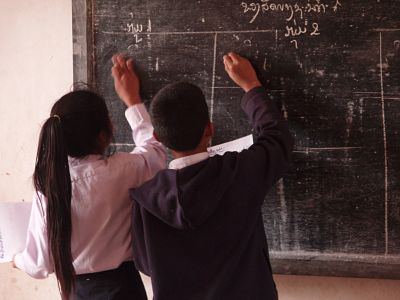
The 1871 book by Lewis Carroll, and sequel to Alice’s Adventures in Wonderland came to mind when Minister Angie Motshekga announced the 2017 matric results on the 4 January 2018. The Minister announced a year on year overall pass rate increase with results for 2017 standing at 75.1% with provincial breakdowns as follows:


Read More »

ARTICLE: YOUR MOVE, MR PRESIDENT…

CREDIT ANC moneywebcoza opt

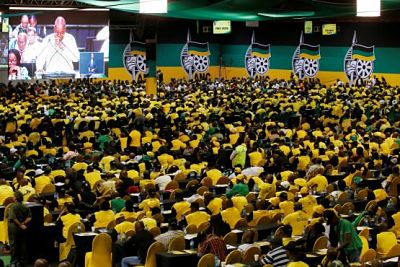
Two sets of congratulations are in order after the first days of the ANC 54th National Conference at Nasrec. The ANC as a whole can be congratulated for a conference at which the recent court judgments about the compositions of various delegations were accepted and upheld, as well as for a conference that saw no disruptions or violent behaviour (which was not the case with all the provincial elective conferences).

Justice Yacoob, in 2012, writing for the Constitutional Court in Ramakatsi and Others v Magashule and Others observed that: “I would hold that the right to participate in the activities of a political party confers on every political party the duty to act lawfully and in accordance with its own constitution. This means that our Constitution gives every member of every political party the right to exact compliance with the constitution of a political party by the leadership of that party”. The run-up to the elections was characterised by branches in KwaZulu-Natal, Free State and North West successfully challenging their provincial elective conferences. This meant that such provinces – and specifically the provincial executive committees – could not legally participate in the National Conference. Their branch delegates were free to participate in their individual capacities. The real concern arose over the verification of the identities of the individual participants, a matter which the party gave serious consideration to with the verification process taking place overnight. While there were a few discrepancies, they were however not enough to cast aspersions on the entire verification process. No faction has so far challenged the very close outcome of the election of the top six. At the time of writing, the secretary-general position is under scrutiny with regard to 68 votes that were allegedly uncounted. This could potentially have the effect of toppling Ace Magashule out of the this crucial position, in favour of Senzo Mchunu of KwaZulu-Natal.  

Read More »

FESTIVE GREETING 2018

FWDK Matthew Willman SML

As you know, the FW de Klerk Foundation’s first and foremost objective is to defend and promote the Constitution. On a macro level, the Constitution acts as the cornerstone for the South African society. Acting as an advocacy think tank for the Constitution and its values, the Foundation monitors public and private policy measures, to ensure that these are in line with the Constitution, and points out when they are not.  

Among our instruments to achieve this – through our Centre for Constitutional Rights and Centre for Unity in Diversity –  are:

  • submissions to Parliament and Chapter 9 Institutions;
  • statements and articles (published online and in print);
  • radio and TV interviews;
  • roundtable discussions;
  • conferences and;
  • litigation.
Read More »

ARTICLE: WHERE HOPE RESIDES

The proclamation of 16 December as the Day of Reconciliation in 1995 speaks volumes about the magnanimity and skill of former Presidents Nelson Mandela and FW de Klerk during the transition to democracy in 1994. 

Read More »

ARTICLE: THE ELEPHANT IN THE ROOM: MOTHER TONGUE EDUCATION

language

The recently published Progress in International Reading Literacy Study (PIRLS) has outraged educators and parents. The report contains the shocking revelation that 78% of Grade 4 learners in South Africa cannot comprehend what they read. The causes were sought – and apparently found. The scapegoats included education policy, outcomes-based education, parents’ shortcomings, teachers’ inability to teach children to read, teachers’ inadequate education and a school environment where learners are often bullied. And it may be true that this and other factors played a part in this disappointing outcome. This is a very complex problem.

However, one of the factors that received almost no attention is mother tongue education (or the lack thereof).

Read More »

INVITATION: ANNUAL CONFERENCE 2018

ct conf finalThe FW de Klerk Foundation – in partnership with the Konrad Adenauer Foundation – invites you to attend our Annual Conference. Our theme for 2018 is: “South Africa Beyond State Capture and Corruption”.

The FW de Klerk Foundation annually hosts a conference on 2 February in Cape Town, to coincide with the announcement in Parliament in 1990 of the release of Nelson Mandela and other prisoners and the unbanning of several organisations. Each year the conference tackles a topical theme, with input from a diverse range of influential speakers. Previous speakers include former President Kgalema Motlanthe, Justice Albie Sachs, Dr Mathews Phosa, Ms Rhoda Kadalie, Prof Frans Viljoen, Mr Sipho Pityana, Adv Jeremy Gauntlett, Mr Johann Rupert and former President FW de Klerk. 

Read More »

ARTICLE: SASSA SETTLES FOR SAPO

Like a knight in shining armour, Minister in the Presidency and Head of the Inter-Ministerial Committee (IMC), Jeff Radebe, announced on Sunday 10 December that a landmark deal had been signed between SASSA and the South African Post Office (SAPO), bringing years of court battles and political wrangling to a close.

Read More »

ARTICLE: COMPROMISE SCENARIOS AT NASREC ’17 CAN HARM SOUTH AFRICA

T ELOFF opt

With Nasrec ’17 just days away, it is still unclear who the new ANC president will be, come 20 December. Following the end of nominations by provinces and branches, there are two clear frontrunners: Nkosazana Dlamini-Zuma and Cyril Ramaphosa. At this stage (with a number of branches yet to nominate a candidate or embroiled in court cases), no other candidate has received the minimum percentage of 15% of branch nominations needed for the presidency. This means that candidates like Zweli Mkhize and Lindiwe Sisulu can only be nominated as candidates if they garner the support of 25% of conference delegates during the proceedings. This is unlikely. As far as the deputy presidency is concerned, a number of branches and provinces have nominated Mkhize and Sisulu. Then, the so-called “kingmaker” of Mpumalanga, DD Mabuza, was nominated by the KwaZulu-Natal province as deputy president under Dlamini-Zuma.

Read More »