
ARTICLE: DAY OF RECONCILIATION
 On the eve of the 22nd Reconciliation Day after the founding of a democratic South Africa, the question must be raised: What happened to the reconciling rainbow nation of Mandela, De Klerk and Tutu? Because it is, sadly, very clear that reconciliation and tolerance are in short supply in South Africa today.
A few examples will prove the point: xenophobic attacks on foreigners, intolerance amongst and even inside political parties (especially in Parliament), the recent examples of attacks on and damage to statues, and the violence and racist undertones of some of the student protests.
Tony Ehrenreich’s now infamous statement in the controversy over the naming of a Cape Town street after FW de Klerk said it all: “The phase of reconciliation that brought together fair-minded white and black people is over. We are now engaged in a struggle for economic and social justice.”
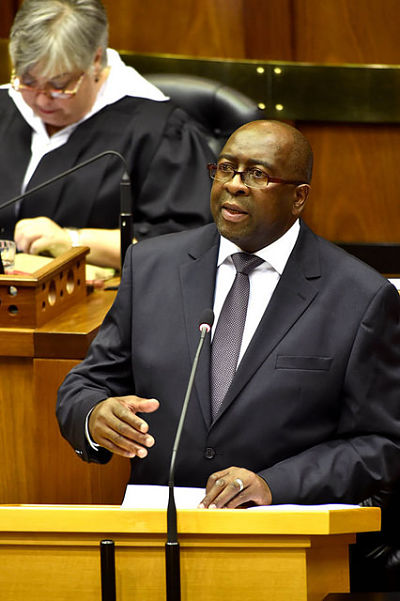 President Zuma’s decision to dismiss Minister Nhlanhla Nene as Minister of Finance may signal a catastrophic turning point for South Africa’s already ailing economy. The Ministry of Finance and the Treasury have thus far been the main – and perhaps the last – bulwarks against unrestrained and profligate state expenditure. Minister Nene has maintained probity in the management of state finances and tried, with courage and distinction, to hold the line against irresponsible state expenditure.
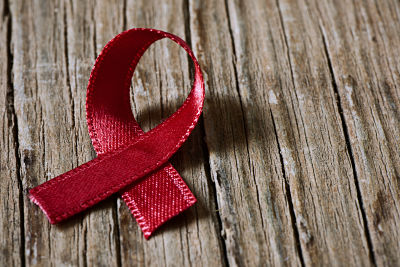 The FW de Klerk Foundation has written a letter to the Minister of Health proposing that Government should build an appropriate national monument to commemorate the lives of the four million South Africans who have so far died of HIV/AIDS. By any measure, HIV/AIDS is the most serious human catastrophe that has ever afflicted the people of South Africa. We need a suitable monument, not only to commemorate the lives of all those who have died of the disease – but also to remind us of the ongoing threat that HIV/AIDS poses to our society.
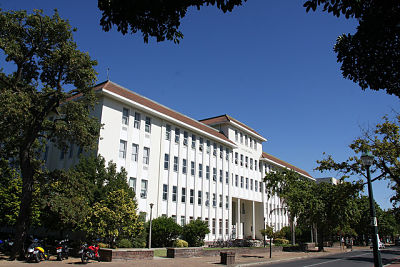 The Foundation issued the following statement in response to a request by “Die Burger” for comment on the current language debate at the University of Stellenbosch
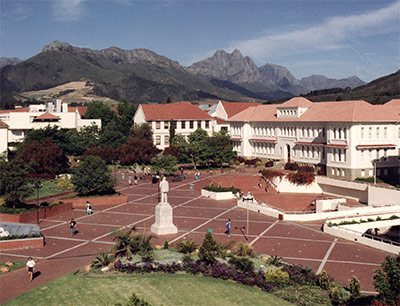 The Foundation has taken note, with shock and disappointment, of the letter and annexure of Prof Wim De Villiers to the Senate of the University of Stellenbosch. The letter makes it clear that if the Rector’s proposals are approved by the University Council on 30 November, Afrikaans will no longer have an equal position with English at US. So after having been assured only a few years ago that Afrikaans would be the default language, and after assurances only last year that the language would enjoy equal status with English, it now appears that Afrikaans is, for all practical purposes on its way out as a language of tuition. Under these circumstances, we must ask what confidence we can place on any assurances by the university administration?
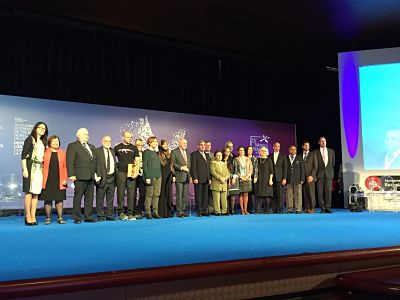 We, the Nobel Peace Laureates and Peace Organisations, in the presence of youth from all over the world, gathered together in Barcelona from 12 – 15 November 2015, have considered issues affecting world peace – with special emphasis on the current refugee and migration crisis.