Support the work of the FW de Klerk Foundation
For more information regarding donations contact info@fwdeklerk.org or scan the QR code below
Issued by Daniela Ellerbeck on behalf of the FW de Klerk Foundation on 20/10/2026
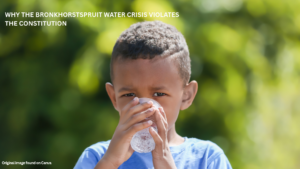
The FW de Klerk Foundation is deeply concerned by reports that hundreds of residents in Bronkhorstspruit and surrounding communities, amongst them many young children, have fallen ill and require medical attention after being exposed to contaminated water.
While first and foremost a public health crisis, what is unfolding in Bronkhorstspruit is also a matter of constitutional concern. When contaminated water reaches homes and residents become ill, the constitutional rights to water, human dignity and an environment that is not harmful are directly affected.
The Constitution guarantees everyone the right of access to sufficient water and requires municipalities to promote a safe and healthy environment. It also requires that public administration be accountable and that the government must be accountable, responsive and open.
The facts emerging from Bronkhorstspruit suggest possible failures not only in the treatment of water and the maintenance of critical water infrastructure but also a failure by the authorities to communicate possible risks to residents and the community.. Importantly, it needs to be pointed out that this crisis was both foreseeable and avoidable. In December 2025, the Auditor-General told Parliament that it found that 46% of drinking water systems failed microbiological safety standards, 44% failed chemical safety standards and 99% of wastewater treatment works failed at least one effluent quality standard. The report also found that infrastructure projects were delayed by an average of 32 months and that 96% of Water Service Authorities failed to meet maintenance norms. These findings led Parliament’s Portfolio Committee on Water and Sanitation to describe the state of the sector as deeply concerning and unacceptable.
Bronkhorstspruit should not be viewed as an isolated incident but as a warning of deeper systemic weaknesses in South Africa’s water governance. The Foundation urges all spheres of government to ensure full transparency regarding the causes of the contamination, to hold those responsible accountable where wrongdoing or negligence is established, and to implement the institutional and infrastructure reforms necessary to safeguard the constitutional rights of all South Africans. Access to safe and reliable drinking water is not a privilege, but a constitutional imperative.
END

WHY THE BRONKHORSTSPRUIT WATER CRISIS VIOLATES THE CONSTITUTION
The FW de Klerk Foundation raises concern over the Bronkhorstspruit water crisis, warning that contaminated drinking water threatens constitutional rights, public health and human dignity. The Foundation calls for transparency, accountability and urgent reforms to address systemic weaknesses in South Africa’s water governance and infrastructure management.
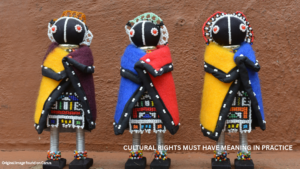
CULTURAL RIGHTS MUST HAVE MEANING IN PRACTICE
Cultural rights have meaning when they are realised in practice. The FW de Klerk Foundation’s CRL Report Card 2026 examines key developments affecting cultural, religious and linguistic communities, from Khoi and San recognition to cultural participation and customary practices.
PROTECTING FREEDOM OF BELIEF IN SOUTH AFRICA
South Africa’s Constitution strongly protects freedom of conscience, religion, thought, belief and opinion. Yet recent debates surrounding the CRL Rights Commission’s proposed self-regulatory framework for the religious sector have raised important questions about the relationship between accountability, religious autonomy and State involvement. This article examines the constitutional protections afforded to religious communities, the controversy surrounding the Section 22 process, and why safeguarding freedom of belief remains essential to South Africa’s democracy, diversity and human rights culture.