Introduction
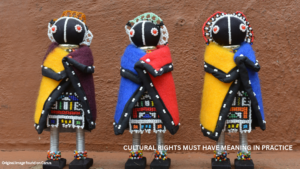
Cultural rights often sound abstract, but their meaning becomes clear and very practical when we see how these rights affect people. Section 31 of the Constitution protects people belonging to cultural, religious and linguistic communities. It gives them the right to enjoy their culture, practise their religion, use their language and form and maintain associations and other organs of civil society.
However, as the FW de Klerk Foundation’s Cultural, Religious, and Linguistic Rights Report Card 2026 (“CRL Report Card”) shows, protecting cultural rights requires more than recognising them in the Constitution. It also requires practical measures that allow communities to maintain and participate in their cultural life.
Developments that give practical meaning
At the start of the year, the Department of Home Affairs handed over the first Smart ID recognising a Khoisan traditional name to 18-year-old !Khūboab Oedasoua Lawrence. Members of Khoi and San communities had experienced longstanding difficulties registering indigenous names because of the technical orthographies and writing systems associated with these languages. !Khūboab was no different, and his name had not been accepted by the Department’s system for the first 18 years of his life. The Department’s system was subsequently upgraded to accommodate these characters on official documents. The Foundation agrees with the Pan South African Language Board that this measure is a practical and restorative response to historical linguistic marginalisation.
Customary initiation provides one example. On 29 July 2026, Cabinet reported that 47 initiates had died and 93 had been hospitalised during the winter initiation season. It also reported 161 criminal investigations, the closure of illegal initiation schools and the rescue of 181 initiates. These figures demonstrate the scale of the safety concerns surrounding some initiation practices and the extent of State intervention.
Earlier this year, 63 Khoi and San ancestral remains were reburied at the Kinderlê Monument in Steinkopf, Northern Cape, following their repatriation from museums in Europe. The remains had been removed from graves during the late 19th and early 20th centuries. The repatriation process included cultural guidance and oversight from representatives of Khoi and San cultural groupings.
Then there is also the Traditional and Khoi-San Leadership Bill currently before Parliament. This Bill provides for structures including a National House of Traditional and Khoi-San Leaders and sets out roles for traditional and Khoi-San councils. This is important, because the Bill has placed the recognition and functioning of traditional and Khoi-San communities before Parliament. Its consideration is, therefore, relevant not only to traditional leadership, but also to how communities participate in institutions connected to their cultural identity.
Lastly, the Constitutional Court’s judgment in Sustaining the Wild Coast NPC v Minister of Mineral Resources and Energy concerned an exploration right for oil and gas along the Wild Coast. Importantly, the Court confirmed that cultural and spiritual interests are relevant when the State makes decisions that affect communities and places that form part of their cultural and economic lives.
The developments of 2026 demonstrate that section 31 is not an abstract constitutional promise. It affects official identity documents, the treatment of ancestral remains, traditional institutions, environmental decisions and customary practices.
Protecting cultural rights
Protecting cultural rights does not mean placing cultural practices outside the law. Article 31 makes it explicit that cultural, religious or linguistic communities cannot exercise their rights in section 31 in a way that is inconsistent with the Bill of Rights. Furthermore, it is important that, as with all rights in the Bill of Rights, the State may limit cultural rights, but only in terms of law of general application that passes the test laid down in section 36 of the Constitution. Thus, one of the requirements of the test that any regulation of cultural practices must satisfy that there is no other less restrictive means available.
We also live in participatory democracy, and this means that cultural communities are not merely subjects of decisions made about their culture. They must have a meaningful role in shaping those decisions. Cultural rights have greater meaning when communities can participate in determining how their heritage, identity and practices are recognised and protected.
Conclusion
The developments discussed above show how important the practical realisation of cultural rights are. Recognition of Khoi and San names, the reburial of ancestral remains, greater attention to cultural participation, and legal recognition of cultural interests all strengthened the rights protected by section 31.
At the same time, ongoing deaths and injuries linked to customary initiation demonstrate the need for carefully targeted regulation. The State must protect life and safety without unnecessarily restricting legitimate cultural practices.
Overall, the dominant trend in 2026 was one of recognition, inclusion and protection. While important challenges remain, the reporting period saw meaningful progress in giving practical effect to the cultural rights of South Africa’s diverse communities