
ARTICLE: UNELECTED PRESIDENT?
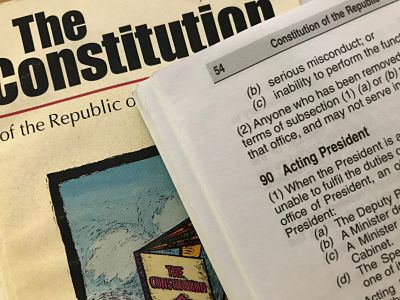
In 1973, the Watergate Scandal broke, eventually costing United States of America’s President Richard Nixon his scalp in 1974. The Deputy President, Gerald Ford, was appointed, unelected, into the position, which he held for three more years. He holds the distinction as the only unelected President of the USA in the 20th Century. Back home, the Constitution contemplates such a scenario, albeit for a temporary period.
Specifically, section 90 of the Constitution governs the eventuality of an Acting President in circumstances where the President is “absent from the Republic or otherwise unable to fulfil the duties of President, or during a vacancy in the office of President”. Prior to assuming the office of the President, the Acting President “must swear or affirm faithfulness to the Republic and obedience to the Constitution”.
ARTICLE: UNITY AND RENEWAL
The governing party has reintroduced a slew of words in the political lexicon over the last few days – from transition, to constructive, to fruitful, to closure – all to describe the crisis within the ruling party.
ARTICLE: RECALL, IMPEACHMENT, NO-CONFIDENCE MOTION OR THE MBEKI SOLUTION: WHAT IS AT STAKE
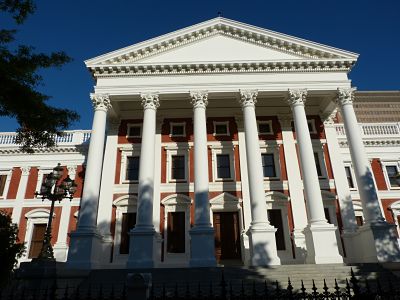
With rumours swirling fast and loose regarding the President’s imminent departure from the office, it is important to note that the President can leave the office through being “recalled”, being impeached, or having a motion of no confidence passed. Each of the different processes will achieve different results. Here is a primer on what should follow, depending on how the President leaves the office.
“Recalled”
In terms of the governing party’s political parlance, being “recalled” refers to the governing party’s National Executive Committee (NEC) resolving that the President step down from the position. Should the President acquiesce to the resolution, then this will be followed by the President’s resignation. A resignation in terms of South Africa’s Constitution, counts as a “vacancy in the office of the President”. As such, the Deputy President occupies the office of the President, assuming all the responsibilities, powers and functions of the office. The Constitution further provides that a person who fills the vacancy in the office of the President merely completes the term of office of the recently deposed President, without this regarded as a term. This leaves any such interim President free to hold the office for two more terms, if so elected.