
STATEMENT: THE DISMISSAL OF MINISTER NHLANHLA NENE
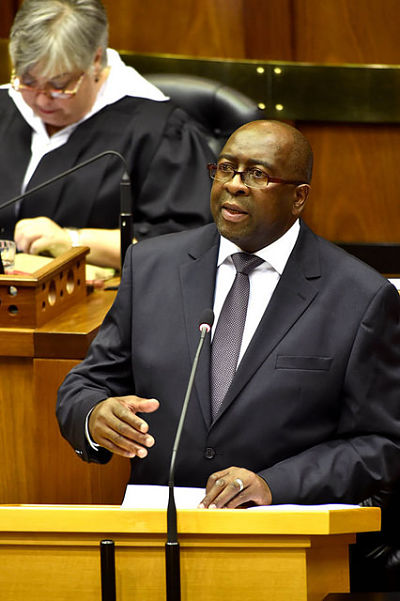 President Zuma’s decision to dismiss Minister Nhlanhla Nene as Minister of Finance may signal a catastrophic turning point for South Africa’s already ailing economy. The Ministry of Finance and the Treasury have thus far been the main – and perhaps the last – bulwarks against unrestrained and profligate state expenditure. Minister Nene has maintained probity in the management of state finances and tried, with courage and distinction, to hold the line against irresponsible state expenditure.
It is widely believed that his opposition to the President’s plans to spend more than one trillion rand on Russian nuclear reactors and the firm line that he took in countermanding the highly suspect plans of the SAA Board Chairperson, Dudu Myeni, to reopen complex contracts for new aircraft, have led to his dismissal. Ms Myeni, a close confidante of President Zuma, is also the Chairperson of the Jacob G Zuma Foundation.
STATEMENT: FW DE KLERK FOUNDATION CALLS FOR A NATIONAL MONUMENT TO THE FOUR MILLION SOUTH AFRICANS WHO HAVE DIED OF AIDS
 The FW de Klerk Foundation has written a letter to the Minister of Health proposing that Government should build an appropriate national monument to commemorate the lives of the four million South Africans who have so far died of HIV/AIDS. By any measure, HIV/AIDS is the most serious human catastrophe that has ever afflicted the people of South Africa. We need a suitable monument, not only to commemorate the lives of all those who have died of the disease – but also to remind us of the ongoing threat that HIV/AIDS poses to our society.
STATEMENT BY THE FW DE KLERK FOUNDATION ON THE CURRENT LANGUAGE DEBATE AT THE UNIVERSITY OF STELLENBOSCH
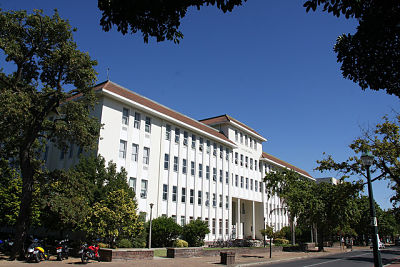 The Foundation issued the following statement in response to a request by “Die Burger” for comment on the current language debate at the University of Stellenbosch
The Council of the University of Stellenbosch has the responsibility of determining the university’s language policy.
In the Foundation’s view, the Council should, in doing so, bear in mind the requirement in section 29(2) of the Constitution in terms of which “everyone has a right to receive education in the official language or languages of their choice in public educational institutions where that education is reasonable practicable.”
Clearly it is practicable to do so at a university that has traditionally offered tuition in Afrikaans in a province in which Afrikaans is the principal language.
ARTICLE: THE WESTERN CAPE CHILDREN’S COMMISSIONER UNDER THE SPOTLIGHT

The Western Cape is a dangerous place for children. The province has the highest child murder rate in the country, with four children murdered every week. Besides that, children are subject to violence, abuse and rape every day. This is in stark contrast with the rights extended to children under both international and South African law. South Africa has committed to respecting children’s rights, including their right to life, under the United Nations Convention on the Rights of the Child, the African Charter on the Rights and Welfare of the Child, and the South African Constitution.
ARTICLE: SECTION 25: TO AMEND OR NOT…

The report of the Presidential Advisory Panel on Land Reform and Agriculture was presented to President Ramaphosa on 4 May 2019 and made available to the public in July. Even before this date, two panelists – Dan Kriek (president of AgriSA) and Nick Serfontein (well-known farmer) – decided to hand over a minority report to the President. It was made available to the public after the main report.
What are the key differences between the main report and the minority report? Why did these two respected panelists find it necessary to draft a minority report? The differences can be summarised in three groups: process issues, style and ideological issues and substantive issues.
ARTICLE: CAN MOTHER TONGUE EDUCATION IN SOUTH AFRICAN SCHOOLS BECOME A REALITY?

During her recent budget speech, the Minister of Basic Education, Angie Motshekga, referred to President Ramaphosa’s target in his State of the Nation address that every learner should be able to read with comprehension by the age of ten. She notes that the language issue is a key factor affecting reading ability and literacy, and then refers to the importance of African languages as teaching and reading languages. However, the phrase “mother tongue education” was not mentioned in her speech.