 Friday 7 April was a momentous day across most of South Africa’s larger cities. In response to current events, including the downgrading of South Africa’s economic prospects by international ratings agencies, thousands of South Africans took to the streets to demand firmer, ethical and more decisive political leadership. While the protests were largely peaceful it is worth noting that Luthuli House was surrounded by men in camouflage, ostensibly uMkhonto weSizwe Military Veterans Association (MKMVA) seeking to “defend” the headquarters of the governing party.
Move, a month later, to 7 May, this time to Vuwani, in Limpopo province. The area has been the site of violent protests, which have seen the destruction of over 20 schools. The Vuwani residents oppose their incorporation into a new municipality and have been protesting for close to two years. As such, the 7 May gathering – which President Zuma was meant to address – was intended to reassure the community of an attentive Executive, willing to listen, at the very least, to the demands its citizens. Only, President Zuma did not attend the event as scheduled, reportedly, due to security concerns. Nevertheless, MKMVA members were present, clad yet again in army fatigues.


 Lieutenant-General Khomotso Phahlane has been removed from his acting position as National South African Police Commissioner. This, against the backdrop of the erstwhile National Police Commissioner, Riah Phiyega, still serving her suspension from the position due to her role in the Marikana killings of striking mine workers. Dare one remind the nation that there is yet to be an individual to complete their term of the helm of the South African Police Service (SAPS)? South Africans are weary of daily revelations of corruption, ineptitude and a State that is seemingly determined to veer the nation off its path of constitutional democracy.

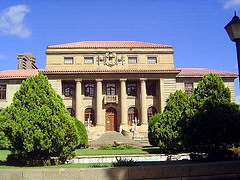 This is the second article in a series of four analysing the recent Supreme Court of Appeal judgment in the matter of University of the Free State v Afriforum and Another (SCA judgment).

 Is it realistic in South Africa’s multicultural society to expect to receive mother tongue education at a public educational institution? If one only focuses on section 29(2) of the Constitution, the answer should be legally determinable in any factual context. Section 29(2) of the Constitution (section 29(2) right) was crafted to ensure a balancing of rights, by guaranteeing everyone the right to education in the language of their choice at a public education institution, provided the same is “reasonably practicable”. The State is furthermore obliged to consider “all reasonable educational alternatives” to give effect to this right, taking into account the listed factors of “equity, practicability and the need to redress the results of past discriminatory laws and practices”.