View Archived Content

ARTICLE: MISMANAGEMENT OF WATER AND SEWAGE SYSTEMS INFRINGES CONSTITUTIONAL RIGHTS TO WATER AND ENVIRONMENT

water resources

Cape Town faces a severe water crisis. At the time of writing, dam levels were around 28%, compared to 68% the same time last year, and the City uses over 600 million litres of water per day. Gauteng faced a similar crisis until heavy rains filled the Vaal Dam in February.

Drought is not the sole reason for water shortages. As a 2016 report by the Department of Water and Sanitation noted, “South Africa has been losing water through leaks due to the continued use of the ageing and dilapidated infrastructure.” Media reports in March showed high levels of water wastage through broken pipes. Some pointed to the City of Cape Town, which instated a name-and-shame policy to target water wasters. However, some quarters of civil society accused the City of allowing water networks to deteriorate to the point of releasing 30% to 60% of potable water through leakage.


Read More »

STATEMENT: SETTING ASIDE THE PUBLIC PROTECTOR’S RECOMMENDATION WELCOMED

ppSA

The Centre for Constitutional Rights (CFCR) welcomes today’s decision handed down by the Johannesburg High Court regarding the powers of the Public Protector. The decision set aside the Public Protector’s recommendation that the Constitution be amended to change the mandate of the South African Reserve Bank (SARB) and further dismissed the Public Protector’s recommendation that the Chairperson of Parliament’s Committee on Justice and Correctional Services and the SARB submit an action plan detailing how the remedial action recommendation would be implemented.

Read More »

STATEMENT: THE CYBERCRIMES AND CYBERSECURITY BILL [B6-2017] – NEW AND IMPROVED BUT STILL WORRISOME

PRIVACY opt

On 10 August 2017, the Centre for Constitutional Rights (CFCR) made a submission to the Portfolio Committee on Justice and Correctional Services on the Cybercrimes and Cybersecurity Bill [B6-2017].

The Bill, an amended version of the draft Cybercrimes and Cybersecurity Bill [B-2015], essentially seeks to address the increase in cybercrimes and cybersecurity breaches in the modern digital age. The Bill is an improvement of the initial draft [B-2015] released in August 2015. However, it still has the potential to infringe upon constitutional rights to privacy, access to courts and freedom of expression.

The Centre raised concerns about the prohibition of a “data message which is harmful” on the right to freedom of expression. Not only does this clause rely on undefined terminology to instances when a data message will be considered “harmful”, it also fails to prescribe any statutory defences. This clause does not fall within the very narrow prohibited forms of expression as set out in the Constitution and potentially infringes upon freedom of expression as envisaged by the Constitution.

Read More »

CONCISE SUBMISSION ON THE CYBERCRIMES AND CYBERSECURITY BILL [B 6-2017]

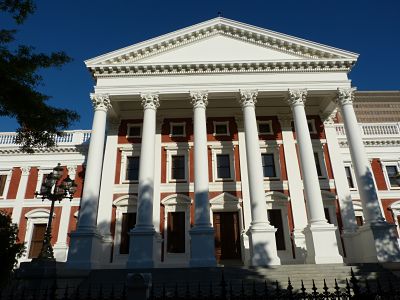
parliament exterior opt

    1. The Centre for Constitutional Rights (CFCR) is a unit of the FW de Klerk Foundation – a non-profit organisation dedicated to upholding the Constitution of the Republic of South Africa, 1996 (the Constitution). To this end, the CFCR seeks to promote the Constitution and the values, rights and principles enshrined in the Constitution; to monitor developments including legislation and policy that may affect the Constitution or those values, rights and principles; to inform people and organisations of their constitutional rights and to assist them in claiming their rights. The CFCR does so in the interest of everyone in South Africa.
Read More »

ARTICLE: THE SEEMING FUTILITY OF IT ALL – WOMEN’S DAY 2017

Image 11 opt

The Deputy Minister of Higher Education, Mduduzi Manana, has admitted to assaulting a woman after footage emerged across several media platforms of the incident. It is apparently not the first such incident, as other women have made similar reports of his conduct to the South African Police Service (SAPS). Their response was lethargic at best, and indifferent at worst. From April 1 to May 21 this year, 63 women were murdered in Gauteng alone, with 10 said to have been killed by their partners. The system – from the Courts to the Department of Social Development, through to the SAPS – is inundated with matters involving the violation of women’s rights.

Read More »

CASE DISCUSSION: BREAKING DOWN THE NUCLEAR PROCUREMENT JUDGMENT – EARTHLIFE AFRICA-JOHANNESBURG AND 1 OTHER V THE MINISTER OF ENERGY AND 5 OTHERS

nuclear opt

On 26 April 2017, the Western Cape High Court highlighted the foundational values of a democratic society built on openness and accountability in the matter of Earthlife Africa-Johannesburg vs the Minister of Energy (Earthlife judgment). The Earthlife judgment concerned the review application of the State’s dubious steps between 2013 and 2016 in the furtherance of its nuclear procurement programme. The judgment sets an important precedent for public participation in any future determinations by the Minister of Energy (the Minister) regarding the procurement for nuclear energy.

Read More »

CASE DISCUSSION: UNCONSTITUTIONALITY OF DETENTION WITHOUT TRIAL FOR THE PURPOSE OF DEPORTATION – LAWYERS FOR HUMAN RIGHTS V MINISTER OF HOME AFFAIRS AND OTHERS

fence opt

On 29 June 2017, the Constitutional Court (the Court) reaffirmed in Lawyers for Human Rights v Minister of Home Affairs (Lawyers for Human Rights matter) that the constitutional right to not to be deprived of personal freedom has two built-in constitutional aspects. First, the deprivation must be for a lawful, rationally-connected cause. Second, and of importance to the matter at hand, the conditions of the deprivation must be procedurally fair and cannot be above the scrutiny of the Courts. Judicial oversight is still required, even if there are lawful reasons for depriving a person of their personal freedom.

Read More »

ARTICLE: WHEN NO ONE IS WATCHING THE WATCHERS – THE FATE OF STATE-OWNED ENTERPRISES

prasa logo opt

The Passenger Rail Agency of South Africa (PRASA) appeared before the North Gauteng High Court early this year in Molefe and Others v Minister of Transport and Others, and the Court ruled that administrative action conducted by the State must be accompanied by a rational nexus. By then, the gravity of the trouble brewing at other State-Owned Entities (SOEs) had been highlighted repeatedly in the press. PRASA had previously made news headlines following reports by the Public Protector and the Auditor-General citing irregular expenditure and corruption within the parastatal. Not too long thereafter, PRASA was again making headlines in relation to the purchase of incompatible locomotives and the corrupt manner in which the tender for the trains was awarded. The impunity with which officials at the SOE continued to operate led to a scathing indictment of corruption of SOEs by the South Gauteng High Court in Passenger Rail Agency of South Africa v Swifambo Rail Agency.

Read More »

ARTICLE: THE RIGHT TO FREEDOM OF EXPRESSION EVEN PROTECTS UNINFORMED, BIASED ASSUMPTIONS

freedom of expression opt

On 31 July 2017, the columnist Mr Rams Mabote, wrote an article for News24 in which he shared his view on the future of young white Afrikaans boys attending an Afrikaans private school, Helpmekaar Kollege (Helpmekaar), after watching a rugby match between Helpmekaar and his son’s school. The heading of the article already sets the tone for the article, in which he announces “Helpmekaar not preparing learners for the real world”. He continues to state why he feels “sorry” for these young boys “who are cushioned in a cocoon of Afrikanerdom” and are ill-prepared for the realities of a mixed work environment. He avoids saying directly that the school is a racist school but without checking the facts he announces with “its race-exclusive make-up” it provides opportunities for prejudice. He attempts to provoke a response by stating “They speak the same language, they are all white and they almost look alike” (own emphasis). This article elicited a flood of responses from former students.

Read More »