
STATEMENT: STRIKING DOWN OF NUCLEAR DEAL WELCOMED
 The Centre for Constitutional Rights (CFCR) welcomes the decision by the Western Cape High Court, handed down today, which sets aside South Africa’s nuclear agreement with Russia. The successful challenge to the agreement was launched by civic organisations, EarthLife Africa (ELA) and the Southern African Faith Communities’ Environment Institute (SAFCEI), on the basis that the agreement was unlawful and unconstitutional.
The secret nuclear deal would have reportedly cost the nation R1-trillion and the South African public would be none the wiser – but for the diligence of investigative journalists and the non-governmental organisations who approached the courts.
Apart from the exorbitant costs of the deal, which South African taxpayers would have to bear, the deal transgressed the Constitution’s demands that procurement of goods or services must be fair, equitable, transparent and cost-effective. Binding for a minimum of 20 years, the deal would have practically granted South Africa’s decision-making powers on the nuclear industry, over to Russia.
 It is vital that all citizens participate in the election of their representatives to guarantee government by the people under the Constitution – not only in Parliament but also in crucial institutions, such as the Commission for Gender Equality (CGE). The CGE is currently in the process of filling several vacancies and in the interests of public participation and representative democracy, the Centre for Constitutional Rights (the CFCR) will provide the public with more information about the CGE, the selection process and the prospective candidates.
 Join us for the inaugural launch of the Centre for Constitutional Rights’ (CFCR) flagship publication, the Human Rights Report Card. The launch event is hosted in collaboration with the Commission for the Promotion and Protection of the Rights of Cultural, Religious and Linguistic Communities (CRL Rights Commission) and supported by the Konrad Adenauer Foundation (KAS).
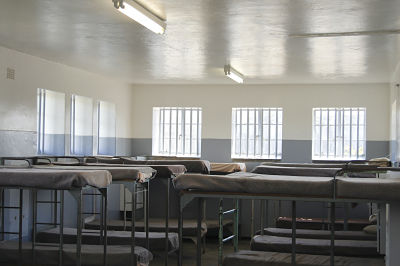 The South African Government’s failure to address the overcrowding at Pollsmoor Remand Detention Facility (Pollsmoor RDF) was addressed, on 5 December 2016, by the Western Cape High Court in the matter of Sonke Gender Justice v The Government of the Republic of South Africa and the Head of Pollsmoor Centre Remand Detention Facility.
 Parliament’s Joint Standing Committee on Intelligence (JSCI) has finally nominated a candidate for the post of Inspector-General of Intelligence (IGI) after the post had been vacant since 31 March 2015. Dr S.I. Dintwe has been nominated as the preferred candidate by the JSCI, and the National Assembly (NA) will vote on the nomination this week. The election process has not been without setbacks but public participation and civil action ensured a more open and transparent process this time around, which appears to be the pattern for ensuring accountability in 2016. Despite serious attacks on our constitutional democracy this year, the founding values of “accountability, responsiveness and openness” are alive and well and being upheld by ordinary South Africans through action by civil society – a proud moment for the Constitution.
 The period from 25 November (International Day for the Elimination of Violence against Women), to 10 December (International Human Rights Day), marks the annual commemoration of the 16 Days of Activism against Gender-Based Violence campaign. The international campaign originated from the first Women’s Global Leadership Institute coordinated by the Center for Women’s Global Leadership in 1991. Annually, United Nations Women spearhead this cause and this year’s theme is centered around resources that are needed to facilitate the cessation of gender-based violence across the world.
 A question has arisen as to whether the Public Protector may legally compel the President to establish a commission of inquiry, seeing as the establishment of commissions of inquiry is, in terms of the Constitution, the sole prerogative of the President.
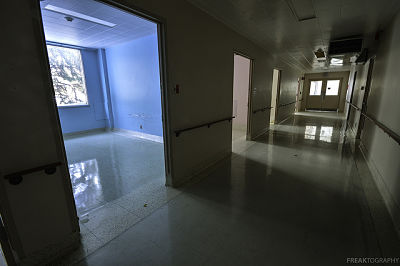 On 21 September, the death of the 37th psychiatric patient removed and transferred from Life Esidimeni Healthcare Centre was announced. The Gauteng Department of Health (the Department) transferred approximately 1 300 patients from Life Esidimeni to 122 non-governmental organisations and other homecare facilities around the province in March 2016. This initiative came after the provincial health department ended its long-term relationship with Life Esidimeni. The Department stated that it had decided to re-prioritise funds allocated to Esidimeni, citing R323 million paid to the hospital during the 2014/15 financial year. The Department had held a public-private partnership with Life Esidimeni, the institution which cared for Gauteng’s most serious mentally ill patients, often from more marginalised and underserved populations.
 On Wednesday 5 October, the Parliamentary Portfolio Committee on Communications (the Committee) convened a meeting with the beleaguered Board of the South African Broadcasting Corporation (SABC) to allow the latter to brief the former on the state of affairs at the public broadcaster. This was done in light of the recent Supreme Court of Appeal (SCA) judgment concerning its newly appointed Group Executive for Corporate Affairs, Hlaudi Motsoeneng, and the problems that have recently plagued the SABC. It is worth noting that this meeting was conducted during a period of Parliamentary recess, which indicated the gravity of the matter.