View Archived Content

ARTICLE: WILL THE STATE-OWNED ENTITIES EVER FIND THEIR FEET?
tshwane gov za

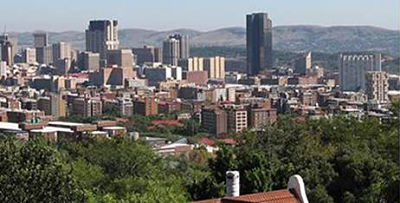
The national electricity supplier, Eskom, has been operating in crisis mode for as long as any other State-owned enterprise (SOE) in South Africa, with the primary concern, of course, being its financial insecurity. On 23 July 2019, Finance Minister, Tito Mboweni, introduced the Special Appropriations Bill (the Bill) in the National Assembly. The succinct Bill details additional funding for Eskom – in terms of which Minister Mboweni will be able to approve a whopping R59 billion bailout for Eskom. The funds will be released in a R29 billion chunk for the 2019/2020 period, with the remainder following in the 2020/2021 financial year. 

Read More »

ARTICLE: FLOUTING CONSTITUTIONAL DUTIES WILL NOT BE TOLERATED – CONSTITUTIONAL COURT UPHOLDS PUNITIVE COST ORDER AGAINST PUBLIC PROTECTOR: PUBLIC PROTECTOR V SOUTH AFRICAN RESERVE BANK

constitutional court foter

On Monday 22 July, the majority of the Constitutional Court, in a decisive judgment, upheld the personal cost order made against the Public Protector by the Pretoria High Court in ABSA Bank and Others v the Public Protector and Others (Bankorp High Court judgment). According to the Bankorp High Court judgment, the Public Protector was to be held personally liable for 15% of the legal costs of the South African Reserve Bank (SARB), on a punitive scale. This was because she did not “fully understand her constitutional duty to be impartial and to perform her functions without fear, favour and prejudice”. Further, there was a “reasonable apprehension” that she was “biased” in her investigations. 

Read More »

ARTICLE: FORMER PRESIDENT ZUMA AND THE STATE CAPTURE COMMISSION OF INQUIRY

ZONDO

The importance of a clear understanding of the procedural issues involved in the Zondo Commission when considering Former President Zuma’s allegations of “victimisation” 

On 15 July 2019, embattled former President Jacob Zuma appeared before the Judicial Commission of Inquiry into allegations of State Capture, corruption and fraud in the public sector including organs of State (State Capture Commission). This, amidst much public speculation whether he would testify or not. The South African public, hungry for accountability, eagerly and skeptically watched the former ‘Number One’ – well known for his Stalingrad tactics – appear before the Commission. The former President did not disappoint them: as expected, his legal counsel played into his well-established narrative of victimisation. His allegations of procedural unfairness were followed by Mr Zuma’s own testimony of historical conspiracies by foreign and local intelligence agents to eliminate him. Mr Zuma further alleged that the State Capture Commission was the latest episode in this plot to discredit him and that Mr Ramatlhodi, whose testimony before the State Capture Commission had implicated Zuma, was a spy. This was all before the lunch-break. 

Read More »

STATEMENT: EMPOWERING BRIGHT YOUNG MINDS

JS 2019

CFCR JOB SHADOWING PROGRAMME – JULY 2019 

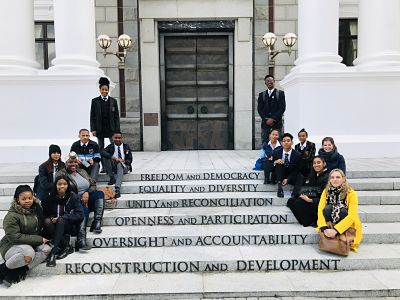
Since 2016, the Centre for Constitutional Rights (CFCR) has hosted a Job Shadowing Programme, aimed at high school learners seeking an opportunity to experience the legal profession. The Programme is offered in conjunction with one of the CFCR’s long-time partners, Salesian Life Choices. The students come from disadvantaged backgrounds yet are among the highest performers in their respective schools. The Leaders Quest programme at Salesians Life Choices aims to provide the learners with tutoring services, career guidance, leadership workshops and more. 

Read More »

CASE DISCUSSION: DOMESTIC WORKER COMPENSATION – SYLVIA BONGI MAHLANGU V THE MINISTER OF LABOUR

High Court

On 23 May 2019, the North Gauteng High Court (the Court) issued an order declaring section 1(xix)(v) of the Compensation for Occupation Injuries and Diseases Act of 1993 (COIDA) unconstitutional and invalid to the extent that it explicitly excludes domestic workers employed in private households from the definition of “employee”. The Court also ordered that the section be severed from section 1 of COIDA, and under consideration is whether the amendment will apply retrospectively. 

For over 25 years, domestic workers have been excluded from COIDA’s protections. There are over one million domestic workers in South Africa, 96% of whom are women and 91% of whom are black. Domestic work is one of the lowest paying occupations in the labour market, due in large part to wage discrimination and limited bargaining power. The low status of domestic workers in society and their limited bargaining power in the labour market renders them susceptible to exploitation and abuse. The deprivation of benefits of social insurance under COIDA only serves to further marginalise them and entrench pre-existing inequalities.

Read More »

CASE DISCUSSION: DIVORCE AND MAINTENANCE ARRANGEMENTS – S AND S AND ANOTHER

court

On 27 June 2019, the Constitutional Court declared section 16(3) of the Superior Courts Act 10 of 2013 (the Act) constitutional. Section 16(3) of the Act states that spouses cannot appeal maintenance pending litigation, costs of pending matrimonial actions, interim custody of a child, or interim access to a child. Further, the Constitutional Court held that Rule 43 of the Uniform Rules of Court – regarding spousal relief for maintenance pending litigation, costs of matrimonial action, interim custody of child, and interim access to child – can be read expansively in light of section 16(3) of the Act.

According to Statistics South Africa – as cited by Nicholls AJ in the present case – 25 326 divorce orders were granted in 2016, 55% of which involved children. Applicants in Rule 43 cases most often involve low-income women. Nicholls AJ notes that gender imbalances at home are often exacerbated by courtrooms, when institutional failures prevent the enforcement of maintenance orders. This lack of enforcement has a very negative impact upon the health and financial wellbeing of women and children. The Constitutional Court proceeded with the present case with an awareness of the infringement of women and children’s rights, to protect and uphold the interests of vulnerable sectors of society. 

Read More »

ARTICLE: 20 JUNE 2019 – RESISTANCE AND RESILIENCE: REFUGEE RECEPTION IN SOUTH AFRICA

refugees opt

On June 20, World Refugee Day is internationally observed. This day is dedicated to commemorating the strength, courage, and resilience of millions of refugees, who are forced to flee their countries of origin under threat of persecution, conflict, and violence every day. The United Nations High Commissioner for Refugees’ (UNHCR) theme this year is “With Refugees”, a campaign that encourages civil society and governments to take action to provide access to education, safe shelter, and employment opportunity to refugees. 

Read More »

STATEMENT: CREATING PLATFORMS FOR THE YOUTH TO ENGAGE – CFCR YOUTH DIALOGUE #STANDUP4HUMANRIGHTS

Youth 2019 opt

In commemorating Youth Day, the Centre for Constitutional Rights (the CFCR) hosted a youth dialogue on Saturday 8 June 2019, in partnership with the Konrad Adenauer Foundation (KAS). Grade 11 and 12 learners from 10 high schools across the Western Cape were invited to join the dialogue. The focus was human rights activism and how the youth can get practically involved in upholding human rights. The event was well-attended with over 80 people from diverse social backgrounds, attending. The dialogue showed the real need for platforms where the youth can participate and share their views on the realisation of human rights, social injustice and civil participation in our constitutional democracy.

Read More »

ARTICLE: INTERNATIONAL ALBINISM AWARENESS DAY 2019 – INTERVIEW WITH NODUMO NCOMANZI

NODUMO opt

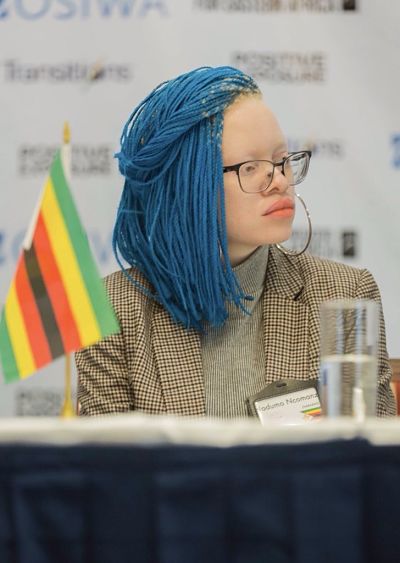
13 June is commemorated annually as International Albinism Awareness Day (IAAD) with the aim of raising awareness concerning the particular challenges faced by people with albinism (PWA) across the globe. As is often the case when it comes to vulnerable and marginalised groups, their causes are championed by people who are knowledgeable on their issues and may or may not be their allies. More often than not, members of the disenfranchised are not the forefront of movements that speak particularly to their access to human rights. Unfortunately, this is also true for PWA. I had a conversation with woman with albinism to discuss, and learn, about PWA and the state of their human rights experience, to gain a nuanced understanding from someone for whom albinism is a lived experience.

Nodumo Ncomanzi is a Communications Officer for the United Nations Mandate on Albinism, outside of that, she runs her own creative consulting firm. From my limited interaction with her on social media, she is more than just her professional occupation and is a fierce advocate for herself – a woman with albinism – and other people who like her, have had to endure the discrimination, stigma and exclusion that attaches to the colour of her skin.

Read More »