
CASE DISCUSSION: PAVING THE WAY FOR ACCOUNTABILITY – AGRI EASTERN CAPE AND OTHERS V THE MEC FOR THE DEPARTMENT OF ROADS AND PUBLIC WORKS AND OTHERS
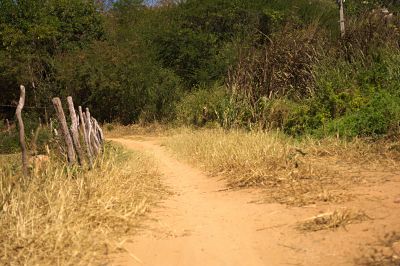
Attention to the poor conditions of the 37 000 km of rural gravel roads in the Eastern Cape was finally given judicial teeth in the structural interdict in Agri Eastern Cape and Others v the MEC for the Department of Roads and Public Works and Others (Agri Eastern Cape matter). The structural interdict was delivered by the Eastern Cape High Court on 28 February 2017 and provides great relief to the farming communities of the Eastern Cape.
The important structural interdict granted against the Member of the Executive Council and Director-General of the Department of Roads and Public Works (collectively described as the Department or the Respondents) included time frames for specific remedial actions, time frames for road repair service contract agreements to be concluded, and an Order to initiate a competitive bidding process for external contractors involved in road repairs. The Order also went as far as to stipulate a mechanism in terms of which individual farmers may attend to the repair of a farm road, depending on compliance with the procedure set out in the Order for which they will be entitled to be refunded for the costs incurred.
The rural roads serving farming communities in the Eastern Cape are not only used by commercial farmers but are a vital lifeline for access to a whole range of social services, including emergency services and access to schools. Furthermore, in the answering affidavits filed by the Respondents, they admitted that the condition of the gravel roads in the Eastern Cape is the worst in the country. In addition, there is an extensive backlog of road maintenance, which appears to be due to under-funding and lengthy procurement processes.
 THE CONSTITUTION AND GOOD PUBLIC LEADERSHIP: BREAKFAST DISCUSSION SERIES 2017


 On Sunday, 12 March 2017, 35 000 cyclists would have participated in the Cape Town Cycle Tour – one of South Africa’s most iconic sporting events. Despite the event being cancelled, the organisers must be applauded for their approach to include people with disabilities to participate. This event is a blueprint for inclusivity and gives effect to the right to equality, as enshrined in section 9 of the South African Constitution.
 According to the acting Chief Executive Officer (CEO) of the South African Broadcasting Corporation (SABC), the Broadcaster has approached the High Court to challenge the findings of the erstwhile Public Protector’s report – When Governance and Ethics Fail. That Report found the former Chief Operations Officer (COO), Hlaudi Motsoeneng, guilty of misconduct and fraudulently obtaining his position at the SABC. The application for review – on the basis of administrative justice – comes an entire three years after the Report and its remedial actions were published by the Office of the Public Protector.
 The perennial land debate in South Africa seems to have taken on a new sense of urgency. In the last week alone, the National Assembly debated an Economic Freedom Fighters (EFF) motion to amend the property clause in the Constitution, with their leader issuing the injunction that “People of South Africa, where you see a beautiful land, take it, it belongs to you”. The President too called for expropriation of certain land without compensation – a sentiment he first echoed during his State of the Nation Address (SONA) of 2017.
 It is vital that all citizens participate in the election of their representatives to guarantee government by the people under the Constitution – not only in Parliament but also in crucial institutions, such as the Commission for Gender Equality (CGE). The CGE is currently in the process of filling several vacancies and in the interests of public participation and representative democracy, the Centre for Constitutional Rights (the CFCR) will provide the public with more information about the CGE, the selection process and the prospective candidates.