ARTICLE: USE THE POWERS YOU POSSESS
The Joint Constitutional Review Committee was set up in the aftermath of the 27 February 2018 resolution in the National Assembly on expropriation without compensation (EWC).

The Joint Constitutional Review Committee was set up in the aftermath of the 27 February 2018 resolution in the National Assembly on expropriation without compensation (EWC).

The South African Human Rights Commission (SAHRC) recently published its 2017/18 Equality Report (the Report), which was submitted to Parliament. This has probably not attracted much attention, due to processes around expropriation without compensation (EWC), the Zondo State Capture Commission of Inquiry and other current news. One exception was the Solidarity Movement. They announced that the Report means that the country’s affirmative action legislation is unlawful and does not comply with international requirements. Solidarity is to approach the Courts for a declaratory order to clarify how employers and the Department of Labour should handle the situation until the law (as proposed by the SAHRC) is amended.
The Zondo and Nugent Commissions of Inquiry will in the next few weeks and months drill down, hopefully hard, on the extent of State capture and the sorry state of affairs at the revenue collection agency.
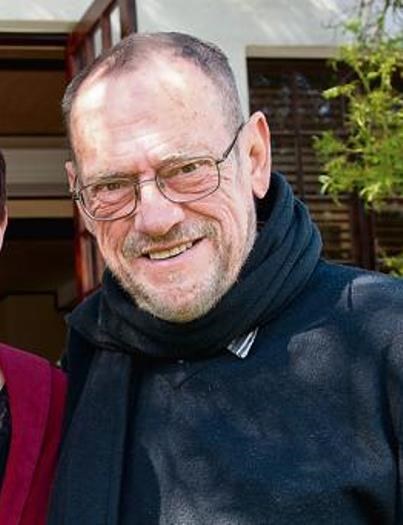
The FW de Klerk Foundation with sadness observes the passing of Professor Marinus Wiechers, a member of the advisory panel of the Foundation’s Centre for Constitutional Rights (CFCR). However, we also rejoice in the life and significant achievements of Marinus Wiechers.
Professor Wiechers was one of South Africa’s first and foremost legal constitutional experts. He played a significant role in the drafting of both the Namibian and the South African constitutions. He was a consummate academic, with numerous research outputs and books of international quality. As Vice-Chancellor of UNISA, he played an important role in leading the largest South African university into a new era.

The last week’s developments on the land and expropriation without compensation (EWC) debate were, to say the least, interesting. Firstly, there was the “toenadering” between the ANC and South African agriculture (Agri SA and Agbiz), and then we heard President Ramaphosa answer questions in Parliament on the subject. In comparison to last week, some farmers and business people are breathing much easier today. From “we will give our people the land back that was stolen from them, without compensation to the thieves” a mere few months ago, to “we will never expropriate productive agricultural land” last week, is quite a jump. One does imagine that the EFF and the Zumaites in the ANC are slightly worried about this change in message. Was this a turn-around on land and EWC, or merely a spin-around?
Join us for the third discussion for 2018 hosted by the Centre for Unity in Diversity (CUD) and supported by the Konrad Adenauer Foundation (KAS).
The FW de Klerk Foundation would like to congratulate Prince Mangosuthu Buthelezi on his 90th birthday today. He is one of the longest-serving members of Parliament and is one of the most consistent politicians our country has had in the last 40 years.
Media and social media have been abuzz over the last few weeks calling out Adam Catzavelous racist references to black people in his weather report from his Greek island holiday.

Now that we know the ANC will support an amendment of section 25 to enable expropriation without compensation (EWC), the question is, what potential changes can be proposed? There are views that together, the ANC and the EFF will get a comfortable two-thirds majority, and be able to change section 25 “as they like”. There are others who believe that any change to section 25 will require not only a two-thirds majority but because property rights are so central to economic prosperity and the achievement of other individual rights such as dignity, any change to section 25 will require a 75% majority. Where lies the truth?