ANNUAL REPORT: 2016 – 2017
A summary of highlights and activities of the FW de Klerk Foundation during the year under review.

A summary of highlights and activities of the FW de Klerk Foundation during the year under review.

As you know, the FW de Klerk Foundation’s first and foremost objective is to defend and promote the Constitution. On a macro level, the Constitution acts as the cornerstone for the South African society. Acting as an advocacy think tank for the Constitution and its values, the Foundation monitors public and private policy measures, to ensure that these are in line with the Constitution, and points out when they are not.
Among our instruments to achieve this – through our Centre for Constitutional Rights and Centre for Unity in Diversity – are:
The proclamation of 16 December as the Day of Reconciliation in 1995 speaks volumes about the magnanimity and skill of former Presidents Nelson Mandela and FW de Klerk during the transition to democracy in 1994.

The recently published Progress in International Reading Literacy Study (PIRLS) has outraged educators and parents. The report contains the shocking revelation that 78% of Grade 4 learners in South Africa cannot comprehend what they read. The causes were sought – and apparently found. The scapegoats included education policy, outcomes-based education, parents’ shortcomings, teachers’ inability to teach children to read, teachers’ inadequate education and a school environment where learners are often bullied. And it may be true that this and other factors played a part in this disappointing outcome. This is a very complex problem.
However, one of the factors that received almost no attention is mother tongue education (or the lack thereof).
 The FW de Klerk Foundation – in partnership with the Konrad Adenauer Foundation – invites you to attend our Annual Conference. Our theme for 2018 is: “South Africa Beyond State Capture and Corruption”.
The FW de Klerk Foundation annually hosts a conference on 2 February in Cape Town, to coincide with the announcement in Parliament in 1990 of the release of Nelson Mandela and other prisoners and the unbanning of several organisations. Each year the conference tackles a topical theme, with input from a diverse range of influential speakers. Previous speakers include former President Kgalema Motlanthe, Justice Albie Sachs, Dr Mathews Phosa, Ms Rhoda Kadalie, Prof Frans Viljoen, Mr Sipho Pityana, Adv Jeremy Gauntlett, Mr Johann Rupert and former President FW de Klerk.
Like a knight in shining armour, Minister in the Presidency and Head of the Inter-Ministerial Committee (IMC), Jeff Radebe, announced on Sunday 10 December that a landmark deal had been signed between SASSA and the South African Post Office (SAPO), bringing years of court battles and political wrangling to a close.

With Nasrec ’17 just days away, it is still unclear who the new ANC president will be, come 20 December. Following the end of nominations by provinces and branches, there are two clear frontrunners: Nkosazana Dlamini-Zuma and Cyril Ramaphosa. At this stage (with a number of branches yet to nominate a candidate or embroiled in court cases), no other candidate has received the minimum percentage of 15% of branch nominations needed for the presidency. This means that candidates like Zweli Mkhize and Lindiwe Sisulu can only be nominated as candidates if they garner the support of 25% of conference delegates during the proceedings. This is unlikely. As far as the deputy presidency is concerned, a number of branches and provinces have nominated Mkhize and Sisulu. Then, the so-called “kingmaker” of Mpumalanga, DD Mabuza, was nominated by the KwaZulu-Natal province as deputy president under Dlamini-Zuma.
Between 25 November and 10 December each year, there is a global pause and considered reflection on the grave and disabling matter of gender-based violence.
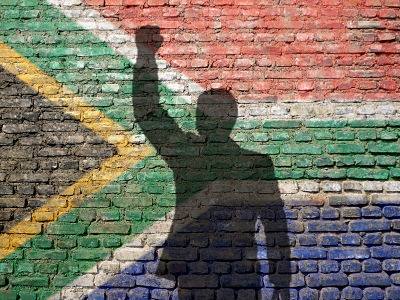
It is today four years since South Africa mourned the passing of Nelson Rolihlahla Mandela, the first President of the democratic and non-racial South Africa. And even though this is a short time in the life of a country, it seems much longer. This feeling originates from the fact that in the last four years, the country has moved almost a lifetime away from Madiba’s South Africa. During, and for some time after his presidency, South Africa was the country of hope, of reconciliation, of an active reconstruction and development programme, and of a public service with a motto such as batho pele, the people first.
Even within his beloved ANC, countless leaders have asked the question of what Madiba would have thought of the South Africa of 2017. A South Africa where hope has all but left even the most patriotic of South Africans, where reconciliation has been replaced with racialisation and intolerance, where not even the most basic of government programmes are implemented and service delivery has grinded to a halt, where the motto of the public service is, with only a few exceptions, ke pele, me first. Those same leaders answered their own question: He would have been pained, sad and furious. Lack of leadership, corruption and state capture are far from the ideal society Madiba had envisaged for the nation.