
SPEECH: THE ACCOMMODATION OF CULTURAL, RELIGIOUS AND ETHNIC DIVERSITY: A CORE CHALLENGE FOR THE 21ST CENTURY FOR SOUTH AFRICA, FOR EUROPE AND FOR THE WORLD
Everywhere people are on the move.
One of the inescapable implications of globalisation is an enormous increase in the interaction between people from different backgrounds, cultures, languages and religions. The management of the resulting cultural, language and religious diversity will be one of this century’s greatest challenges.
ARTICLE: THE ACCOMMODATION OF CULTURAL, RELIGIOUS AND ETHNIC DIVERSITY: A CORE CHALLENGE FOR THE 21ST CENTURY FOR SOUTH AFRICA, FOR EUROPE AND FOR THE WORLD

In a speech on 24 March in Cernobbio, Italy, FW de Klerk said that during the past 24 years South Africa had unfortunately been moving further and further away from the ideal of cultural, religious and language diversity. He called on the international community to do much more to define and protect the rights of cultural, ethnic and religious minorities throughout the world.
De Klerk was addressing the International Forum on Market Leaders and Scenarios for the 21st Century on “The Accommodation of Cultural, Religious and Ethnic Diversity: A Core Challenge for the South Africa, for Europe and for the World.”
He said that South Africa had plenty of experience in managing – and mismanaging – diversity.
ARTICLE: A CASE OF NEGLECT
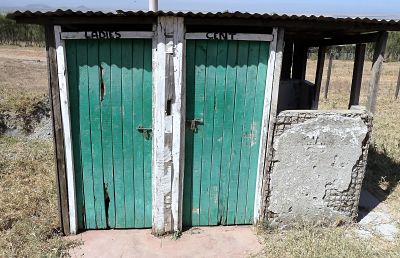 The nation came to a standstill in 2014 when Michael Komape, a five-year-old Grade R pupil, went missing at school. He was later discovered, dead, at the bottom of a collapsed pit latrine at his school in Limpopo. The pit latrines were the only available sanitation options for the learners. In March 2018, four years later, the body of another Grade R pupil, five-year-old Lumka Mkhethwa, was found after she, like Michael, disappeared from her classroom in rural Eastern Cape (EC). She was found, again like Michael, dead at the bottom of a pit latrine at her school.
These cases are only two of those that have been reported. They are unlikely to be the only instances where children have died, been injured or have fallen ill due to poor sanitation infrastructure at schools across the country. Millions of South Africa’s children live and go to school in the poorest provinces, of which Limpopo and the EC are part. The responsibility to ensure the safety of learners at public schools – with access to not just the tools to learn, but the conditions under which to learn, including appropriate infrastructure, like serviced toilets, functional classrooms and recreational facilities – is vested in the Department of Basic Education (DBE).