
ARTICLE: WHO WILL PROTECT US?
In a recently-published article, A Strategy Built on Race Profiling and Hate, the Centre for Unity in Diversity (CUD) put the searchlight on yet another incident of race-baiting and instigation by Julius Malema at a Youth Day event in Klerksdorp.
ARTICLE: SHINING A SPOTLIGHT ON POLITICAL PARTIES
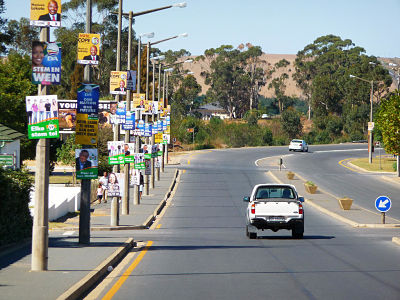
South Africa, alongside other constitutional democracies, recognises the importance of political parties. The founding provisions of the Constitution mention that South Africa is a sovereign, democratic State, founded on the values of universal adult suffrage, a national common voters roll, regular elections and “a multi-party system of democratic government”. Political parties as such, play a beneficial role within South Africa’s constitutional democracy.
It stands to reason that political parties are not homogenous but are nonetheless united in their quest to acquire and exercise political power. But what happens when the practices and conduct of political parties are found wanting, resulting in an apparent existential intra-party crisis?
While there is an obvious distinction between political parties and the State, however, South Africa’s democracy is highly dependent on political parties. Moreso at provincial and national level, political parties are voted in – rather than individuals – and it is these members of political parties who then become the Executive. The Executive, in terms of the Constitution, is tasked with ensuring good governance through quality service delivery while realising the aspirations of the nation as a whole.
STATEMENT ON MY VOTE COUNTS CONSTITUTIONAL COURT RULING

The FW de Klerk Foundation welcomes the Constitutional Court’s decision in My Vote Counts NPC v Minister of Justice and Correctional Services and Another. The decision, which confirmed an earlier Western Cape High Court ruling, makes it apparent that the unchecked funding of political parties or individuals running for political office, has no place within a constitutional democracy founded on values of transparency and accountability.
The decision enhances the voting public’s right to make informed political choices through requiring that the information pertaining to the private funding of political parties and independent candidates must be recorded, preserved and made reasonably accessible. The provisions of the Promotion of Access to Information Act 2 of 2000 (PAIA), which excluded political parties and independent candidates from its purview, were also declared invalid. The order of invalidity was however suspended for 18 months to allow Parliament to remedy PAIA to bring the Act in line with the decision. This means that there is a high likelihood that political parties in the 2019 national and provincial elections will be governed by the amended PAIA. South Africa’s democracy will be all the richer for it.