
ARTICLE: ALL ABOARD FOR THE DICTATORSHIP OF THE PROLETARIAT?
 In his remarks to the ANC’s National General Council on 9 October 2015 President Zuma provided some crucial insights into how he views his Alliance partners and how he foresees their future relationship after the goals of the National Democratic Revolution (NDR) have been achieved. (President Zuma’s comments in isiZulu are indicated by italics.)
President Zuma spelled out the ANC’s role as follows:
“The ANC, the leader of the Alliance, is a multiclass national liberation movement advancing the NDR, the primary objective of which is the establishment of the National Democratic Society, which is united, non-racial, non-sexist, democratic and prosperous. That is the objective of the ANC.”
PRESIDENT ZUMA’S VIEWS ON MEDIA FREEDOM
PRESIDENT ZUMA’S CELEBRATION OF MEDIA FREEDOM DAY By Dave Steward, Executive Director of the FW de Klerk Foundation President Zuma is understandably unhappy with the
ARTICLE: PRESIDENT ZUMA’S CELEBRATION OF MEDIA FREEDOM DAY
 President Zuma is understandably unhappy with the treatment he receives from the media – and particularly from the print media. He is regularly depicted with a shower emerging from his head. Artists paint him with his genitals exposed. He is castigated for corruption and the media continue to hound him over the expenditure of R246 million on his retirement home.
So, it is not surprising that when he went off text during his recent address to mark Media Freedom Day, the President expressed some emotion.
ARTICLE: SECTION 25: TO AMEND OR NOT…

The report of the Presidential Advisory Panel on Land Reform and Agriculture was presented to President Ramaphosa on 4 May 2019 and made available to the public in July. Even before this date, two panelists – Dan Kriek (president of AgriSA) and Nick Serfontein (well-known farmer) – decided to hand over a minority report to the President. It was made available to the public after the main report.
What are the key differences between the main report and the minority report? Why did these two respected panelists find it necessary to draft a minority report? The differences can be summarised in three groups: process issues, style and ideological issues and substantive issues.
ARTICLE: CAN MOTHER TONGUE EDUCATION IN SOUTH AFRICAN SCHOOLS BECOME A REALITY?

During her recent budget speech, the Minister of Basic Education, Angie Motshekga, referred to President Ramaphosa’s target in his State of the Nation address that every learner should be able to read with comprehension by the age of ten. She notes that the language issue is a key factor affecting reading ability and literacy, and then refers to the importance of African languages as teaching and reading languages. However, the phrase “mother tongue education” was not mentioned in her speech.
ARTICLE: PRETORIA HIGH COURT CONFIRMS THE PRESIDENT ACTED RATIONALLY AND REASONABLY IN PRESIDENT V THE PUBLIC PROTECTOR AND ANOTHER
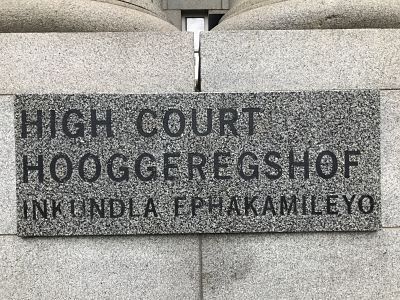
On Thursday, 8 August 2019, the embattled Public Protector (PP) received yet another legal blow when the Pretoria High Court (the High Court) granted the President’s declaratory order confirming that he had complied with the Public Protector’s remedial action against Minister Gordhan.
This remedial action relates to the PP’s investigative report on the approval of former deputy SARS Commissioner, Mr Ivan Pillay’s early retirement pay-out (PP’s report on Pillay-pay-out).