

Support the work of the FW de Klerk Foundation
For more information regarding donations contact info@fwdeklerk.org or scan the QR code below
Issued by Mpone Komako on behalf of the FW de Klerk Foundation on 30/06/2026
Introduction
Education was one of the main topics in Premier Lesufi’s 2026 State of the Province Address (“SOPA”) back in February. He celebrated Gauteng’s 89,06% matric pass rate, praised successful township schools and spoke about using technology to improve education. While these achievements deserve recognition, the speech offered little detail on how government will address overcrowding, ageing buildings, maintenance backlogs and other serious challenges. The main promises included building 18 new schools, improving the online admissions system, enhancing scholar transport safety and establishing an artificial intelligence (“AI”) office. While positive, the promises lack clear targets, timelines or detailed plans, making accountability difficult (i.e. for the public to know whether government has delivered on its promises).
This article compares the promises made in the 2026 SOPA with the province’s own budgets, annual reports and oversight findings. It aims to assess whether the province’s commitments were sufficiently clear to enable citizens to measure progress and hold the government accountable. The article will form part of the FW de Klerk Foundation’s Active Citizenship Journey series which will evaluate the realisation of the Gauteng SOPA’s education promises over the course of the year.
The Budget: Where Will the Money Go?
The 2026/2027 Gauteng Budget Speech allocates R70,9 billion to education. Education will receive R221,8 billion through the Medium-Term Expenditure Framework over the next three years, making it one of Gauteng’s largest budget allocations.
The money will be used for:
- Early Childhood Development (“ECD”): Supporting the ECD Strategy, but the Budget Speech does not provide details on how many new centres will be supported, or how many children are expected to benefit.
- Learner support programmes: Programmes to improve learner performance, but the Budget Speech does not provide details on expansion, reach or expected outcomes.
- School safety: Funding is allocated for safer, more inclusive schools, but it does not say whether the money will be used for security guards, cameras, anti-bullying programmes or other safety measures.
- School nutrition: Funding school nutrition programmes, but without details on beneficiary numbers, expansion, or addressing irregular spending.
- Scholar transport: Paying for scholar transport, but without details on beneficiaries, route expansion, or safety improvements.
- Schools of Specialisation: Schools of Specialisation will be supported, but the budget does not say whether new schools will be opened, which sectors will receive attention, or how success will be measured.
- Inclusive education: Funding will support learners with disabilities through special schools and inclusive education programmes. However, the Budget Speech does not explain how this funding will improve access, reduce waiting lists, or strengthen support in mainstream schools.
A budget should be more than a list of priorities. It should also show how and by when government plans to achieve them to enable the public to measure progress. This Budget only told citizens what government plans to fund, not how much each programme will receive, what results are expected or how success will be measured. Without this information, citizens cannot easily track progress, determine whether public funds are being spent as promised, or hold government accountable.
The Missing Infrastructure Plan
The Budget Speech does not specify how much of the R70,9 billion will fund the 18 new schools or fix existing infrastructure. This is a major concern because Gauteng’s schools already face a serious infrastructure crisis, with reports showing schools had a maintenance backlog of about R31,3 billion, while only R427 million (1,36% of what was needed) was allocated to maintenance in 2024/25. Despite this, the Premier offered no clear budget allocation, targets or timelines to address the crisis.
Instead, the focus is on building new schools. While this is important, many existing schools remain overcrowded, poorly maintained and in need of repair. This changes how we should view the Premier’s promises. The challenge is not only to build more schools but to repair, maintain and improve the schools that already serve thousands of learners every day.
Overcrowding and Mobile Classrooms
The 2024/2025 Annual Report for the Gauteng Department of Education (“the department”) paints a very different picture from the one presented in the SOPA. The department admits that rising learner numbers, overcrowding, ageing infrastructure and maintenance pressures continue to strain schools. To ease overcrowding, the department funded 300 schools to build their own classrooms and relies on mobile classrooms. This raises important concerns. Mobile classrooms are meant to be a temporary solution. However, many schools use them for much longer than planned. Research shows that these classrooms often become much hotter in summer and much colder in winter than permanent classrooms. These conditions can make it harder for learners to concentrate, stay comfortable and perform well in class.
The department’s reliance on self-build classrooms also raises questions. It suggests schools are being left to manage overcrowding themselves rather than benefiting from long-term infrastructure projects. This does not match the message in the SOPA. The speech gives the impression that the province has a clear plan to improve school infrastructure. However, the Annual Report suggests that schools are still relying on temporary measures to cope with growing pressure.
There is little reason to expect a very different picture in the 2025/2026 Annual Report. The 2026 SOPA should have set out a clear plan to deal with the problems identified in the previous report. Instead, it offered few detailed commitments beyond building 18 new schools and set no clear targets for reducing overcrowding, maintenance backlogs or temporary classrooms. Without measurable targets, timelines and funding commitments, citizens will struggle to assess progress, and many of the same long-standing problems may persist in the next Annual Report.
The Online Admissions Problem
One of the Premier’s main promises was to improve Gauteng’s online admissions system. He described it as an important tool that gives all children fair access to schools. This sounds like a great solution for a long-term problem. However, the department’s own Annual Report admits that the system faced challenges – some parents accidentally linked more than one child to the same profile, others had incorrect or mismatched information on their applications and some had to rely on internet cafés to complete the process. All of this delayed learner placements and required additional verification by schools. Parents also raised concerns about technical problems, poor communication and long waiting times. Some said they struggled to get help from the department or to receive updates about their applications. The frustration became so widespread that some parents publicly called for the online admissions system to be scrapped.
The problems did not end there. Reports show that 15 144 learners were still waiting for placement in December 2025 for the 2026 school year. Although that number dropped over the following weeks, approx. 10 000 learners entered the holiday season without knowing where they would go to school.
These problems with the admissions system raise a simple question: what will change this time? The Premier simply said that the online admissions system will be “improved and strengthened“. He did not explain how. He set no targets, timelines, or measures of success. He also did not explain how government will reduce placement delays, improve communication with parents or prevent the problems identified in the Annual Report.
This is where the commitment falls short. A promise to “improve” a system is difficult to measure without clear, measurable goals. Government could, for example, commit to placing all learners before the start of the school year, reducing delays by a specific percentage, or publishing regular progress reports. Instead, the commitment is too vague to allow meaningful public oversight. If the province wants to earn parents’ trust, it must do more than promise improvements. It must clearly explain what will change, when those changes will happen and how citizens will know whether the system is working better.
AI: An Ambitious Idea, But Few Details
The Premier also announced plans to establish an AI Office which will work with the Council for Scientific and Industrial Research, state entities and the private sector to help Gauteng prepare for an AI-driven future. However, he did not explain how this vision will become a reality, or say when the AI Office will be established, how much it will cost, or what its responsibilities will be. He also does not explain which schools will benefit from AI programmes, how learners and teachers will be prepared to use this technology, or how the success of these initiatives will be measured.
These omissions matter, because not all schools are in the same position. Some have modern facilities and reliable internet access. Others still struggle with basic infrastructure, overcrowded classrooms and limited digital resources. The Premier did not explain how the province will ensure that AI initiatives benefit all learners, rather than only those at better-resourced schools.
The commitment also raises questions about priorities. AI may play an important role in the future of education, but new technology should not take attention away from solving the everyday challenges that continue to affect teaching and learning. Additionally, without clear plans, funding, timelines and measurable targets, citizens have no way of knowing whether the promised AI initiatives will move beyond announcements and become a reality.
Lowering of Targets Raise Concerns
One of the biggest concerns in the department’s Annual Report is that some of its performance targets were lowered during the financial year. Changing a target is not always a problem. Sometimes unexpected events make it necessary. However, lowering targets should be the exception and not the rule. If targets are lowered too easily, it becomes harder to judge whether the department is making real progress. One example is the target for replacing inappropriate school structures. The department lowered its target, because of budget constraints and delays in infrastructure projects. However, many schools are dealing with overcrowding, ageing buildings and poor infrastructure and delaying projects, or lowering targets, means learners may have to wait even longer for safe and suitable classrooms.
The same pattern appears in other areas of the report. Budget pressures, delays by implementing agencies and capacity challenges are often given as reasons for missing or revising targets. These explanations help us understand why projects fall behind, but they also highlight the need for better planning and stronger project management.
The Premier did not mention that some targets were revised downwards. Instead, he focuses on new commitments and future plans. However, citizens should be given the whole picture and told where government has fallen short, why it happened and what is being done to prevent the same problems from happening again. Being honest about challenges does not weaken public confidence. It strengthens it. People are more likely to trust government when it openly acknowledges problems and explains how it plans to fix them.
The Auditor-General’s Findings
The Premier’s speech presents a positive picture of education in Gauteng. However, the Auditor-General’s findings tell a different story. They point to serious problems in the way the department manages its finances, reports its performance and awards contracts.
One of the most worrying findings is that the department submitted inaccurate performance information: The Auditor-General found material misstatements in the department’s Annual Performance Report, particularly in the areas of public ordinary school education and infrastructure development. (The department did not correct these mistakes before the report was finalised.) This matters, because if government is not accountable, responsive and open, it is acting unconstitutionally.
The Auditor-General also found serious problems with procurement and spending. In some cases, the department bought goods and services worth more than R1 million without inviting competitive bids, even though there was enough time to follow the normal procurement process. Some construction contracts were awarded to contractors who were not properly registered with the Construction Industry Development Board. In other cases, contracts were not awarded in the most cost-effective way, meaning government may not have received value for money.
The report also found that the department failed to take proper steps to prevent irregular expenditure, as required by the Public Finance Management Act, 1999. Most of this irregular expenditure resulted from failures to follow procurement rules.
Senior management and the accounting officer also failed to effectively oversee compliance controls and performance reporting. This resulted in material regulatory non-compliance and deficiencies in performance information and target setting.
These findings raise important concerns about governance. The province cannot improve education through larger budgets alone. Public money must also be managed lawfully, fairly and efficiently. When procurement rules are ignored or performance information is inaccurate, it becomes harder for the public to trust that education funding is being used as intended.
The Premier did not address any of these findings, choosing instead to focus on achievements and the future.
Conclusion: Active Citizenship Means Looking Beyond the Speech
Premier Lesufi’s 2026 State of the Province Address presented an encouraging picture of education in Gauteng. It celebrated excellent matric results, recognised successful schools and set out an ambitious vision for the future. However, the province’s own budget, Annual Report and oversight findings tell a more balanced story. They show that many schools still face overcrowding, ageing infrastructure, maintenance backlogs and problems with service delivery. They also raise concerns about financial management and the way some government commitments are reported and carried out. This does not mean that no progress has been made. Many of the achievements highlighted in the SOPA deserve recognition. However, real progress should not stop citizens from asking difficult questions. Taxpayer money must lead to real improvements in classrooms, school buildings and the quality of education that learners receive every day.
Government should be recognised when it delivers results. But it should also be expected to explain where it has fallen short and how it plans to improve. That is not criticism for the sake of criticism. It is an important part of accountability.
Active citizenship is about more than listening to speeches, or celebrating good news. It means reading budgets, annual reports and audit findings. It means asking whether promises are clear, whether targets can be measured and whether government has delivered on what it promised. An informed public is one of the strongest foundations of democracy. When citizens ask questions, follow the evidence and hold government to its promises, they help build a more transparent, accountable and responsive Gauteng. That is why active citizenship is not a once-off event. It is an ongoing journey.
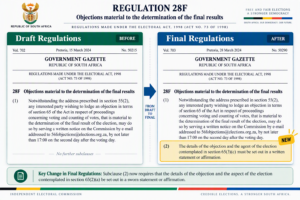
RED FLAG: NO OPPORTUNITY FOR PUBLIC COMMENTS ON FINAL VERSION OF ELECTORAL REGULATIONS.
The FW de Klerk Foundation has raised concerns about a change introduced into the final Municipal Electoral Regulations that was not included in the draft published for public comment. The Foundation argues that the addition of a sworn-statement requirement for election objections raises important questions about meaningful public participation, electoral transparency, and compliance with Constitutional Court principles governing post-consultation amendments.
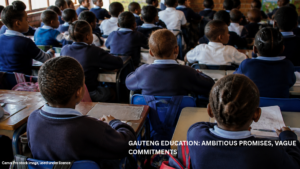
GAUTENG EDUCATION: AMBITIOUS PROMISES, VAGUE COMMITMENTS
Premier Panyaza Lesufi’s 2026 State of the Province Address highlighted Gauteng’s education achievements, including strong matric results and plans for new schools, AI initiatives and improved admissions systems. However, a closer examination of the Gauteng Budget, Department of Education Annual Report and Auditor-General findings reveals ongoing challenges such as overcrowded classrooms, infrastructure backlogs, admissions delays and governance concerns. This analysis explores whether the province’s education commitments are specific enough to ensure transparency, accountability and measurable progress.
WHY THE BRONKHORSTSPRUIT WATER CRISIS VIOLATES THE CONSTITUTION
The FW de Klerk Foundation raises concern over the Bronkhorstspruit water crisis, warning that contaminated drinking water threatens constitutional rights, public health and human dignity. The Foundation calls for transparency, accountability and urgent reforms to address systemic weaknesses in South Africa’s water governance and infrastructure management.