View Archived Content

ARTICLE: GOOD NEWS AND BAD NEWS FOR AFRIKAANS EDUCATION IN UFS RULING

CONCOURT FOTER opt

The dust has not yet settled over the Constitutional Court (CC) judgment in the University of the Free State (UFS) language policy case. What is the impact of this ruling on the future of Afrikaans as language of instruction, and by implication, the future of other indigenous languages ​​in education? Are we destined for a completely English education system, with mother tongue education tossed into the trashcan of history?

Of course, one should not be alarmist or get discouraged. The CC verdict is, with respect, regrettable and could be challenged on many levels. However, there are some technical issues that could limit the impact thereof in future cases. One of these are the special circumstances at the UFS, for example, the size of the Afrikaans and English classes, which according to the UFS (and CC) would lead to unequal quality of education and would therefore be discriminatory and racist. Another set of facts could provide a different outcome.

Read More »

ARTICLE: SASSA NEEDS ADROIT LEADERSHIP

SASSA

“We underestimated the work we were supposed to do. Taking over payments is a lot of work”, is not the message that millions of South Africans take comfort from as the new year dawns with this message from Social Development Minister, Bathabile Dlamini.

The Minister, officials of the Department of Social Development and the South African Social Security Agency (SASSA) have had since September 2013, when the Constitutional Court’s judgment declared the CPS contract invalid, to put in place a plan to either reopen the tender ensuring a proper procurement process, or create the capacity in-house to access, approve and pay almost 18 million grant recipients, many of whom are desperately poor and fall within the following categories of recipients:

  • Grants for Older Persons
  • Disability Grant
  • War Veteran’s Grants
  • Foster Care Grant
  • Care Dependency Grant
  • Child Support Grant
  • Grants-in-Aid
  • Social Relief of Distress
Read More »

ARTICLE: PROCEED CAUTIOUSLY WITH LAND REFORM, MR PRESIDENT…

parliament sml

In the annual 8th January statement (delivered on the 13th January this year), ANC president Cyril Ramaphosa spelled out the central tasks of the ANC for 2018. He covered a wide range of themes and topics, and it is apparent that this is (as usual) not a piece drafted by the ANC president himself. There is the usual rhetoric about the National Democratic Revolution and the gains made in regard to its goals during the last number of years. Nevertheless, a careful reader will discern Ramaphosa’s hand and that of his close allies in a number of issues and the way they were presented and emphasized. Both the selection of these, as well as the way in which they were framed, are a far cry from those highlighted in the 8th January statements of the last nine years. At least three such issues can be distinguished, namely the economy, corruption and land reform. This article looks briefly at the first two and then continues to focus on land reform and property.

Read More »

ARTICLE: SUBJECTIVITY AND FALLACIOUS ARGUMENTS IN THE MAJORITY RULING ON THE UFS LANGUAGE POLICY

languageJust before the end of 2017, and while South Africa almost came to a halt during the Christmas holidays, an extremely important ruling almost passed unnoticed. Chief Justice Mogoeng delivered the majority ruling in Afriforum’s leave to appeal in the case on the University of the Free State’s language policy. He did so without having heard any oral arguments and dealt simply with the documents before the court. He and seven (black South African) judges denied the leave to appeal, and Judge Froneman and two other (white South African) judges differed in a minority ruling.
Read More »

THROUGH THE LOOKING GLASS: MATRIC RESULTS 2017

students opt


The 1871 book by Lewis Carroll, and sequel to Alice’s Adventures in Wonderland came to mind when Minister Angie Motshekga announced the 2017 matric results on the 4 January 2018. The Minister announced a year on year overall pass rate increase with results for 2017 standing at 75.1% with provincial breakdowns as follows:


Read More »

ARTICLE: YOUR MOVE, MR PRESIDENT…

CREDIT ANC moneywebcoza opt

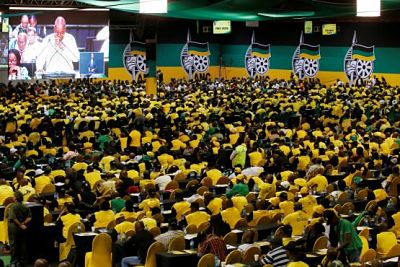
Two sets of congratulations are in order after the first days of the ANC 54th National Conference at Nasrec. The ANC as a whole can be congratulated for a conference at which the recent court judgments about the compositions of various delegations were accepted and upheld, as well as for a conference that saw no disruptions or violent behaviour (which was not the case with all the provincial elective conferences).

Justice Yacoob, in 2012, writing for the Constitutional Court in Ramakatsi and Others v Magashule and Others observed that: “I would hold that the right to participate in the activities of a political party confers on every political party the duty to act lawfully and in accordance with its own constitution. This means that our Constitution gives every member of every political party the right to exact compliance with the constitution of a political party by the leadership of that party”. The run-up to the elections was characterised by branches in KwaZulu-Natal, Free State and North West successfully challenging their provincial elective conferences. This meant that such provinces – and specifically the provincial executive committees – could not legally participate in the National Conference. Their branch delegates were free to participate in their individual capacities. The real concern arose over the verification of the identities of the individual participants, a matter which the party gave serious consideration to with the verification process taking place overnight. While there were a few discrepancies, they were however not enough to cast aspersions on the entire verification process. No faction has so far challenged the very close outcome of the election of the top six. At the time of writing, the secretary-general position is under scrutiny with regard to 68 votes that were allegedly uncounted. This could potentially have the effect of toppling Ace Magashule out of the this crucial position, in favour of Senzo Mchunu of KwaZulu-Natal.  

Read More »

ARTICLE: WHERE HOPE RESIDES

The proclamation of 16 December as the Day of Reconciliation in 1995 speaks volumes about the magnanimity and skill of former Presidents Nelson Mandela and FW de Klerk during the transition to democracy in 1994. 

Read More »

ARTICLE: THE ELEPHANT IN THE ROOM: MOTHER TONGUE EDUCATION

language

The recently published Progress in International Reading Literacy Study (PIRLS) has outraged educators and parents. The report contains the shocking revelation that 78% of Grade 4 learners in South Africa cannot comprehend what they read. The causes were sought – and apparently found. The scapegoats included education policy, outcomes-based education, parents’ shortcomings, teachers’ inability to teach children to read, teachers’ inadequate education and a school environment where learners are often bullied. And it may be true that this and other factors played a part in this disappointing outcome. This is a very complex problem.

However, one of the factors that received almost no attention is mother tongue education (or the lack thereof).

Read More »