Support the work of the FW de Klerk Foundation
For more information regarding donations contact info@fwdeklerk.org or scan the QR code below
FW DE KLERK FOUNDATION CALLS FOR END TO “CULTURE OF IMPUNITY” IN LOCAL GOVERNMENT
Issued by Daniela Ellerbeck on behalf of the FW de Klerk Foundation on 03/03/2026
The FW de Klerk Foundation is participating in the Department of Cooperative Governance’s (“COGTA”) national consultation on the Revised Draft of the White Paper on Local Government. The deadline for the Revised White Paper is 31 March 2026. The 65 recommendations it contains will be further developed in consultation over the next six weeks.
“The Constitution sees municipalities as the service delivery vehicles of the nation,” says Daniela Ellerbeck, an attorney and Manager of the FW de Klerk Foundation’s Constitutional Rights Programme. “This makes working, ethical and accountable municipalities non-negotiable to South African’s welfare.”
During the consultation, the COGTA acknowledged that a culture of impunity has taken root in local government. In response, the FW de Klerk Foundation has urged government to prioritise firm, visible enforcement of existing laws and audit findings.
“To start turning local government around, we must enforce the Auditor‑General’s findings,” says Ellerbeck. “Establish a dedicated, fast‑acting prosecution team focused exclusively on prosecuting the cases identified in the Auditor-General’s report. Let the public see justice done. Because culture follows enforcement, the law must be applied without fear or favour, and every councillor and official who acts unlawfully must face real consequences.”
The Foundation further recommends measures to strengthen ethical leadership and stability in municipalities:
- Rebuild public trust by ensuring that politicians and staff who break the law are held to account.
- Empower voters with information to elect competent, ethical people by requiring all candidates to disclose the skills and experience that qualify them to serve.
- Regulate coalitions to stabilise them, because entire communities depend on the stability of these political party coalitions for their welfare.
“South Africans rely on municipalities for the services that make their constitutional rights a lived reality,” Ellerbeck concludes. “If we end the culture of impunity, uphold the rule of law and empower citizens to choose capable, ethical leaders, we can restore local government and protect the welfare of every community.”
A GUIDE ON WHO DOES WHAT IN LOCAL GOVERNMENT
A guide for citizens on who does what in local government

THE CCTSA WINS CULTURAL AWARD
The Centre for the Constitutional Transformation of South Africa (CCTSA) is delighted to announce that it was named winner of the Heritage, Memory and Identity category at this year’s Western Cape Cultural Affairs Awards, held in Cape Town on 9 September 2026. The CCTSA is dedicated to telling the story of South Africa’s constitutional journey. The awards, hosted annually by the Western Cape Government’s Department of Cultural Affairs and Sport, recognise individuals and organisations that make a meaningful contribution to the cultural, linguistic and heritage life of the province.
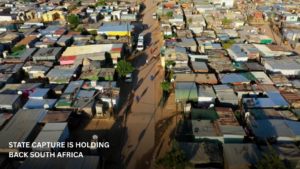
STATE CAPTURE IS HOLDING BACK SOUTH AFRICA
After Nelson Mandela was elected in 1994 his government abolished racially segregated local authorities, creating ostensibly integrated municipalities. Today these range in size from Johannesburg, the commercial capital, to units like Mpofana that comprise a small town and rural areas. All are supposed to fund themselves through property taxes, business rates and charges for water, electricity and waste collection. The poorest also get a grant from the central government to fill any gap between revenue and expenditure.