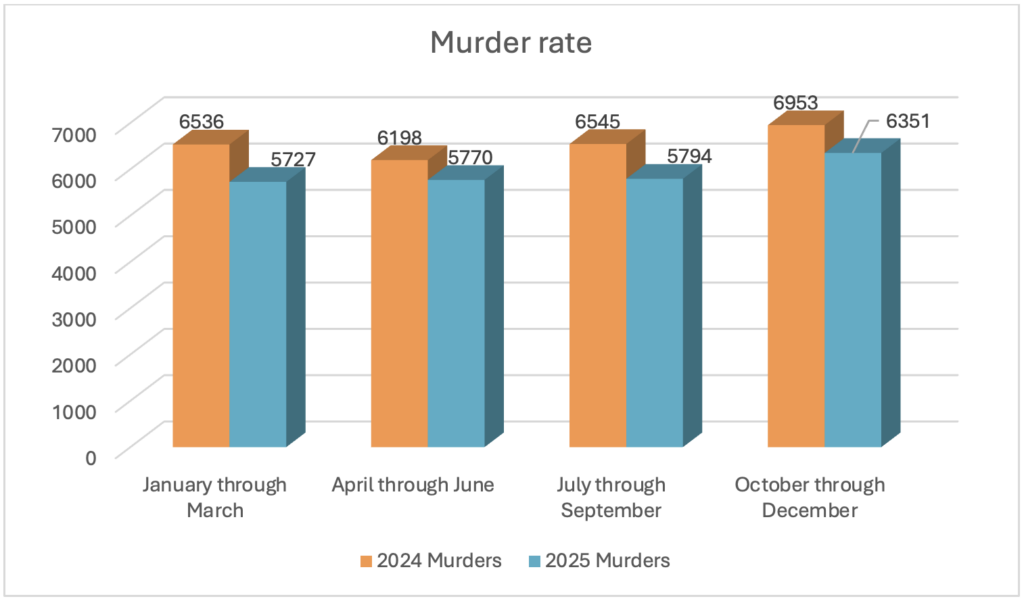
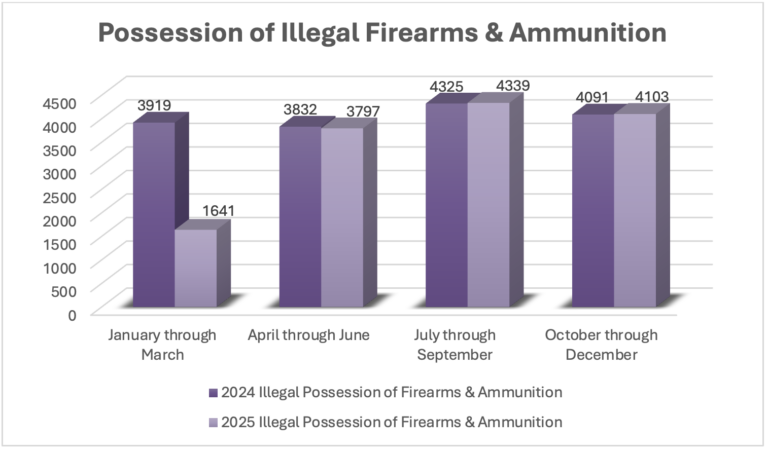
Illegal firearms play a major role in sustaining this violence. While police confiscated some weapons, the scale of the problem remains vast. Should external estimates that put illegal firearms at approximately 2 million be accurate, this means that less than 1% were confiscated last year.
Organised criminal violence also continues to threaten lives. Gang-related shootings, taxi conflicts and extortion networks contribute to deadly violence in several parts of the country. In Cape Town alone, more than 30 people were killed in mass shootings linked to gangs, taxi conflicts and extortion in Cape Town alone. In response to the ongoing gang violence, the Foundation called for gang violence to be declared a national disaster. The Foundation argued that such a declaration would enable a coordinated national response, unlock emergency resources and prioritise intervention to improve the protection of the right to life.
Violence affects not only communities but also law enforcement itself. The report highlights that 86 police officers lost their lives during 2025, weakening policing capacity and affecting morale within the South African Police Service.
When crime reaches these levels, the consequences extend far beyond the victims themselves. Communities live in fear, businesses struggle to operate safely and public trust in the state’s ability to protect citizens begins to erode. South Africa’s Constitution places a clear obligation on the state to respect, protect, promote and fulfil the rights in the Bill of Rights. When the right to life is under such sustained pressure, it signals a serious failure of governance, policing and criminal justice systems.
Biting the bullet: What Must Be Done
South Africa needs decisive, coordinated action.
The Foundation believes the country can draw lessons from Brazil and Mexico: Brazil demonstrated the benefits of a single, integrated crime‑information platform feeding operational decisions, with the Ministry of Justice’s 2025 Public Security Map recording a 6,33% fall in homicides in 2024.
Mexico’s president credits daily coordination and intelligence‑led deployments for a sharp preliminary homicide decline in 2025, though analysts urge caution until death‑certificate totals confirm the trend.
South Africa needs the same disciplined, intelligence‑driven approach.
The Foundation recommends establishing a single, real‑time crime data platform that links the police, prosecutors and forensic services. With weekly, leadership‑led reviews to steer intelligence‑driven operations toward the small number of hotspots that drive most killings, we can replicate the declines seen in countries that use this model. The Foundation believes that combining real‑time data, hotspot‑focused joint operations and stronger investigations and prosecutions will turn arrests into lasting reductions in lethal violence.