

Support the work of the FW de Klerk Foundation
For more information regarding donations contact info@fwdeklerk.org or scan the QR code below
DANIELA ELLERBECK'S HUMAN RIGHTS REPORT CARD LAUNCH ADDRESS
Delivered by Daniela Ellerbeck on behalf of the FW de Klerk Foundation on 18/03/2026
Introduction
Thank you, Christo. All protocols observed. I am Daniela Ellerbeck, an attorney and the Foundation’s Constitutional Rights Programme Manager.
As Christo said, every year, this report card assesses the degree to which rights and freedoms are being enjoyed as a lived reality. In doing so, the Foundation also considers how the Government is meeting its obligations to respect, protect, promote and fulfil all the rights entrenched in the Constitution’s Bill of Rights.
Now, human rights are not abstract ideas. They are the water that runs from our taps, the ambulance that arrives on time when we have a medical emergency, the street that is safe to walk in at night, and the school that is a non-violent place where a child successfully learns to read and master basic mathematics.
This report card enables South Africans (and our leaders) to gauge how well the country is doing in making the Constitution a reality for all – highlighting both successes and challenges.
It is part of the Foundation’s efforts to encourage citizens to engage in discussions about these important issues, because they should form part of our national dialogue and constantly feature in the media we consume.
2025 Developments
Human rights tell the story of our country: They are a decisive break from our past and show South Africa’s areas of progress, her strain, as well as our (and our leaders’) choices.
When looking at how South Africa performed in making these rights and freedoms a lived reality, it is important to look at context. For this reason, the report card starts with an examination of the top 2025 developments in the spheres of politics, crime and corruption, the economy, and international relations.
When it comes to Political developments, the Government of National Unity, or “GNU” as it is commonly known, remained intact, but not without chronic tensions and sharp disputes: One such sharp dispute was about fiscal policy and resulted in the National Budget being postponed for the first time ever. The dispute was due to disagreement about a proposed Value Added Tax (or “VAT”) hike that would have increased VAT to 17%. To eventually pass the third reiteration of the Budget, this VAT hike was abandoned. However, because the government lost the revenue this VAT increase would have brought into its state coffers, the National Treasury warned of approximately R75 billion in spending cuts across departments – including education, health, and home affairs.
Importantly, Foundation’s “The Constitution and The Cabinet Report” also graded South Africa’s 77 national executive members on whether they are improving South Africans’ quality of life. No Minister or Deputy Minister achieved an A+ rating. Only the Electricity & Energy Minister achieved an A. The bulk of the Cabinet received Cs. A troubling cohort received Ds and lower, including several Ministers that scored Fs. However, no party could claim a monopoly on either good or bad governance.
Now while the GNU held nationally, our local governments, especially our metros, were a different story: Apart from Tshwane – where the most recent coalition appears to be holding steady (with the city’s first fully funded budget in years being passed and a R1,9 billion budget surplus being achieved) – many local government coalitions continue to experience instability. This instability, caused by fragile political arrangement and internal party conflicts, often occurs at the expense of basic service delivery.
It must also be pointed out that 2025 was the year where municipalities’ dismal deterioration in service delivery was repeated national news. The Auditor‑General flagged persistent municipal failure, pointing out that service delivery and consequence management remain systemic weaknesses.
To address this instability, which directly impacts on people’s constitutional rights, the Foundation recommended that coalitions must be stabilised through public, binding, and enforceable coalition agreements, to ensure that service delivery happens, regardless of political manoeuvring.
When it comes to Economic developments, the GNU resulted in the economy starting 2025 with confidence: the Johannesburg Stock Exchange rocketed – nearing record highs – as waves of foreign capital was invested into South Africa, especially to buy shares in companies and government bonds. The rand also strengthened to its best levels in months. Analysists saw the GNU as a shift towards policy stability, allowing businesses to operate in a more predictable environment.
South Africa achieved a major turnaround in energy stability, cutting loadshedding by 97% and returning Eskom to profit for the first time in eight years. Ports also showed signs of improvement and government opened freight corridors to 11 private rail operators.
South Africa also exited the Financial Action Task Force’s greylist. This strengthened the country’s credibility and should, over time, lower borrowing costs and support investment. The economy showed modest but real recovery in 2025: Real GDP grew by 1,1% for the year, which is weak, but still positive growth, inflation fell to a 21‑year low, unemployment eased slightly, and job creation improved across several sectors. However, the broader macro-economic picture remained constrained by international trade tensions, record high government debt – something which is unsustainable – and youth unemployment, which has reached crisis levels.
Youth have the highest unemployment rate despite dropping to a two‑year low of 58,5%. This means that young people are not entering the formal economy. And it shows us the scale of the crisis. Even qualified professionals are affected; for example, at least 450 qualified doctors were unable to secure permanent public-sector posts in early 2025 due to government budgetary constraints.
The high rate of youth unemployment has created a dangerous imbalance in the national economy: Fewer young people entering the formal work environment means less income for the government from taxes. This puts tremendous pressure on the narrow tax base.
To illustrate just how narrow this tax base is: The number of social grant recipients, estimated at 28 million, far exceeds the number of taxpayers, which is about 7,8 million. To cover the gap between shrinking revenue and rising social spending, the government relies on borrowing roughly 22 cents every rand received in tax revenue. This is more than the budget for health, police or basic education. Without faster youth job creation, a smaller pool of taxpayers will carry a heavier load.
To address high unemployment and the shrinkage of the tax base, the government continued implementing the Employment Tax Incentive, which reduces employers’ tax liability to encourage the hiring of young workers. It also continued structural reforms through Operation Vulindlela to remove constraints in electricity, logistics and water to support economic growth and job creation.
The Foundation made numerous proposals to address youth unemployment, that Christo has already covered in-depth.
Of course, any overview of 2025’s economic developments would be remiss if I did not mention the issue of United States of America’s tariffs: In addition to normal import charges, the United States imposed tariffs on more than 180 countries in 2025. Now, the United States is South Africa’s second largest trading partner, so this really hits our businesses, who export their goods to the States, very hard. The United States imposed a 50% tariff on steel and aluminium and a 30% tariff on all South African goods. These measures slowed South Africa’s economic growth in 2025 and harmed job creation.
When it comes to Crime, the lived reality for many people continued to be one of high insecurity and persistent violence:
While murders decreased by nearly 10% in 2025, the absolute levels remained extreme, with an average of 65 people killed every day. The threat is compounded by a high volume of illegal firearms (estimated at 2 million). Assaults with intent to cause grievous bodily harm (commonly known as “assault GBH”) jumped by approximately a third.[1] Kidnappings also continued to increase and GBVF was declared a national disaster, requiring the National Executive to lead a coordinated, multi-sectoral response.
Mass shootings and gang-related extortion remained severe, particularly in the Western Cape and Gauteng. Conversely, a sustained crackdown on the “construction mafia” was cited as a major success, resulting in hundreds of arrests and a significant reduction in site disruptions.
Importantly, the Independent Police Investigative Directorate (or “IPID”) reported roughly 670 deaths resulting from police action, the highest figure since 1997. IPID itself also struggled with a massive backlog of nearly 15 000 active cases last year, which risks a culture of impunity amongst police officials.
Turning to Corruption, the international perception of corruption in South Africa has not changed: Transparency International’s Corruption Perceptions Index’s continued to rank South Africa 81 out of 182 countries.
Progress in addressing state capture also moved in fits and starts: By July, government reported that almost half[2] of state‑capture action items were complete or substantially complete, 23% were on track, and almost a third[3] were delayed. There were four convictions. However, only one person went to jail.
On the money side, roughly 2% of what was stolen was recovered, with about R10,9 billion in assets were recovered against an estimated R500 billion stolen.
Furthermore, the integrity of the criminal-justice system became a major rights issue through the Madlanga Commission of Inquiry. Launched in July 2025, this commission began investigating criminality, political interference, and corruption within the criminal-justice system itself. The Commission delivered its interim report in December 2025.
Lastly, International relations in 2025 were defined by rising diplomatic friction, particularly with the United States, and the heavy impact of global geopolitics on South Africa’s domestic economy:
South Africa’s genocide case concerning Gaza continued at the International Court of Justice. Relations with the United States deteriorated with a meeting between Presidents Trump and Ramaphosa in the White House in May 2025. Trade uncertainty escalated as U.S. officials questioned South Africa’s eligibility to benefit from the African Growth and Opportunity Act (commonly known as “AGOA”) due to its geopolitical alignments. Now, AGOA gives duty-free access to the US market for eligible African countries and lapsed in September 2025. A one‑year extension was subsequently granted, which restored short‑term certainty for South Africans who export their goods to America.
This all shows how foreign policy affects South Africans’ daily lived reality, and how foreign policy can become a salary issue in a heartbeat. It is submitted that South Africa must navigate geopolitics with a “jobs compass.” In other words, foreign policy must prioritise domestic economic stability and export infrastructure. This includes diversifying markets and keeping diplomatic lines open.
Turning to the ten rights the Report Card identified as being under the most significant threat:
The Right to Life’s practical enjoyment was graded as being very bad and deteriorating. Our safety and lives improve when the whole system is properly resourced and synchronised. We saw glimpses of that in focused operations, like Operation Shanela, which repeatedly produced approximately 15 000 arrests per week nationwide, showing operational reach and suggesting that sustained, focused, well-resourced policing can dismantle organised crime, protect lives and begin to restore public trust. However, we have not yet seen something like Operation Shanela at a national scale. Here I wish to reiterate what Christo said: The Foundation believes that combining real‑time data, hotspot‑focused joint operations and stronger investigations and prosecutions will turn arrests into lasting reductions in lethal violence.
The right to Freedom and Security of the Person’s practical enjoyment remained unchanged and was graded as being very bad. People remained vulnerable to violence from both private and state actors.
The right to access to Health Care, Food, Water and Social Security’s practical enjoyment was graded as being very bad and deteriorating. Water and wastewater systems failed at scale. We had a shortage of about 2 221 ambulances and some public hospitals failed to provide cancer treatment to approximately 3 000 cancer patients for three years. Courts often had to enforce minimum standards.
The practical enjoyment of Children’s rights was graded as very bad but showing a slight improvement due to judicial victories. However, the lived reality for children remains very bad. 1 in 10 children go hungry, schools remain unsafe, and transport failures are all persistent threats to this right.
The practical enjoyment of the right to equality was unchanged and remained very bad. Threats include persistent, racial disparities in top management[4] and the risk of new employment equity targets becoming de facto quotas. Additionally, gender-based violence continues to undermine equal enjoyment of rights for women.
The right to education’s practical enjoyment was graded as poor and deteriorating: Despite a record matric pass rate of 88%, there is a severe early grade reading crisis, with 15% of Grade 3 learners unable read a single word. Furthermore, teacher shortages and overcrowded classrooms led to enjoyment of this right deteriorating. We need to get the basics right: books, teachers, and safe school buildings and transport.
The Rights of Arrested, Detained and Accused Persons’ practical enjoyment was graded as a very bad rating due to systemic failure. Threats include extreme prison overcrowding (some centres at 155% capacity), a massive backlog of roughly 60,000 trial-awaiting detainees, and a reduction in funding for Legal Aid, which limits the ability of poor persons to challenge their detention.
The practical enjoyment of the right to an Environment that is not harmful to one’s health or wellbeing is moderate, but deteriorating. The primary threats are unsafe drinking water (detected in 8 municipalities) and sewage spills, with 86% of sewage treatment plants discharging polluted effluent.
The practical enjoyment of the right to freedom of Trade, Occupation and Profession remains unchanged and was graded as poor. This was primarily due to the youth unemployment crisis and concerns regarding the numerical target regulations.
Finally, the practical enjoyment of Property Rights remained poor in 2025. Threats are driven by legal and policy uncertainty surrounding the Expropriation Act and debates over “nil compensation,” which the Foundation submits destabilises investment and creates risk for households.
Human rights matter in 2025 because they are the daily test of our democracy. They remind us that freedom is not a speech. Leadership means doing the unglamorous work that protects life, safety, and dignity. Hold to the Constitution when it is popular and when it is unpopular. That is how rights become practical in the lives of ordinary people.
Thank you.
[1] 33.5% and 35% respectively
[2] 48%
[3] 29%
[4] Where 64.2% of roles are held by white individuals

FW DE KLERK FOUNDATION ANNOUNCES DEPARTURE OF EXECUTIVE DIRECTOR CHRISTO VAN DER RHEEDE , CAPE TOWN, SOUTH AFRICA
FW de Klerk Foundation Announces Departure Of Executive Director Christo Van Der Rheede, Cape Town, South Africa
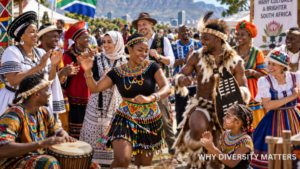
WHY DIVERSITY MATTERS
Diversity can be a mechanism for nation-building, because it can strengthen social cohesion and opens up economic value chains.

THE ROLE OF MUNICIPALITIES IN PROMOTING OUR HERITAGE
South Africa’s cultural and linguistic heritage depends on public spaces where communities can learn, gather and pass traditions from one generation to the next. Municipalities have an important role in maintaining the local facilities and public spaces that help make these constitutional rights meaningful in everyday life. As Heritage Month and the local government elections approach, communities should demand clear accountability for how these spaces are maintained, funded and protected.